Ordering acrylic may appear straightforward. You provide a width and height, choose a thickness and wait for the finished panel to arrive.
In practice, small details can make a major difference. A panel may be the right overall size but have holes in the wrong position. A visible edge may be left unfinished. A cut-out may have corners that are difficult to manufacture, or a panel may fit the opening but leave no room for installation.
This is why a successful Perspex Cutting Sydney order should begin with a clear specification.
Current Australian acrylic suppliers commonly request the panel width, length, thickness, colour or finish, quantity and application before preparing a cut-to-size quote. Drawings may also be needed when the project includes shapes, fixing holes or other features.
The following guide explains how to prepare that information and compare services without needing to understand every fabrication process in advance.
Identify where and how the panel will be used
Begin by describing what the finished panel needs to do.
A clear cover for a framed picture has different requirements from a shop display, machine guard, office screen, sign face or decorative wall panel. The use affects the sheet type, thickness, edge finish and fabrication method.
Consider whether the panel will be installed indoors or outdoors. Think about whether customers will touch it, whether the edges will remain visible and whether it needs to support any weight.
Also explain how the panel will be installed. A piece that slides into an existing frame may need accurate rectangular dimensions but no polished edges. A freestanding display may need polished edges, drilled holes, bends or bonded joints.
Providing the application helps the supplier understand the complete result rather than treating the project as a basic sheet-cutting order.
Sydney suppliers currently offer acrylic for applications including signage, displays, shopfitting, glazing, decorative features and fabricated components. The material can be cut, drilled, polished, laser cut, machined and heat formed, although the suitable process depends on the project.
Confirm whether acrylic is suitable for the application
Perspex is commonly used when a project needs a clear, coloured, frosted or translucent plastic surface with a clean appearance.
However, acrylic is not the correct material for every application. A project involving high impact, unusual heat, chemicals, structural loading or specific building requirements may need another plastic or a purpose-selected product.
Do not choose acrylic only because it is transparent. Tell the supplier what conditions the finished component will face.
For example, a retail product cover may prioritise optical clarity and presentation. A frequently handled protective component may place greater importance on impact performance, abrasion resistance and fixing design.
Ask whether the quotation is for genuine PERSPEX-branded material, another acrylic brand or a general PMMA sheet. Perspex is commonly used as a general search term, but the precise manufacturer, grade and technical properties may differ.
The supplier should be able to explain why the proposed sheet is suitable for the stated use. Where formal compliance or engineering performance is required, request the relevant product documentation rather than relying on a general material description.
Measure the Finished Space Carefully
Measurements should describe the finished component, not merely the sheet from which it will be cut.
Record dimensions in millimetres and use the same order throughout the drawing, email and quotation request. Clearly label which measurement is the width and which is the height.
This becomes especially important when the material has a directional surface, printed film, textured finish or visible grain-like pattern.
Measure the opening or existing component in more than one location. Walls, frames and older fittings may not be perfectly square, so the width at the top may differ slightly from the width at the bottom.
Do not automatically use the largest measurement. A panel made to the widest point may not fit through a narrower part of the opening.
Where an existing component is being replaced, measure the component itself as well as the available opening. This helps identify whether the original item included a gap for expansion, installation or movement.
For irregular shapes, a dimensioned drawing or physical template may be more reliable than several measurements written in a message.
Allow for frames, fittings and installation clearance
A panel that has exactly the same dimensions as the opening may be difficult or impossible to install.
The required clearance depends on the frame, fixing method, panel size and environment. A piece sliding into a channel needs different allowances from a panel fixed to a wall with stand-offs.
Check how deeply the sheet enters each frame or channel. Also account for seals, clips, screw heads and other fittings that occupy space.
Do not create your own allowance based on guesswork when the panel is part of a specialised system. Ask the frame, hardware or fabrication supplier what clearance is required.
Acrylic can also respond to temperature changes, so tightly trapping a panel without suitable allowance may create stress. The appropriate gap depends on the dimensions, product and installation conditions and should be confirmed for the particular project.
Customers searching for perspex cut to size sydney should therefore provide both the required finished panel size and a description of how it will be installed. This allows the supplier to identify potential problems before cutting begins.
Specify the Sheet Type, Colour and Thickness
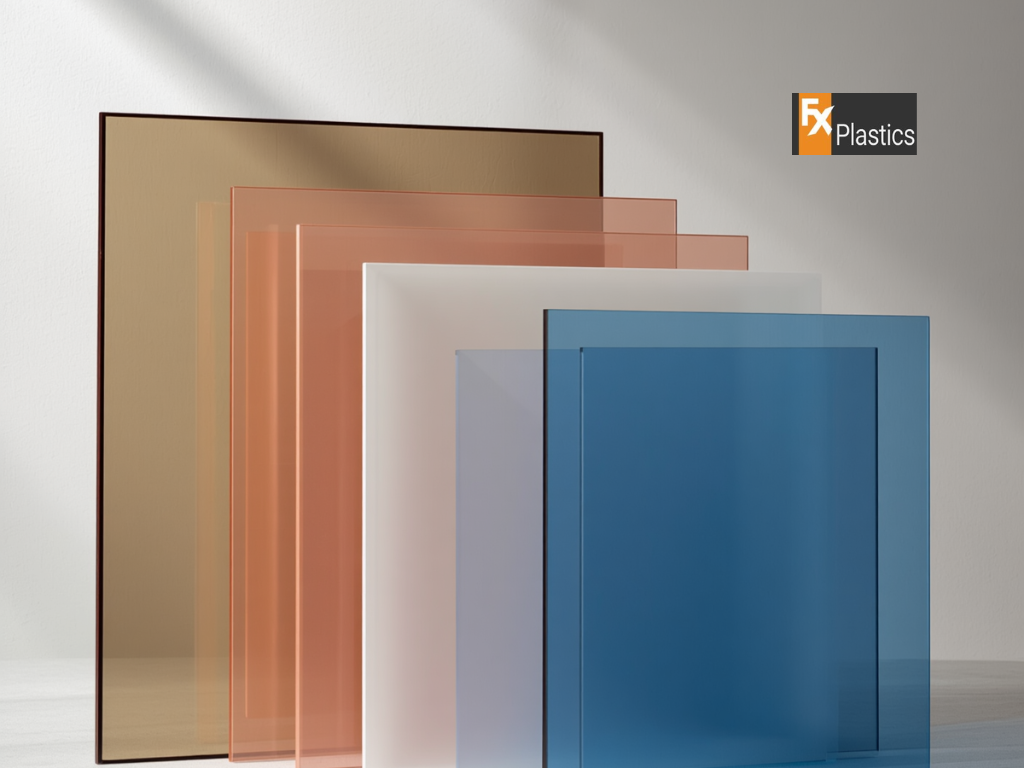
Compare clear, coloured, frosted and opal acrylic
Acrylic is available in more than one visual finish.
Clear sheet may be suitable when visibility is the main goal. Frosted or satin surfaces can soften reflections and provide partial visual screening, while opal material can diffuse light and reduce direct visibility through the panel.
Tinted and solid colours can support signage, branding, decorative displays and privacy applications. Mirror acrylic and specialised anti-glare grades are also available from some suppliers.
Australian acrylic ranges currently include clear, solid, tinted, translucent, mirrored, frosted and specialised surface options. However, colour and thickness availability can differ between products. One current Australian guide notes that acrylic is generally available in thicknesses from approximately 1.5 mm to 50 mm, while many coloured options are concentrated in a smaller thickness range.
Do not approve a colour using an online image alone. Screen settings and lighting can change its appearance.
Request a physical sample when colour, privacy or light diffusion is important. Confirm the exact product code so that the sample and ordered sheet refer to the same material.
Select a practical thickness for the panel
Thickness should be selected according to panel dimensions, support and use.
A small panel held securely around its edges may not need the same thickness as a large freestanding screen. A shelf or horizontal cover has different requirements from a vertical sign face.
Thicker material can feel more rigid and may allow deeper edge polishing or machining. It also adds weight and cost and may require different cutting or drilling methods.
Avoid selecting the thinnest option only to reduce the price. A flexible or poorly supported panel may not deliver the expected appearance or performance.
The supplier will need to know the panel size, fixing arrangement and application before suggesting a thickness. For projects involving loading, safety barriers, structural support or regulated building work, thickness should follow suitable technical or professional guidance rather than a general online recommendation.
When requesting a perspex sheet sydney quote, state whether the nominated thickness is mandatory or whether you are asking the fabricator to recommend an option.
Mark Holes, Cut-Outs and Corner Details
A hole location should not be described as “near the corner.”
Every hole and cut-out needs clear dimensions from known edges or a fixed reference point. Include the hole diameter as well as the centre position.
For several identical holes, show whether the measurements apply to each hole centre or to the spaces between them. Do not rely on a sketch that is not drawn to scale unless every relevant dimension is written clearly.
State which side of the finished panel is the front. This matters when the layout is not symmetrical, when countersinking is required or when a surface finish appears on only one side.
Also explain what will pass through the hole. A fixing screw, cable, handle or pipe may require a different clearance and edge condition.
Where practical, provide a CAD file or a dimensioned PDF for detailed components. FX Plastics’ published fabrication information describes the use of CAD, CNC laser cutting and CNC routing for custom acrylic work.
The supplier should confirm which file formats it accepts and whether the drawing is ready for production or still needs design work.
Choose corners and openings that can be fabricated reliably
Square internal corners may look simple on a drawing, but the chosen cutting method can affect how they are produced.
A CNC router uses a rotating cutting tool, which normally leaves a radius in an internal corner. A laser can produce tighter and more detailed shapes in suitable acrylic, but the material thickness, edge condition and application still need to be considered.
Do not add sharp internal corners unless they are necessary. A suitable radius may be easier to manufacture and can help avoid concentrated stress around the corner.
External corners may be left square, rounded or shaped to a specified radius. State the required radius rather than asking for “slightly rounded” corners.
Cut-outs also need enough material around their edges. A large opening positioned very close to a panel edge may leave a narrow section that is difficult to handle or install.
Ask the fabricator to review the drawing before production when the design contains narrow sections, closely spaced holes or unusual internal shapes.
Choose the Cutting Method and Edge Finish
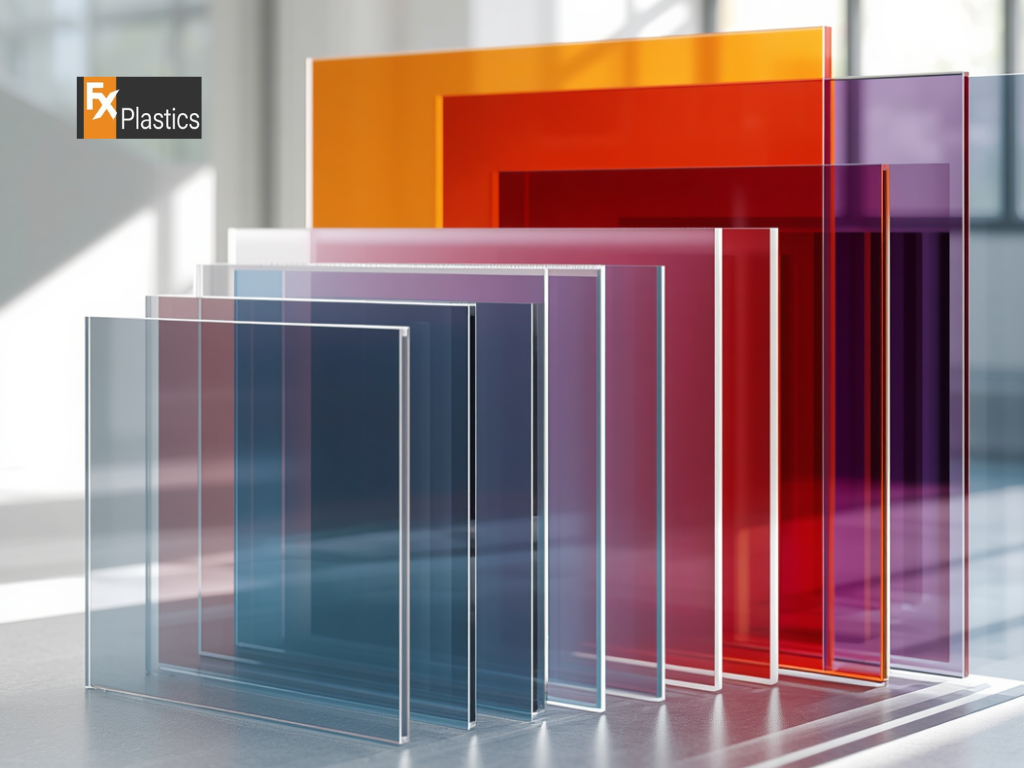
Match straight cuts and complex shapes to the right process
The best cutting process depends on the geometry and finish required.
Straight rectangular panels can often be produced efficiently with a suitable panel saw. CNC routing is useful for profiles, holes, cut-outs and machined shapes. Laser cutting can create intricate forms and a neat edge on suitable acrylic products.
Current Sydney fabrication providers describe panel saws as useful for cutting sheets to size, CNC routers as suitable for shaped and dimensioned parts, and laser systems as useful for intricate designs and tight internal details.
The customer does not need to choose the machine without assistance. Instead, explain the required size, shape, finish, quantity and purpose.
A supplier may recommend different processes for two parts within the same project. A large rectangular backing panel could be saw cut, while lettering or detailed inserts may be laser cut.
Perspex cutting prices can also differ according to setup, complexity and quantity. Comparing only the cost per square metre may not reflect the work required to produce finished components.
Select an edge finish based on visibility and use
Not every cut edge needs a polished finish.
An edge hidden inside a frame or covered by another component may only require a clean standard cut. A visible retail display or freestanding screen may need a smoother, clearer presentation.
Diamond polishing removes a small amount of material from a straight edge to create a smooth, clear finish. Flame polishing and buffing may be used for certain shapes or edge conditions, while laser cutting can produce a finished-looking edge as part of the cutting process.
These finishes are not interchangeable in every situation. The best option depends on whether the edge is straight or curved, how the component will be handled and whether adhesive bonding or another later process is planned.
Ask the supplier to describe the quoted finish. Terms such as standard, smooth, polished and clear can be interpreted differently.
A useful quotation should identify which edges will be finished. It should not be assumed that polishing applies automatically to all sides of every piece.
Compare Perspex Cutting Services and Quotations
A complete enquiry makes the quotation more useful.
State the material, colour, finish, thickness, finished dimensions and quantity. Include the application and identify every hole, cut-out, radius and polished edge.
Explain whether the parts are prototypes, one-off pieces or a repeating production order. Quantity can affect material planning, machine setup and the fabrication process.
Provide a clear drawing when the component is more complicated than a rectangle. Name each part and include a revision number or date so that the supplier knows which version should be quoted.
Customers searching for Penrith Plastics Cutting or Cut to Size Plastics Western Sydney may benefit from choosing a provider that can review a sketch or drawing before production rather than accepting dimensions without discussing the application.
Do not send several conflicting measurements across separate messages. Combine the confirmed details into one final document and ask the supplier to acknowledge the production dimensions.
Check tolerances, inclusions, delivery and fabrication support
Two quotations may cover different outcomes even when their totals appear similar.
Check whether the quoted sheet is cast acrylic, extruded acrylic or another grade. Confirm the brand, colour code, thickness and protective film where these details matter.
Ask what manufacturing tolerance applies. Do not assume that a nominal dimension guarantees an exact result to an unlimited number of decimal places.
The quotation should also explain whether holes, edge finishing, drawing preparation, packaging, GST, delivery or collection are included.
Current Australian cut-to-size services may offer CNC machining, routing, laser cutting, polishing and wider fabrication in addition to basic panel cutting.
Choose the service according to the finished result. A basic rectangular sheet order does not require the same provider capabilities as an assembled display, folded screen or machined industrial component.
Know When to Contact FX Plastics
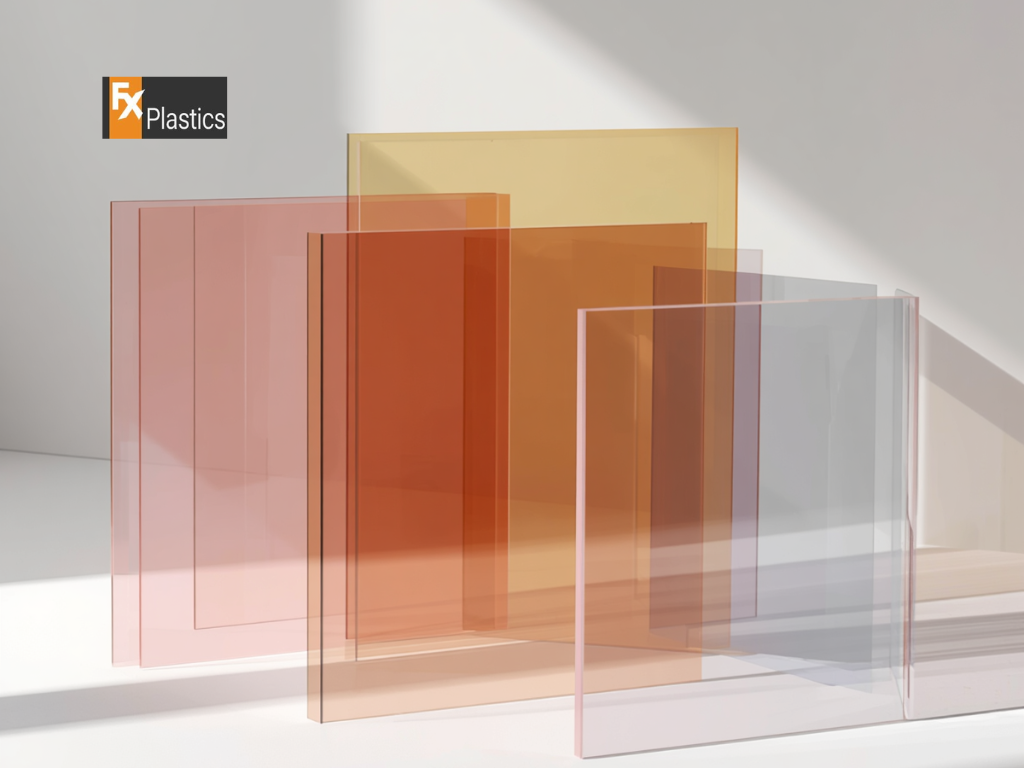
Request help with cut-to-size and custom fabrication
FX Plastics may be contacted when a customer needs help turning measurements, sketches or digital drawings into custom acrylic components.
Its published services include Perspex cutting, CNC laser cutting, CNC routing, machining, CAD-supported design and wider acrylic fabrication. The company describes its work as covering both one-off items and larger production runs, although exact project capacity, materials and current turnaround should be confirmed directly.
Contact may be particularly useful when a project includes detailed shapes, several holes, polished edges, bending, joining or a complete fabricated product rather than a flat sheet.
FX Plastics’ current contact page lists a Penrith address, while its homepage still contains references to Marrickville. Customers should therefore confirm the correct quotation, collection or consultation location before travelling.
Prepare useful project information before enquiring
Before contacting FX Plastics, prepare the finished dimensions, quantity and intended use.
Include the preferred colour, finish and thickness where these have already been selected. When you are unsure, explain the required appearance and performance so the team can discuss suitable material options.
Attach a dimensioned sketch, PDF or accepted CAD file for custom shapes. Mark the front face, grain or surface direction where relevant and identify every edge that needs polishing.
Explain how the component will be installed and whether FX Plastics is being asked to provide only perspex cut to size or broader Design and Fabrication support.
Ask the company to confirm the material, production method, tolerance, edge finish, drawing status, price, lead time and collection or delivery arrangement before approving the order.
A clear specification protects both the customer and fabricator. It reduces assumptions, makes quotations easier to compare and gives the finished component a better chance of fitting and functioning as intended.