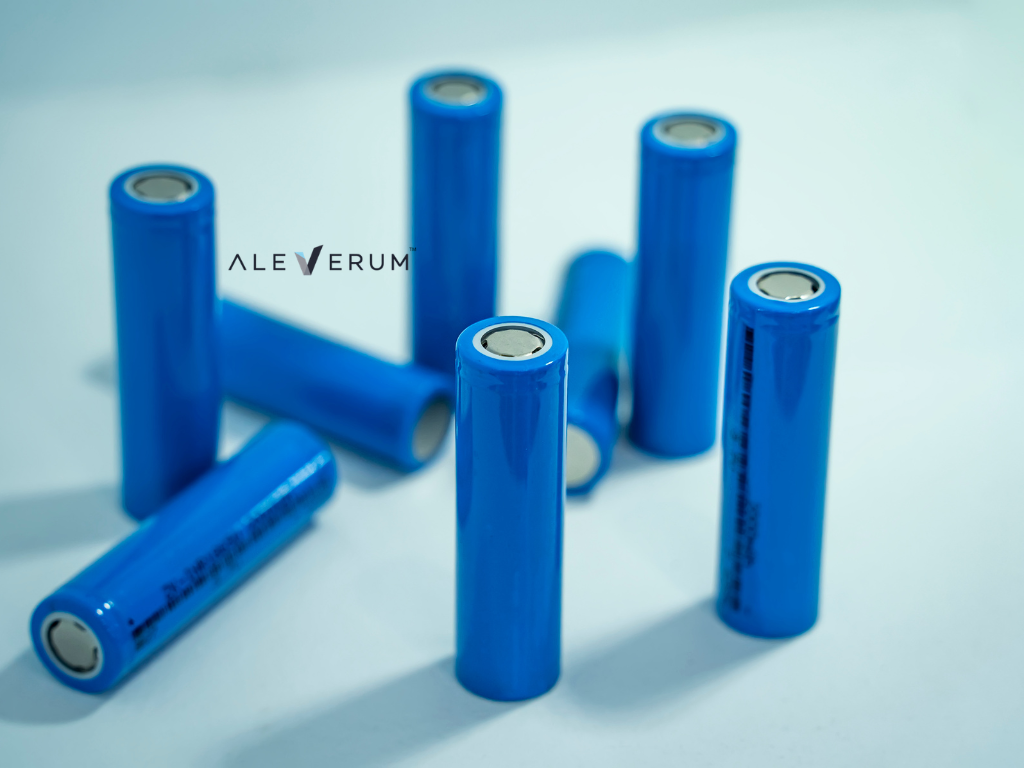
A product digital passport is becoming an important part of how battery information will be structured, accessed and governed in the European Union. For manufacturers, importers and supply-chain organisations, the challenge is not simply creating a QR code. It is making sure the information behind that code is accurate, structured, supported by evidence and available to the right people.
This matters to Australian businesses as well. Regulation (EU) 2023/1542 applies to batteries placed on the EU market or put into service there, regardless of whether they were produced inside or outside the European Union. Australian businesses supplying batteries into European markets therefore need to understand how the requirements may affect their products and supply chains.
The practical starting point is data readiness. Businesses need to understand what information they hold, where it comes from, what evidence supports it and what still needs to be collected before battery-passport requirements begin.
Preparing for a product digital passport Before Battery Passport Rules Apply
What the EU battery-passport requirements mean for businesses
The EU Batteries Regulation is already in force, but the specific battery-passport requirement does not apply to every battery today.
Early next year of 2027, each light means of transport battery, each industrial battery with a capacity greater than 2 kWh, and each electric vehicle battery placed on the EU market or put into service must have an electronic battery passport. The passport must include information relating to the battery model as well as information specific to the individual battery.
The passport is more than an online product page. Under Article 77, it must be accessible through a QR code linked to a unique identifier. The economic operator placing the battery on the market is responsible for ensuring that passport information is accurate, complete and up to date.
Different information can also have different levels of access. Some information is intended to be publicly accessible, while other information is restricted to people with a legitimate interest, notified bodies, market-surveillance authorities or the European Commission. For example, Annex XIII places certain test-report results in an access category limited to notified bodies, market-surveillance authorities and the Commission.
This means businesses should think about information governance as well as publication.
Why businesses should prepare before the compliance date
Waiting until early 2027 to begin an EU digital product passport project could create unnecessary pressure.
Battery information is rarely stored in one place. A manufacturer may have product specifications in a product-management system, supplier declarations in email, test reports in document folders, manufacturing records elsewhere and sustainability information managed by another department.
Before building a passport, the business needs to work out how those records relate to each other.
A useful preparation process starts by identifying the battery models that may be affected, mapping suppliers and materials, reviewing existing evidence, assigning responsibility for information and identifying gaps.
Businesses should also determine which information is model-level and which information needs to follow an individual battery.
That is why the digital product passport regulation should be treated as a product-data and governance project rather than simply a labelling project. A QR code can provide the access point, but it cannot correct incomplete supplier data, outdated documents or unsupported claims.
Article 77 also requires battery-passport information to be structured, machine-readable and searchable, while Article 78 includes requirements concerning access, authentication, reliability and integrity.
Preparing these foundations early makes the later publishing stage much easier.
Building supply chain traceability From Raw Materials to Battery Products

Connecting suppliers, materials, manufacturing and product records
Effective supply chain traceability starts with knowing which information belongs to which product.
For a battery manufacturer, this could mean connecting a battery model with its materials, components, suppliers, manufacturing facility, supporting documentation and relevant life-cycle information.
Instead of keeping those records as separate files, the goal is to create relationships between them.
For example, if a supplier provides documentation relating to a particular material, the business should be able to identify which battery models use that material, which supplier provided it, which document supports the record and whether that evidence is still current.
This becomes especially important when information changes.
If a supplier certificate expires, a material source changes or a manufacturing site changes, teams need to know which product records may be affected. A spreadsheet may work for a small number of records, but complexity increases quickly when a company manages many suppliers, battery models and documents.
Traceability therefore involves more than knowing where a product was manufactured. It means being able to follow the relationships between product identity, materials, suppliers, evidence and life-cycle records.
Moving from global batch traceability to passport-ready product information
global batch traceability can provide an important layer between broad supplier information and individual product records.
Batch or lot information can help businesses connect groups of products with particular production runs, manufacturing locations, materials or supporting records. That is useful when the same product model is manufactured at different times or using inputs from different suppliers.
However, businesses preparing for battery passports should understand where batch-level information ends and individual-battery information begins.
Article 77 requires the battery passport to contain both model-related information and information specific to an individual battery, including information resulting from its use where applicable.
A practical data model might therefore contain several connected levels: supplier, material, component, battery model, manufacturing batch and individual battery.
The exact structure depends on the products and regulatory requirements involved, but the principle is simple. Information should be connected at the level where it can be reliably supported and maintained.
That foundation can make a product digital passport easier to update, review and govern as the battery moves through its life-cycle.
Third-Party Verification and trusted digital information
How independent verification can strengthen confidence in product claims
A Digital Product Passport should not turn a company statement into an independently verified fact simply because the statement appears online.
Trust depends on the evidence behind the information.
For batteries, third-party verification also has a specific regulatory context. The battery due-diligence requirements under Regulation (EU) 2023/1542 include third-party verification by notified bodies. Regulation (EU) 2025/1561 subsequently postponed the application of the relevant battery due-diligence obligations to 2027.
This due-diligence timetable is separate from the battery-passport requirement beginning of 2027. Businesses should avoid treating the two dates as though they represent the same obligation.
Independent evidence can still play an important role in product-data governance before either date.
A product record might be supported by an independently issued test report, declaration, certification document or verification report. Connecting the claim with its evidence allows an authorised reviewer to see where the information came from rather than relying only on a manufacturer’s own statement.
That creates stronger trusted digital information because the product record can show its supporting source and review context.
Connecting certificates, reports and evidence to the right product information
Collecting documents is not enough if users cannot tell what each document supports.
A stronger evidence workflow connects a certificate, declaration, laboratory report, supplier document or verification record to the appropriate product, material, supplier or claim.
It should also be possible to identify important document information such as its issuer, relevant product scope, issue date, expiry date where applicable and review status.
For example, imagine a business has a test report covering one particular battery model. If the report is simply stored in a shared folder called “Certificates”, another team member may later assume it applies to several models.
Connecting the report directly to the correct product record reduces that risk.
The Batteries Regulation itself recognises that not every passport user should see the same information. Annex XIII separates publicly accessible information from information available only to people with a legitimate interest and information restricted to notified bodies, market-surveillance authorities and the Commission.
A useful DPP system therefore needs more than document storage. It needs evidence relationships, review processes and appropriate information access.
Technology can support that process, but it should not be described as replacing an auditor, notified body or certification organisation.
Where blockchain for traceability Fits Into Battery DPP Workflows

Using blockchain to strengthen integrity and auditability
blockchain for traceability can provide an additional integrity layer within a DPP workflow when there is a genuine business need for it.
For example, a system can create a cryptographic record associated with a particular version of a product record or supporting document. If the source record later changes, the cryptographic comparison can help identify that a change has occurred.
This can be useful where organisations want a stronger audit trail around important product information.
It is also relevant to the Batteries Regulation because Article 78 requires data authentication, reliability and integrity to be ensured as part of the technical design and operation of the battery passport.
However, that does not mean the Regulation requires every DPP provider to use blockchain.
The important requirement is the integrity and reliability of the information and the system around it. The technology selected should suit the organisation’s actual governance and traceability requirements.
Understanding what blockchain can and cannot prove
There is an important difference between proving that information has not changed and proving that the information was correct in the first place.
Blockchain can support the first problem. It does not automatically solve the second.
If incorrect supplier information is entered and then recorded using blockchain, the record may help show that the information has remained unchanged. It does not make the original information accurate.
The same applies to certifications and compliance claims. A cryptographic record does not turn an unverified statement into an independently verified one.
For this reason, blockchain should sit alongside proper evidence management, authorised review and clear data responsibility.
Businesses comparing DPP platforms should ask practical questions: What exactly is recorded? Who approves the information first? What happens when a record changes? Can reviewers see the supporting evidence? Is the blockchain element optional or essential to the system?
That provides a much clearer picture than choosing a platform simply because it uses blockchain.
Using GS1 Standards to Support Consistent Battery Product Data
Creating consistent identification across physical and digital products
Product identification becomes more difficult when different suppliers and systems describe the same item in different ways.
GS1 standards are designed to help organisations identify, capture and share information consistently with trading partners. GS1 Australia describes its standards as global and scalable, with uses across different sectors and organisations.
This makes standards particularly relevant to DPP projects where information may need to move between manufacturers, suppliers, systems and other authorised parties.
GS1 has also developed a provisional Digital Product Passport application standard to help users prepare for regulatory requirements concerning identification and data carriers used to access DPP information.
For Australian companies, GS1 Australia can therefore be an important standards reference when assessing product identification and data-sharing approaches.
The purpose is not to add another identifier simply because a DPP is being created. Businesses should first understand the identifiers already used across their products, suppliers and trading relationships.
Connecting identifiers with traceability and DPP information
GS1 Digital Link provides a way to connect GS1 identifiers with online information.
GS1 explains that identifiers such as a GTIN can act as a gateway to online sources of information, including product and supply chain traceability information. Resolver services can direct the same identifier towards different relevant information sources.
This is useful when thinking about the relationship between a physical battery and its digital records.
The identifier is not the passport data itself. It helps create a consistent way to identify the item and reach relevant information.
For organisations assessing standards-aligned DPP services, the supplier should be able to explain how product identifiers are managed, how they connect with product records and how standards are applied in practice.
Aleverum™ is listed by GS1 Australia as an Associate Alliance Partner and supports GS1-aligned Digital Product Passport and traceability workflows. GS1 Australia also makes clear that an Alliance Partner listing does not constitute an endorsement or guarantee of the provider’s products or services.
That distinction matters. Standards alignment should be evaluated by looking at how identifiers and data structures are implemented rather than treating a partnership status as certification.
Choosing the Right DPP Approach for Your Battery Products

Start with battery scope, data readiness and evidence requirements
Businesses should define their requirements before comparing Digital Product Passport platforms.
A good buying process begins with a practical readiness review:
- Identify the battery types and target markets involved.
- Determine whether the products fall within February 2027 battery-passport scope.
- Map where product, material, supplier and life-cycle information currently resides.
- Identify whether information is managed at model, batch, serialised product or several levels.
- Review certificates, declarations, reports and other supporting evidence.
- Determine which information needs public, restricted or internal access.
- Identify the teams responsible for submitting, reviewing, approving and updating information.
- Estimate the number of products, suppliers and records the system needs to manage.
- Check whether existing identifiers, ERP, PLM, PIM, traceability or other business systems need to contribute information.
- Ask how corrections, expired documents and changes to product information will be handled.
Once these questions are answered, it becomes easier to compare services based on actual needs instead of feature lists.
A small organisation with a limited number of battery products may have different requirements from a manufacturer managing thousands of individual records and suppliers across several countries.
Scalability therefore means more than handling a large database. The workflow also needs to remain understandable as more evidence, users, suppliers and product records are added.
How Aleverum™ can support battery DPP workflows
Aleverum™ is designed around structured product information, supplier evidence and governed Digital Product Passport workflows. Its battery support includes data models for material origin, component information, life-cycle events, maintenance records and compliance evidence.
For businesses with fragmented information, the useful starting point is bringing related records together.
Product information can be connected with suppliers, materials, certificates, declarations, test reports and life-cycle records. Aleverum™ also supports review workflows for identifying missing evidence, incomplete information, expired documentation and records that need further investigation.
Reviewed information can then be prepared for QR-linked Digital Product Passport pages and supported structured outputs. The platform also supports GS1 Digital Link principles where applicable and optional blockchain integrity records.
Importantly, these tools do not remove the organisation’s responsibility for the information it publishes. Aleverum™ states that authorised users remain responsible for decisions, approvals and published product information, and that the platform does not independently certify or approve product claims.
For a buyer, that is a useful distinction. A DPP platform should help organise, govern and communicate product information, but it should not be confused with the auditor, testing organisation, certification body or regulatory authority responsible for an external assessment.
When to Contact Aleverum™ About Battery DPP Readiness
Turning battery data into a structured DPP readiness programme
A practical first step is to choose a representative battery product and map its information from beginning to end.
Identify the product record, materials, suppliers, relevant manufacturing information, identifiers, certificates, reports and life-cycle information. Then identify who owns each piece of information and how frequently it may change.
Next, look for gaps.
Can every important claim be traced to a source? Are certificates connected with the correct product? Can outdated evidence be identified? Is information duplicated across systems? Can teams distinguish between public information and restricted information?
These questions show whether the organisation is ready to publish a reliable product digital passport or whether more foundational data work is needed first.
Aleverum™ can be considered when an organisation needs to structure product and supplier information, connect supporting evidence, manage review and governance workflows, and prepare information for Digital Product Passport outputs. Its published platform approach covers product records, evidence relationships, controlled review and battery-specific data workflows rather than treating the passport as only a QR-code page.
The next step should be specific. Instead of simply asking for a DPP demonstration, provide the battery category, intended markets, approximate number of products, supplier structure, current systems and the main information problems you need to solve.
That gives both sides a clearer basis for determining whether the platform suits the use case.
With 2027 approaching, the priority should be getting the underlying information ready before the passport requirement applies. A reliable DPP starts with clear product identity, connected evidence, defined responsibilities and information that can be reviewed and maintained over time.