Ordering a custom acrylic panel can look simple at first. You provide the length and width, choose a thickness and wait for the finished sheet. In practice, several other details can affect whether the panel fits correctly and looks right.
The sheet grade, cutting method, edge finish, hole positions and installation method all matter. A simple measurement mistake can also make the finished part difficult to install.
People searching for Perspex Cutting Sydney services may need anything from one rectangular panel to a large production run. Some need sign faces, display shelves or clear protective screens. Others need shaped components, drilled fixing holes, engraved details or a fully fabricated acrylic product.
This guide explains what to decide before ordering. It also shows how to compare suppliers and prepare a clearer quotation request.
Perspex and acrylic terminology explained
Perspex is a recognised brand of acrylic sheet. Acrylic is also known by its technical name, polymethyl methacrylate or PMMA. In everyday Australian buying conversations, people often use Perspex and acrylic to describe the same general type of clear plastic sheet.
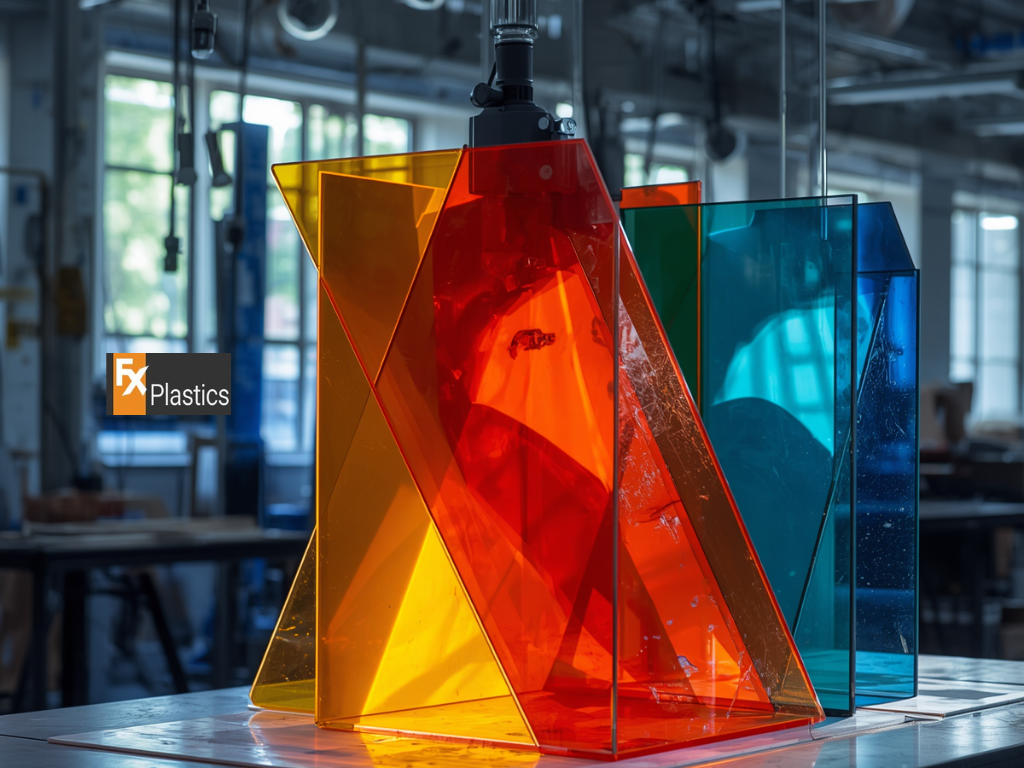
Acrylic is available in different colours, surface finishes, grades and thicknesses. It can be cut, drilled, machined, bent and polished. This makes it suitable for signs, displays, covers, guards, shelves and many custom interior products.
However, not every acrylic sheet is identical. The supplier should confirm the exact material and grade included in the quotation. They should also check whether it suits the chosen cutting, polishing or forming process.
Before ordering, explain how you intend to use the finished panel. A supplier can give more useful advice when they know whether the material will become a sign, shelf, display, barrier or fitted replacement panel.
The difference between cut-to-size supply and fabrication
A basic perspex cut to size order usually involves cutting a flat sheet into one or more specified dimensions. For example, you may need a clear rectangular panel measuring 900 millimetres by 600 millimetres.
More detailed projects require additional fabrication. The panel may need curved corners, internal cut-outs, drilled holes, slots, engraved lettering or polished edges. It may also need bending, bonding or assembly into a finished product.
These services usually follow different production processes. A straight rectangular panel may suit saw cutting, while an intricate profile may need laser cutting or CNC machining.
Make the required scope clear when requesting a quote. Do not assume that holes, polishing or protective packaging form part of a standard cut-to-size price.
A useful enquiry should state whether you need a loose panel or an installation-ready component. This distinction helps the supplier choose the right equipment and include the required finishing work.
Choose the Right Acrylic Sheet
Clear acrylic is a common choice when visibility and light transmission are important. It may suit display cases, protective panels, sign covers and some glazing applications.
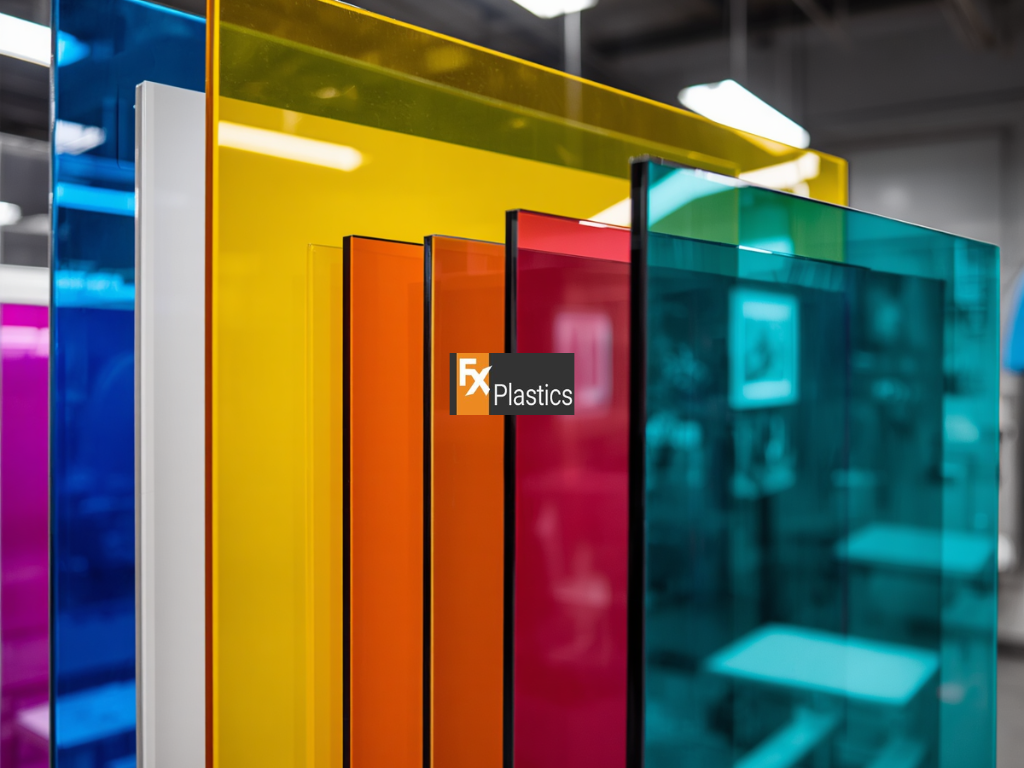
However, clear material is only one option. Australian suppliers also offer acrylic in opal, black, white, coloured, frosted, tinted and mirrored finishes. Available colours and thicknesses vary between products and suppliers.
Opal acrylic can diffuse light and may suit illuminated signs or light features. Frosted finishes can provide privacy while allowing some light through. Coloured or mirrored sheets may suit displays, signage and decorative interiors.
The best finish depends on what the panel needs to do. A screen that needs full visibility requires a different material from a light diffuser or decorative shop display.
Ask to see a physical sample when colour or opacity matters. Online images can help with initial selection, but lighting and screen settings may change how a product appears.
Current colours, finishes and sheet sizes should always be confirmed before ordering.
Selecting thickness for the intended application
Thickness affects the stiffness, weight, appearance and cost of an acrylic panel. A thin sheet may suit a small sign insert or picture-frame cover. A larger shelf, freestanding screen or machine guard may need greater thickness or additional support.
There is no single correct thickness for every application. The finished panel dimensions, fixing method and unsupported span all influence the decision.
A panel held inside a frame receives support around its edges. A shelf or freestanding screen may carry loads or bend under its own weight. These situations require different design considerations.
The installation environment also matters. Explain whether the panel will be used indoors or outdoors. Mention nearby heat, direct sunlight, regular handling or cleaning.
Do not select a thickness only because it was used for another project. Two panels with similar dimensions may perform differently if their support, loads or fixing points change.
For safety-related guards, glazing or load-bearing applications, seek advice from the appropriate designer, engineer or installer. The plastic supplier can provide material information, but they should not guess structural or compliance requirements.
Match the Cutting Method to the Design
Saw cutting, laser cutting and CNC machining
Saw cutting works well for many straight rectangular panels. A panel saw can divide full sheets into accurate lengths and widths. The cut edge may remain suitable for a hidden frame, or it may need further finishing when it will stay visible.
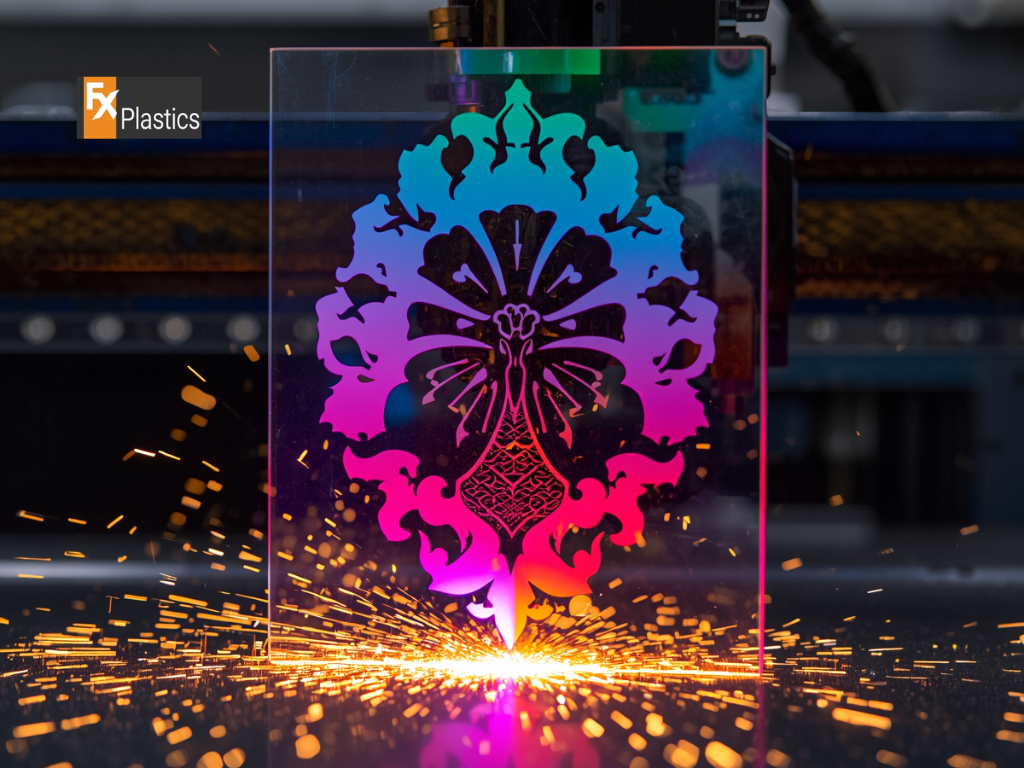
Laser cutting follows a digital design file. It can create detailed profiles, letters and repeatable shapes. On suitable acrylic, the process can also produce a clean, glossy-looking edge.
CNC routing and machining suit many shaped parts, thicker materials and detailed features. A CNC router can create holes, slots, profiles and internal cut-outs. The machined edge may need polishing when appearance is important.
Australian plastic workshops commonly offer a combination of saw cutting, laser cutting, CNC machining and polishing. The best process depends on the material, thickness, design and required finish.
A supplier may also use more than one process on the same component. For example, the workshop may saw a sheet into manageable sections before CNC machining the final profile.
Send the supplier a clear drawing when the part is more complex than a rectangle. They can then review the design and recommend a suitable production method.
How tolerances and edge quality affect the result
A cutting tolerance describes the acceptable variation between the requested measurement and the finished part.
Not every project needs the same tolerance. A loose sign insert may allow more movement than a panel designed to fit closely inside a metal channel.
Tell the supplier when a dimension is critical. The drawing should identify important hole centres, slot widths and fitted edges. Without this information, the workshop may apply its normal production tolerance.
The cutting method can also influence the finished edge. A laser-cut edge may look different from a routed, saw-cut or diamond-polished edge.
Heat from laser cutting can affect some materials or detailed shapes. CNC machining may leave tool marks that require polishing. Saw cutting can leave a functional edge that is suitable for framing but less suitable for a visible feature panel.
Ask the supplier to explain what the quoted edge will look like. A sample can help when the appearance of the finished edge is important.
Prepare Accurate Measurements and Drawings
Begin with the finished width and height. Confirm the unit of measurement and write dimensions in a consistent order.
You should also state the thickness, quantity, colour and intended application. Australian cut-to-size suppliers commonly request these details before preparing a quotation.
For holes, provide the diameter and centre position. The drawing should show the distance from the hole centre to two fixed edges. This is clearer than estimating the position from a photograph.
Identify the dimensions and position of every slot or internal cut-out. Also show whether corners should remain square, receive a small radius or use a larger rounded profile.
A hand-drawn sketch can be enough for a simple part if every measurement is clear. More complex designs may need a PDF, CAD drawing or vector file.
Avoid sending only a photograph with no scale. A photo may show the general shape, but it cannot confirm accurate dimensions.
When replacing an existing panel, measure the original part if possible. Measuring the opening alone may miss overlaps, clearances or hidden fixing details.
Allowances for frames, fixings and installation
A panel that fits inside an opening normally needs some clearance. Ordering it to the exact opening size can make installation difficult.
Measure the opening at several points. Walls, frames and cabinets may not be perfectly square. Use the smallest relevant dimension when the panel must fit inside the opening, then confirm the required allowance with the installer.
If the sheet will cover an opening, state the required overlap. Also explain how you plan to attach it.
Screws, bolts, stand-off fittings, channels and adhesives all create different requirements. Hole diameter and edge distance can affect the risk of cracking around fixings.
Acrylic also responds to temperature changes. Large panels and outdoor installations may need room for movement. The required allowance should come from the material guidance and installation design.
Before placing the order, confirm the final dimensions with the builder, shopfitter, sign installer or other person responsible for installation.
Decide on Edge Finishing and Additional Work
Standard, laser-cut and polished edges
The correct edge finish depends on how visible the edge will be.
A standard saw-cut or machined edge may be suitable when the panel sits inside a frame. It may also suit workshop components where appearance is not a priority.
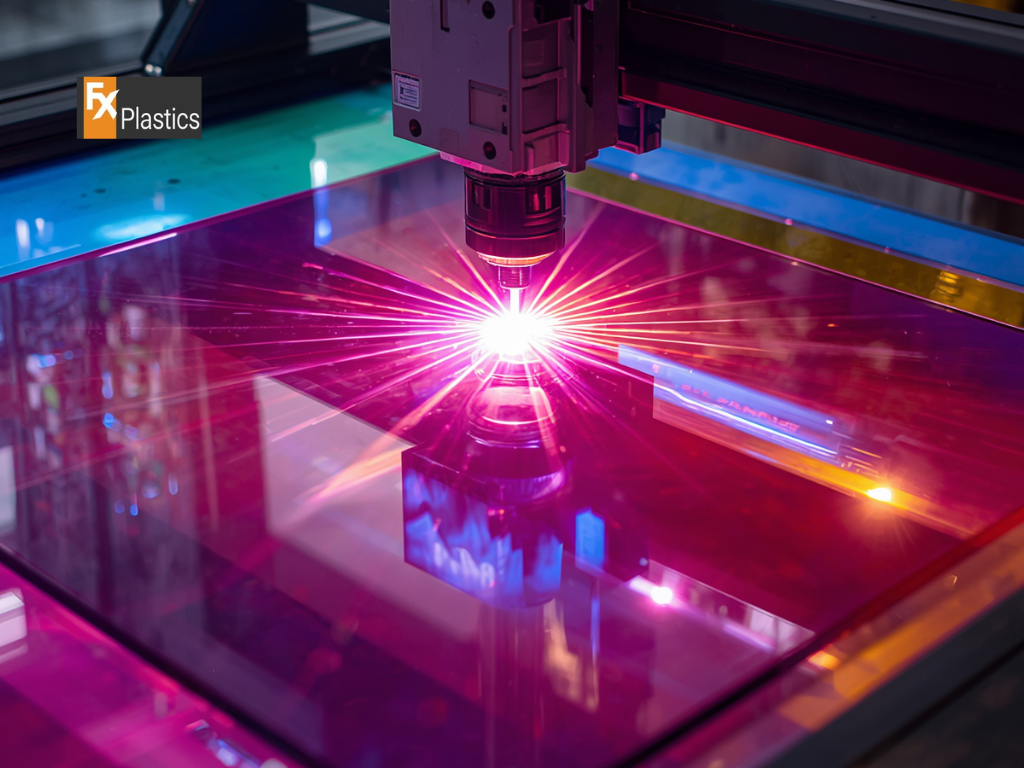
Visible shelves, signs and display panels often need a clearer finish. Common acrylic finishing options include laser finishing, diamond polishing, flame polishing and sanding followed by buffing.
Diamond polishing removes a small amount of material to create a smooth, glossy edge. Flame polishing uses controlled heat to improve the surface of a suitable edge. Sanding and buffing involve several finishing stages.
Each option has its own appearance, cost and suitability. The supplier should recommend a method that matches the material and design.
State which edges require finishing. A rectangular panel may need polishing on all four sides, one visible edge or none at all.
Drilling, bending, engraving and assembly
Perspex cutting is often only the first stage of a custom project.
The workshop may also drill fixing holes, route slots, engrave text or create recesses. Heat bending can form angles and curved components. Bonding and assembly can turn flat pieces into boxes, covers, stands or display units.
These processes require more information than a basic width and height. The supplier may need a drawing, physical sample or clear description of the finished product.
Explain how separate pieces connect. State whether joints must remain visually clear, support a load or resist regular handling.
For a branded display or sign, provide the correct vector artwork. Low-resolution image files may not contain the clean paths needed for accurate cutting or engraving.
Protective film is another detail to discuss. Ask whether it will remain on the sheet during delivery and which surfaces will receive protection.
Complex fabrication may also need a prototype or approved sample before full production. Any prototype, tooling or setup requirements should appear clearly in the quotation.
Compare Perspex Cutting Suppliers in Sydney
When comparing suppliers, make sure every quotation covers the same work.
The quote should identify the acrylic type, colour, thickness, dimensions and quantity. It should also state the cutting process, tolerance, edge finish and additional fabrication.
Ask whether the workshop can complete all required work in-house. Moving a project between several suppliers can make quality control and scheduling more complicated.
FX Plastics lists CNC routing and machining, CNC laser cutting, diamond polishing, CNC saw cutting and cut-to-size services. It also promotes design and fabrication support for acrylic projects.
These capabilities may help when a job requires more than a simple rectangular sheet. However, the company should still confirm whether its equipment, materials and production process suit the exact design.
Compare communication as well as price. A useful supplier should identify missing measurements and explain unclear parts of the request.
The lowest quote may not include polished edges, drilling, packaging or delivery. Check the full scope before choosing.
Collection and delivery in Western Sydney
Location can affect transport costs, collection arrangements and the risk of damage during delivery.
People searching for Cut to Size Plastics Western Sydney or Penrith Plastics Cutting are often looking for a nearby workshop that can supply and finish the material. A local workshop may also make it easier to review samples or discuss a complex part.
FX Plastics lists its current workshop location at Units 1 and 2, 21 Hickeys Road, Penrith, NSW 2750.
Before ordering, confirm whether collection or delivery is available for the finished size. Large panels may require a suitable vehicle, protective packaging and careful unloading.
Ask how the sheet will be protected in transit. Acrylic surfaces can scratch when they rub against hard or dirty materials.
For a construction or shopfitting site, provide access information. Mention stairs, loading docks, restricted delivery times or other conditions that could affect handling.
Current delivery areas, fees and turnaround times should be confirmed directly.
Know When to Contact FX Plastics
Projects that need early design or fabrication advice
A simple rectangle may only require basic dimensions and material details. A shaped or assembled product needs earlier discussion.
Contact the supplier before finalising the design when the project includes tight-fitting components, unusual curves or several aligned holes. Early advice also helps with bends, bonded joints and repeat production.
Large displays, protective enclosures, signage and custom covers may need design and fabrication support. The workshop can review whether the proposed shape suits the material and production process.
FX Plastics describes services that include acrylic fabrication, cut-to-size supply, CNC laser cutting, routing, machining and polishing.
This does not remove the need for a clear brief. The supplier still needs to understand the application, dimensions and expected finish.
Early contact can also reveal practical alternatives. A small change to a hole position, corner radius or sheet thickness may make the part easier to manufacture.
For regulated, structural or safety-related applications, involve the appropriate qualified professional as well as the material supplier.
Information to provide when requesting a quote
Begin by explaining what the finished part will do. State whether it is a screen, cover, sign, shelf, display, guard or replacement panel.
Provide the width, height, thickness and quantity. Include the required colour, opacity or surface finish.
Show all holes, slots, cut-outs and corner radii. Identify critical dimensions and required tolerances. Also explain which edges will remain visible.
Mention any drilling, polishing, bending, engraving, bonding or assembly requirements. Attach a sketch, PDF, CAD drawing or vector file where relevant.
Include the project location and required date. For a perspex cut to size Sydney enquiry, state whether you need collection from Penrith or delivery to another suburb.
Ask the supplier to identify the material, production process and included finishing work in the quotation. Current stock, production timing and delivery availability should be confirmed before approval.
A detailed enquiry gives FX Plastics a stronger basis for reviewing the project. It also makes the final quote easier to compare with other Perspex Sydney suppliers.
The right result starts before the first cut. By confirming the material, measurements, cutting method and finish early, you can reduce avoidable changes and receive a part that is better prepared for installation.
Contact FX Plastics with your dimensions, drawings and intended application to discuss perspex cut to size requirements or a more detailed design and fabrication project.