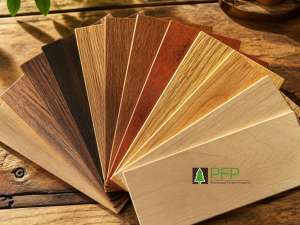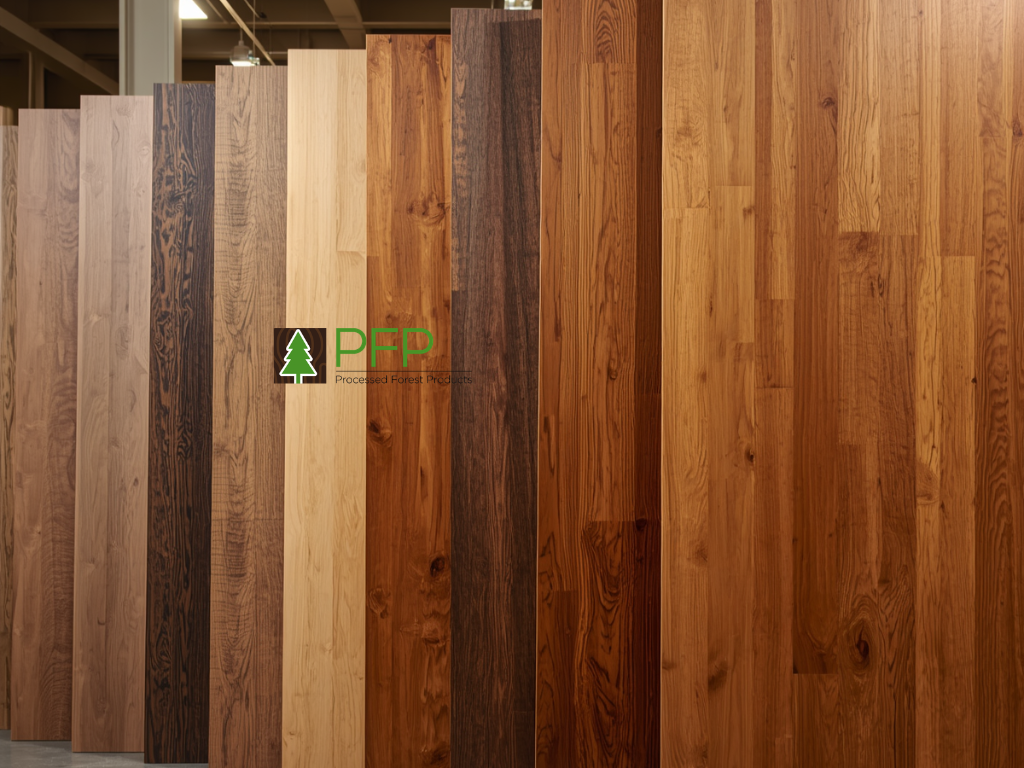
Timber veneer can give a commercial interior the warmth, grain and character of natural timber without requiring every component to be made from solid wood. It is commonly considered for reception areas, wall paneling, cabinetry, doors, furniture and custom joinery where appearance matters.
However, choosing an attractive veneer species is only the beginning.
For architects, interior designers, builders and joiners, the specification also needs to consider the substrate, panel dimensions, grain direction, veneer matching, edge treatment, finish, documentation and the way multiple panels will look together once installed.
This is where early communication with timber veneer suppliers becomes important. A project can look very different depending on how the veneer leaves are selected, arranged and pressed onto panels. WoodSolutions notes that decorative veneers are produced by slicing or peeling timber and that the way the veneer is cut affects the appearance of the grain.
Before placing a commercial order, it is therefore worth working through the visual, technical and supply requirements in enough detail that the design team, fabricator and supplier are all working towards the same result.
Match the panel specification to the application
A veneered reception desk does not necessarily need the same specification as a full-height feature wall.
Start by defining exactly where the timber veneer will be installed and how the finished surface will be used.
For cabinetry, you may need to consider doors, drawer fronts, shelves, exposed ends and the relationship between adjoining panels. A feature wall may place much greater emphasis on continuous grain direction and matching across a large area.
Reception counters, hospitality joinery and furniture may also receive more frequent physical contact, so the finish and edge details deserve particular attention.
WoodSolutions advises that timber used in interiors should be specified with its visual characteristics and resistance to factors such as indentation and abrasion in mind.
This means the project brief should describe more than the desired species. It should also explain what the panel will do once the space is occupied.
Consider the conditions in the finished space
Natural timber products respond to their environment, and the finished application should be considered before the panel construction and finish are chosen.
Think about whether the veneer will be installed in a high-traffic area, close to windows, beside regularly handled doors or in an area that requires frequent cleaning.
The design team should also establish whether the veneered surface is purely decorative or forms part of a wall or ceiling assembly with additional technical requirements.
This is particularly important in commercial projects because the material visible on the surface may only be one component of a larger assembly.
A clear description of the application allows wood veneer suppliers and fabricators to discuss suitable panel options rather than quoting a material without understanding how it will actually be used.
Choose the Species, color and Grain With Natural Variation in Mind
One of the attractions of wood veneers is that they retain the natural grain and figure of real timber.
That also means they should not be specified with the expectation that every sheet will look identical.
color, grain, figure and markings can vary between trees and even between adjacent sections of the same log. The slicing method also changes how the grain appears. Crown-cut veneer, for example, produces a different pattern from other cutting methods.
For a small cabinet, this variation may be relatively easy to manage.
On a long reception counter or a wall made up of many panels, the relationship between sheets becomes much more noticeable.
The specification should therefore communicate whether the design calls for a strongly natural and varied appearance or a more controlled, consistent visual result.
Neither approach is automatically better. What matters is establishing the expectation before material is selected and manufactured.
Use samples as a guide rather than an exact promise
Samples are extremely useful when comparing timber species, color, grain and finishes, but a small sample cannot represent every piece of natural veneer that will appear in a large project.
Use the sample to confirm the general design direction.
Look at whether the grain scale suits the project, whether the color works beside flooring and other finishes, and whether the proposed coating changes the appearance in a desirable way.
For significant commercial installations, it can also be useful to discuss how the actual veneer will be selected or approved before full production where the supplier’s process allows it.
This is particularly relevant when the veneer is a major visual element rather than a small detail.
When comparing wood veneer supplies, ask what type of sample is being provided and how closely it represents the material expected for the project.
That simple question can prevent a design team from treating a small sample as a guarantee of perfectly uniform finished panels.
Decide How the Grain Should Flow Across the Project
Understand why veneer matching changes the finished appearance
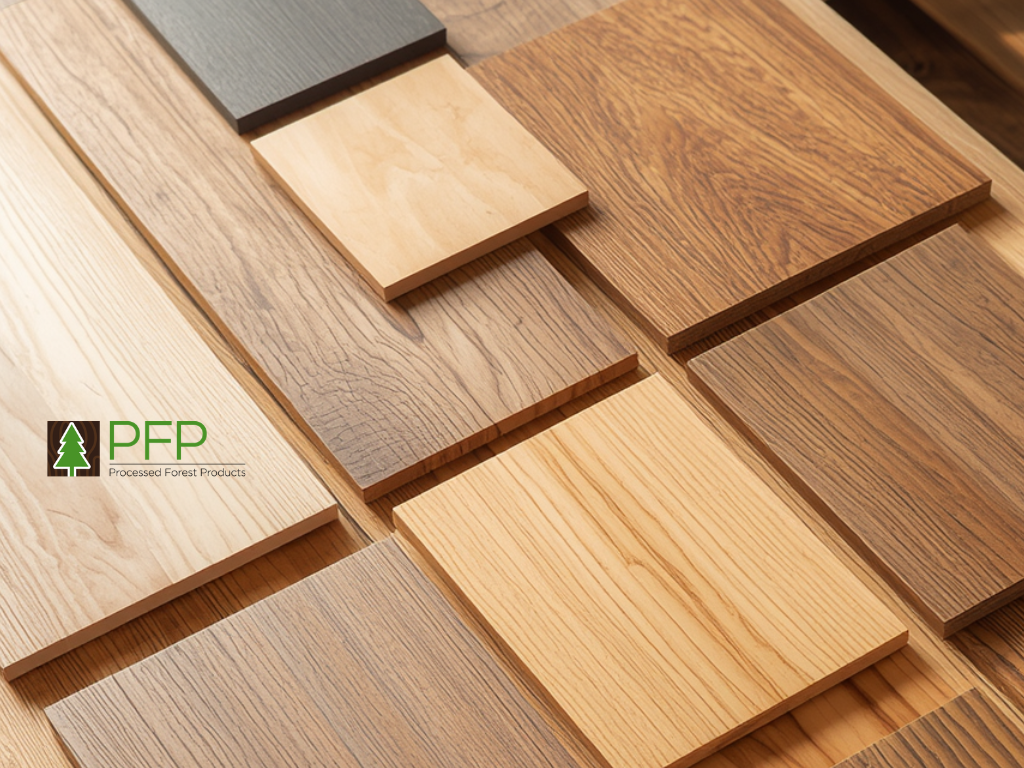
Adjacent veneer leaves can be arranged in different ways to create different visual effects.
WoodSolutions describes the arrangement of similar veneer leaves as “matching” and notes that adjacent leaves often have related grain patterns because they are cut sequentially from the timber.
Book matching is one familiar approach, where adjoining veneer leaves are opened in a mirrored arrangement. Other methods can create a more consistent or deliberately varied effect.
The right approach depends on the design.
A symmetrical reception wall may benefit from a more controlled matching pattern. A large contemporary interior may instead call for a less repetitive appearance.
What should be avoided is leaving the decision until panels have already been manufactured.
The specification should identify the intended grain direction and matching approach where those details are important to the design.
Plan continuous walls and joinery runs as complete compositions
Large installations need more coordination than individual cabinet doors.
If several panels sit beside one another, the design team needs to decide whether the grain is expected to continue visually across the whole elevation.
WoodSolutions warns that buying several veneered boards from the same supplier does not necessarily mean those boards will match end-to-end. Where visual continuity matters, procurement and matching need to be managed accordingly.
This is a crucial point for commercial fit-outs.
Imagine a reception wall made from ten panels. If each panel is ordered independently without considering sequence and grain direction, every individual board may be attractive while the complete wall still looks visually disjointed.
For important feature areas, provide elevations or panel schedules early enough for the timber veneer manufacturer, supplier and fabricator to understand the intended sequence.
Also confirm who is responsible for maintaining that sequence through manufacture, delivery and installation.
The more visually continuous the design, the more important this coordination becomes.
Confirm the Substrate, Panel Size and Edge Treatment
Decorative veneer is typically applied to a panel or board rather than functioning as a thick piece of solid timber.
The substrate therefore forms an important part of the finished product.
Depending on the project, veneered sheet products may use different engineered wood substrates. The appropriate option needs to be considered in relation to the application, fabrication method and project requirements.
WoodSolutions identifies veneer-faced plywood and particleboard among sheet products used for interior paneling and notes that sheet dimensions vary between products and suppliers.
Do not specify only “timber veneer panel” and assume everyone will interpret that phrase in the same way.
Confirm the substrate type, panel thickness and required dimensions before ordering.
This becomes particularly important when veneered panels need to align with other joinery materials or architectural finishes.
Resolve edges, junctions and cut-outs before fabrication
The front face of a panel usually receives most of the design attention, but edges and junctions can determine whether the final installation feels resolved.
Consider what happens where two panels meet.
Will the joint be expressed or concealed? Will exposed edges receive matching timber edging? How will corners be treated? Are there door openings, power outlets, access panels or other cut-outs passing through the veneered surface?
These details should be coordinated before sheets are cut.
If adjoining elements are intended to continue the visual grain, even the position of a joint can influence the result.
WoodSolutions’ guidance on internal timber design illustrates several approaches to joining timber elements and preserving the appearance of adjoining veneer faces, reinforcing the value of resolving junction details during design rather than on site.
Accurate panel dimensions also matter when requesting quotes from timber veneer suppliers because custom pressing, cutting or matching requirements can affect both production planning and price.
Compare timber veneer suppliers by Capability, Not Price Alone
Find out what is actually included in the quotation
A lower panel price does not always mean a lower overall project cost if important services are missing.
Before comparing quotations, establish what each supplier is actually providing.
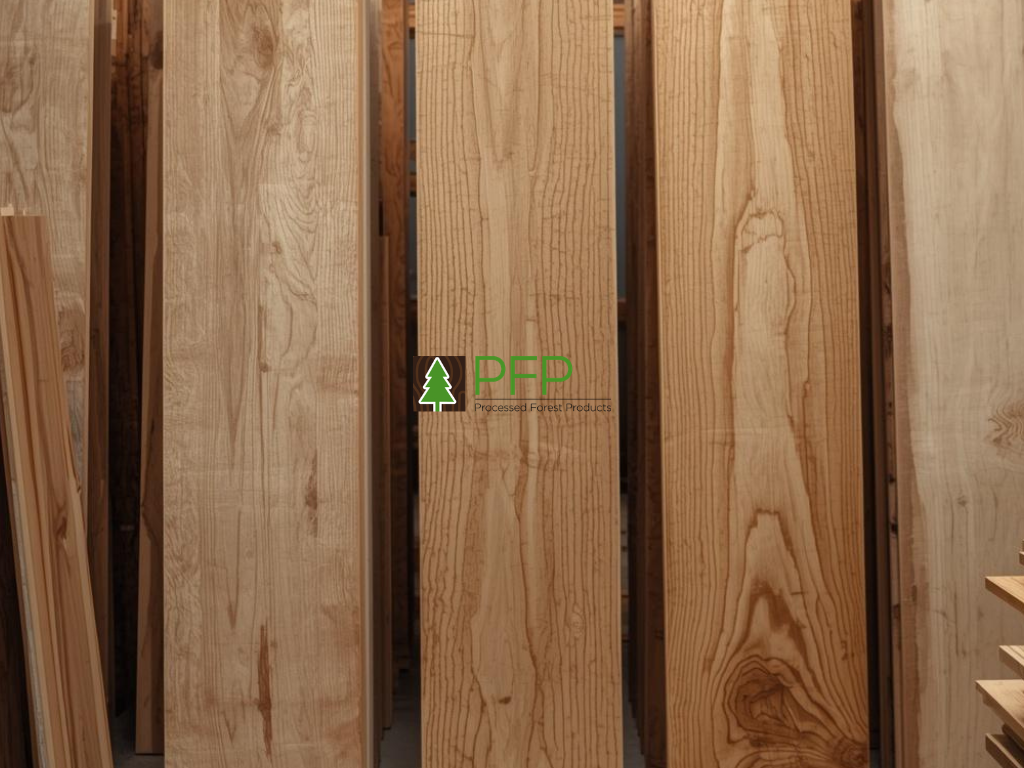
One supplier may quote for raw veneer leaves. Another may provide veneer already pressed to the nominated substrate. Another may offer matching, sequencing, custom panel preparation or other services.
The project team should therefore clarify whether the quote covers the veneer itself, the substrate, panel pressing, matching, edging, finishing, cutting or delivery where relevant.
This is also where the distinction between a reseller, specialist supplier and timber veneer manufacturer can matter.
Do not assume every company offers the same level of processing.
When approaching wood veneer suppliers, provide enough project information for them to quote against the same scope. Otherwise, two prices can appear comparable while representing substantially different products.
Consider availability and repeat-order consistency
Commercial projects often require more material than initially expected.
A panel may be damaged during fabrication, the client may approve additional joinery, or a later project stage may need to visually relate to the original installation.
That makes availability worth discussing before the first order.
Ask whether the selected veneer is a regular product or a limited batch. If matching across the whole project is important, discuss whether enough material should be selected or allocated at the beginning.
This is especially relevant because natural veneer varies.
Ordering an additional board months later may provide the same species but not necessarily the same visual characteristics as the original material.
The best timber veneer suppliers should be assessed on their ability to explain these practical limitations clearly, not on promises of impossible uniformity.
For a commercial project, realistic guidance about natural variation and availability is a stronger trust signal than claiming every panel can look identical.
6. Confirm Certification, Fire Requirements and Finishes Before Approval
Ask for the certification the project actually requires
Sustainability requirements should be written precisely rather than expressed as a vague preference for “sustainable timber”.
If the project requires certified forest products, identify which certification or Chain of Custody documentation needs to be supplied.
Responsible Wood explains that AS 4707 provides Chain of Custody requirements that track certified wood and forest products through ownership, transport and manufacturing to the end consumer.
The important purchasing question is whether the particular material and supply chain proposed for your project can provide the documentation required.
Do not assume that because a supplier offers some certified products, every veneer species in its range carries the same certification.
Confirm the status of the exact selected product before the specification is finalized.
If certification is part of a tender, sustainability requirement or client commitment, make the required evidence part of the procurement discussion rather than trying to obtain it after installation.
Treat fire performance as a project-specific requirement
Commercial interiors may also be subject to fire-hazard requirements depending on the building classification, location and use of the material.
The NCC states that fire-hazard properties of wall and ceiling linings and certain other materials in Class 2 to 9 buildings must comply with the applicable requirements of Specification 7. NSW also has specific provisions applying to relevant internal linings and materials.
This means phrases such as “fire rated timber veneer” should not be used loosely.
The compliance question generally concerns the relevant product or assembly in its actual application, not simply whether the decorative veneer surface has been given a particular marketing description.
Project architects, certifies and other relevant professionals should establish the required performance, and the supplier should provide appropriate evidence for the proposed product where required.
Finishes should also be selected for appearance and service conditions rather than assumed to change the underlying compliance status. The NCC specifically states in the relevant fire-hazard provisions that paint or fire-retardant coatings cannot simply be used to achieve the required fire-hazard properties.
Confirming these matters before approval is far easier than changing a specified panel after procurement has started.
Contact timber veneer sydney and timber veneer nsw Suppliers Early
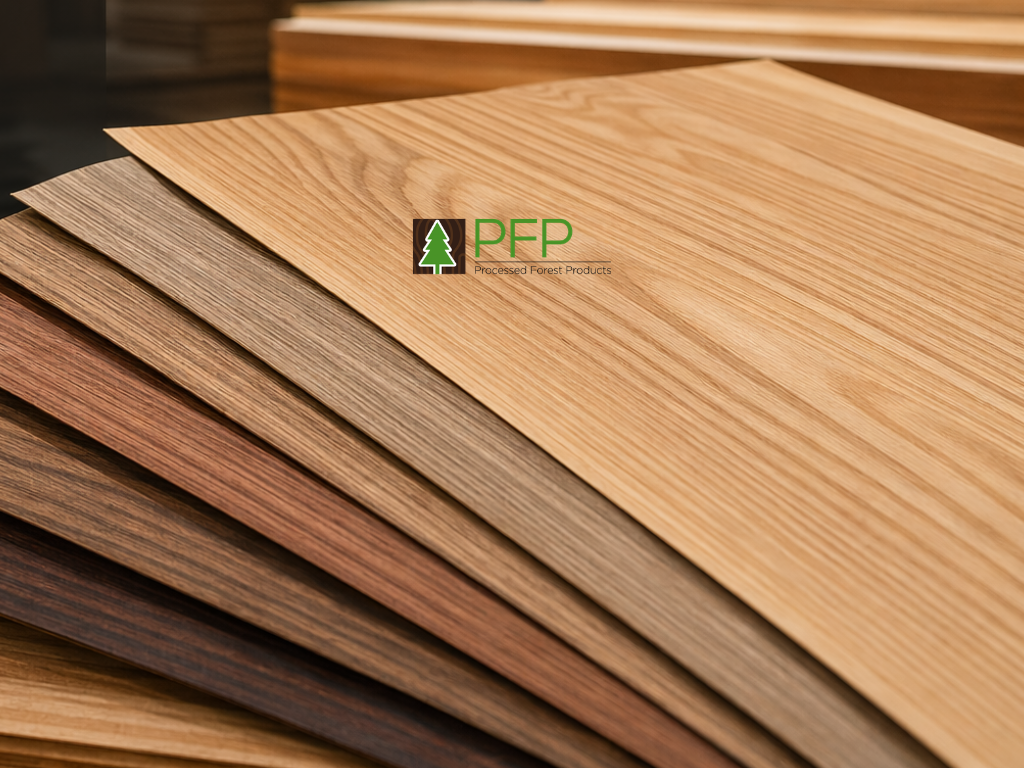
Local supply becomes important when coordination is complex
For straightforward small orders, sourcing may be relatively simple.
For a large commercial project, however, supplier communication can become part of the design process.
A team looking for timber veneer sydney supply may want convenient access to physical samples, discussions about matching and coordination with a Sydney-based joiner or fit-out contractor.
Similarly, a timber veneer nsw project outside metropolitan Sydney may need to consider freight, delivery timing and how panels will be protected in transport.
Location should not be the only factor when choosing a supplier, but it can matter when the project involves repeated sample reviews, custom production or staged deliveries.
The best time to make those inquiries is before the specification becomes difficult to change.
Waiting until construction procurement begins can restrict species availability, matching options or lead-time flexibility.
Give the supplier enough detail to provide useful advice
A supplier can give much better guidance when the inquiry is specific.
Instead of asking only for a price per sheet, explain what the material is being used for, the approximate project quantity, proposed panel dimensions and preferred species.
Describe whether grain matching is important, whether panels form a continuous feature wall, what substrate is required and whether certification or fire-performance documentation is part of the specification.
Also explain the project timing.
Those details allow timber veneer suppliers to identify practical questions before they become site problems.
For example, the supplier may point out that the preferred sheet size affects the panel layout, that additional veneer should be allocated to maintain visual consistency, or that the nominated species has significant natural variation that should be reviewed through samples.
This is where specialist product knowledge adds value.
The aim is not simply to find someone who can supply wood veneers. It is to make sure the material being ordered can realistically deliver the design intent.
Specifying veneered panels successfully comes down to coordination.
Choose the species with natural variation in mind. Decide how grain should move across the space. Confirm the substrate, panel dimensions and edge details. Establish the matching method before production. Verify the documentation actually required for sustainability and fire compliance, and make sure the supplier understands the quantity and visual expectations of the project.
Most importantly, do not leave these decisions until the panels are ready to order.
Early conversations between the designer, joiner, builder and veneer supplier make it much easier to identify limitations while there is still time to resolve them.
That gives commercial project teams a stronger chance of achieving a finished timber veneer installation that looks deliberate, can be documented properly and matches the practical requirements of the space.