Choosing between an excavator and a skid steer loader can make a significant difference to how a construction project is planned. Whether you are digging trenches, preparing a building site or moving soil, understanding the capabilities of each machine is important. For Australian builders and contractors researching construction equipment rental, the best choice depends on the task, site conditions and available working space.
Excavators and skid steer loaders are both used in construction and landscaping, but they perform different functions. Excavators are primarily designed for digging and reaching below ground level, while skid steer loaders are commonly used for loading, carrying and spreading materials.
Before hiring machinery, it helps to compare excavation depth, operating capacity, attachments, access requirements and rental conditions.
This guide explains these differences and provides practical advice for choosing suitable equipment for your project.
What Is the Difference Between an Excavator and a Skid Steer?
Understanding Construction Equipment Rental for Earthmoving
Construction equipment rental allows businesses to access machinery for a defined period without purchasing it outright.
Excavators and skid steer loaders are common choices for earthmoving work, but their designs suit different activities.
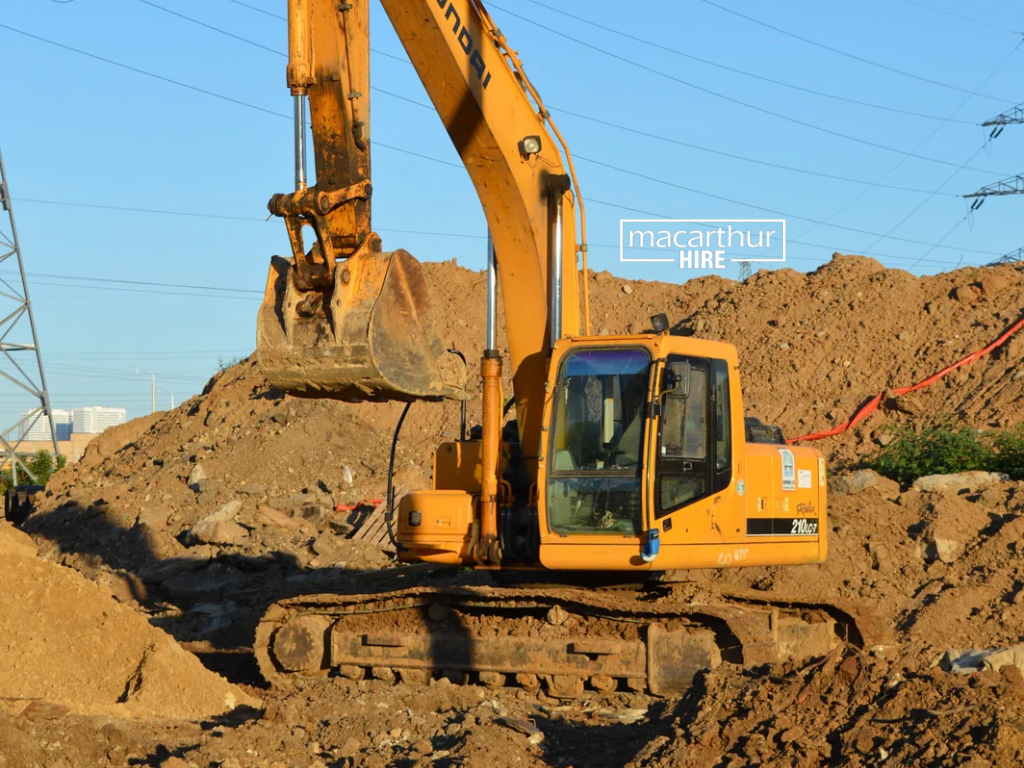
An excavator uses a boom, arm and bucket to dig, lift and position materials within its operating limits. Its rotating upper structure allows the operator to work across a wider area without constantly repositioning the tracks.
A skid steer loader has a front-mounted lifting arrangement designed primarily for loading and transporting materials over suitable ground.
The distinction matters when planning excavation, site preparation and material handling.
A project involving deep trenching will generally need different equipment from one focused on moving stockpiled gravel.
How Each Machine Operates on a Construction Site
Excavators use their digging arm to reach into the ground and remove soil from a designated area.
Their reach and digging depth vary according to machine size and model.
Skid steer loaders use compact steering and front-mounted attachments to manoeuvre around a worksite.
They are particularly useful where repeated loading, carrying or spreading tasks are required.
However, compact dimensions do not automatically mean a machine is suitable for restricted access.
Operators must consider the machine’s working envelope, stability and surrounding hazards.
Understanding these operating differences helps customers compare machinery before committing to a hire arrangement.
Which Machine Is Better for Digging and Site Preparation?
When Excavator Hire Makes More Sense
Excavators are generally the preferred choice for trenching, footing excavation and other tasks requiring controlled digging below ground level.
Their boom and bucket arrangement allows operators to reach into excavation areas while positioning the machine on suitable supporting ground.
For contractors researching excavator hire Macarthur, important considerations include digging depth, reach, machine width and bucket compatibility.
A Kubota excavator may be one option for suitable excavation work, although the capabilities depend on the model.
For example, Macarthur Hire lists the Kubota U55-4 excavator within its equipment range.
Customers should confirm the machine’s specifications and current availability before booking.
The required excavation depth, ground conditions and working area should determine whether a particular excavator is appropriate.
When a Skid Steer Loader Is More Practical
A skid steer loader is often better suited to handling loose materials already on the ground.
Common tasks include moving soil, loading aggregates, shifting stockpiled materials and spreading suitable fill.
Its front-mounted bucket can make repeated loading activities practical, provided the loads remain within the manufacturer’s limits.
For example, an excavator may be needed to dig a trench, while a skid steer could help move suitable excavated material across the site.
Some projects benefit from both machines, although this depends on the amount of work and available space.
When comparing construction equipment rental options, identify whether the main requirement is excavation or material movement.
This distinction can help avoid hiring equipment that is poorly suited to the task.
How Do Site Access and Ground Conditions Affect Equipment Choice?
Comparing Machine Dimensions and Working Space
Site access can influence equipment selection as much as the task itself.
Residential construction sites in Camden, Campbelltown and surrounding Macarthur areas may have gates, fences, neighbouring structures or restricted access paths.
Before arranging construction equipment rental, measure the available entry width and identify overhead or surrounding obstacles.
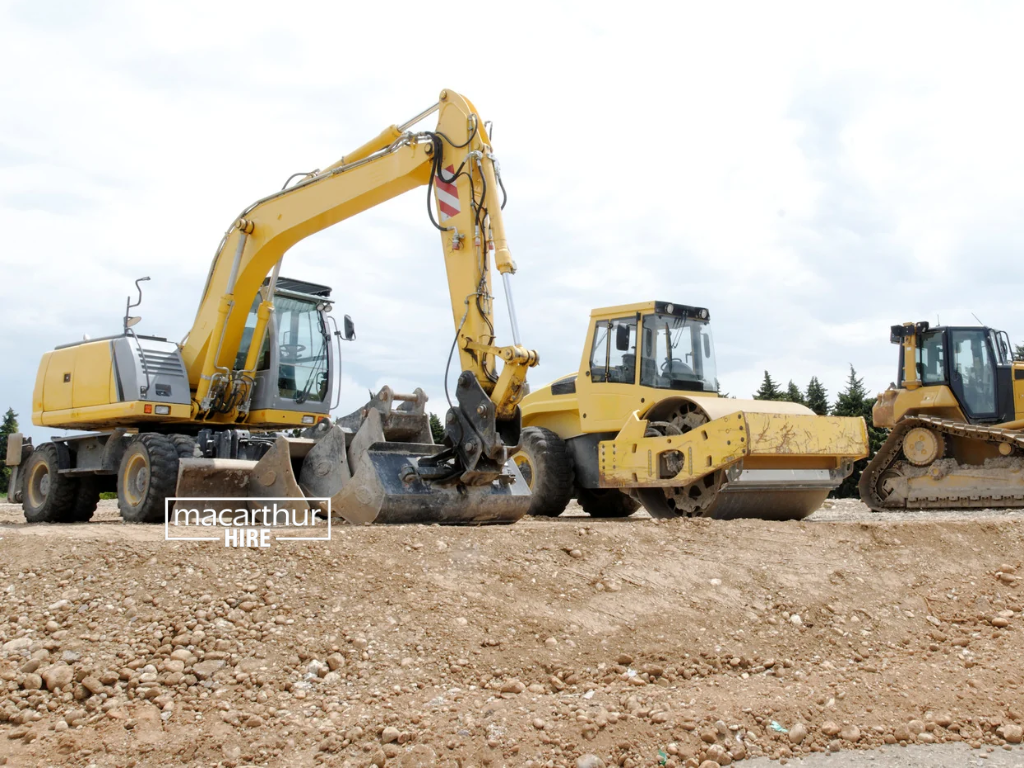
An excavator needs sufficient room for its boom, bucket and rotating upper structure.
A skid steer loader requires appropriate space for manoeuvring and operating its attachments.
Machine width alone does not determine whether equipment will fit safely.
Transport delivery, unloading arrangements and pedestrian access must also be considered.
Providing accurate measurements to the hire supplier helps identify potential access problems before the equipment arrives.
Understanding Soil Conditions and Stability
Different surfaces can affect machine performance and safety.
Firm, level ground may provide suitable conditions for certain equipment, while soft soil, mud or uneven surfaces may introduce additional risks.
Tracked excavators and wheeled skid steer loaders have different traction and ground-contact characteristics.
Tracked loaders may also be available as alternatives to wheeled skid steers.
However, tracks do not guarantee safe operation on soft ground or slopes.
Ground bearing capacity, operating limits and machine stability must be assessed for the particular worksite.
Recent rainfall and nearby excavation activity can also change ground conditions.
Customers should explain these conditions when discussing equipment rental Macarthur options and follow manufacturer instructions for the selected machine.
What Attachments Are Available for Excavators and Skid Steers?
Excavator Buckets, Augers and Grading Attachments
Attachments influence the type of work an excavator can perform.
Digging buckets are commonly used for general excavation, while narrower buckets may suit suitable trenching applications.
Grading buckets can assist with shaping and finishing certain surfaces.
Compatible augers may be used for tasks such as drilling post holes.
However, attachment suitability depends on the excavator’s specifications, hydraulic requirements and operating capacity.
Not every attachment is compatible with every machine.
For construction equipment rental, customers should identify the attachments they need when requesting a quotation.
This allows the supplier to confirm whether compatible equipment is available and whether additional charges apply.
Skid Steer Buckets, Forks and Material Handling
Skid steer loaders can also perform different tasks using compatible attachments.
A general-purpose bucket is commonly used for loading and shifting loose materials.
Pallet forks may be suitable for handling certain loads when the machine and attachment are approved for the task.
Other compatible attachments may assist with grading or surface preparation.
The machine’s rated operating capacity must be considered alongside the attachment’s weight and load characteristics.
Operators should not assume that a machine can safely lift or transport any load simply because an attachment fits.
Before hiring, confirm the intended material, required attachment and manufacturer operating limits.
What Affects Construction Equipment Hire Costs?
Understanding Equipment Hire Macarthur Pricing
Construction equipment rental costs vary depending on the machine, hire period and services required.
Larger equipment, specialised attachments and particular delivery arrangements may affect the final quotation.
Daily, weekly and longer-term hire arrangements can also have different pricing structures.
Businesses comparing equipment hire Macarthur providers should consider the total cost rather than relying only on an advertised daily rate.
Additional items may include delivery, collection, fuel, cleaning and damage-related charges.
Equipment rental Macarthur customers should also clarify the agreed hire period and any charges for late returns or extensions.
Requesting a complete quotation makes it easier to compare available options without assuming one machine type is always cheaper.
Comparing Wet Hire and Dry Hire Arrangements
Dry hire generally means hiring machinery without an operator.
Wet hire includes an operator as part of the service arrangement.
Not every equipment rental provider offers both options, so customers should confirm availability.
Dry hire may suit businesses with competent operators who are familiar with the machinery and can meet relevant safety requirements.
Wet hire may be appropriate where the customer requires an operator as part of the work.
The agreement should identify who is responsible for equipment operation, fuel, transport and other relevant requirements.
For construction equipment rental, understanding these responsibilities helps customers choose an arrangement that suits their project and workforce.
How Do You Choose the Right Equipment and Hire Provider?
Matching Machinery to the Work Required
The best equipment choice begins with a clear description of the job.
For trenches, footings and controlled excavation, an excavator is generally the more appropriate starting point.
For repeated loading and movement of loose materials, a skid steer loader may be more suitable.
Some projects involve both activities and may require more than one machine.
Customers should compare digging depth, reach, operating capacity, attachment requirements and site access before making a decision.
A construction equipment rental provider should be able to explain the specifications of available machinery and identify details that need further assessment.
Macarthur Hire provides equipment and vehicle rental services and lists excavators among its available equipment categories.
Businesses can review its published equipment range and enquire about suitable machinery for their planned work.
Questions to Ask Before Booking Equipment Hire
Before placing an order, confirm the exact equipment model and its operating specifications.
Discuss machine dimensions, required attachments, available hire dates and delivery arrangements.
It is also important to establish whether the hire includes an operator.
Customers should ask about fuel requirements, cleaning conditions, damage liability and procedures for reporting equipment problems.
Where a particular machine is required, confirm availability rather than assuming it will be supplied.
Ask for the quotation to identify included services and additional charges.
For construction equipment rental customers, these details can make the difference between an appropriate booking and equipment that does not meet the project’s requirements.
A clear conversation with the supplier is especially useful when comparing several machines for the same task.
How Can You Prepare Your Site Before Equipment Arrives?
Checking Underground Services and Safe Operating Areas
Construction equipment rental should be planned alongside the site’s safety requirements.
Before excavation, obtain current underground services information through Before You Dig Australia and follow the relevant asset owners’ instructions.
Utility plans indicate potential asset locations but do not necessarily identify their exact position.
Further locating and verification may be required before digging.
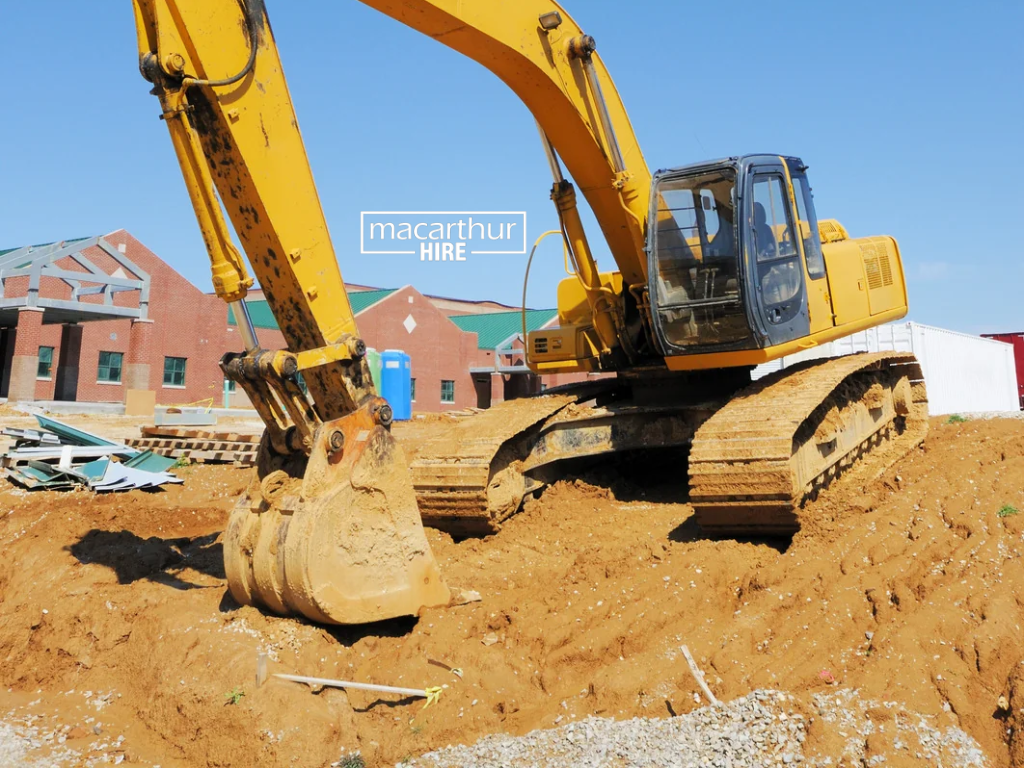
Sites should also be assessed for overhead powerlines, unstable ground, nearby structures and pedestrian movements.
SafeWork NSW requires appropriate risk controls for excavation and earthmoving activities.
High-risk construction work requires a suitable Safe Work Method Statement before work begins.
Operators must also be competent to use the selected machinery and attachments.
Ordinary excavator operation does not automatically require a high-risk work licence in NSW, although specific work activities or equipment may involve additional requirements.
Preparing Your Equipment Hire Requirements
Before contacting a supplier, gather the information needed to describe the project accurately.
This includes the type of work, site location, access dimensions and preferred hire dates.
For excavation, identify the intended digging depth and approximate area involved.
For material handling, explain what needs to be moved, the expected load characteristics and the distances involved.
Ground conditions, attachments and delivery access should also be discussed.
For businesses planning construction equipment rental around Macarthur, Macarthur Hire can be contacted to discuss published equipment options, availability and relevant hire conditions.
Selecting between an excavator and a skid steer loader ultimately depends on what the machine must do.
An excavator is generally better suited to digging and trenching, while a skid steer loader is commonly used for loading and moving materials.
By comparing the tasks involved, machine specifications, site conditions and rental terms, Australian builders and contractors can make more informed equipment hire decisions before starting work.