Perspex is widely used for signs, retail displays, protective panels, shelving, machine guards, furniture, glazing and many other residential and commercial projects.
Its versatility comes from the fact that acrylic can be cut, drilled, routed, bent, polished and fabricated into many different shapes. Australian suppliers commonly offer acrylic in multiple thicknesses, colours and surface finishes, with cutting and edge-finishing options chosen according to the project.
However, ordering a custom acrylic panel involves more than giving a supplier a rough width and height.
The final result depends on the material grade, thickness, finished dimensions, tolerances, hole positions, edge treatment and installation method.
A customer searching for Perspex Cutting Sydney may need one replacement panel, several retail display parts or a complete fabricated item. Each order requires a different level of detail.
This guide explains how to prepare that information, compare cutting services and avoid common mistakes when ordering Perspex cut to size.
Define what the Perspex panel needs to do
The first step is to explain how the finished part will be used.
A clear protective cover has different requirements from a sign face, shelf, machine guard or decorative panel.
For a display, optical clarity and edge appearance may be the main priorities. For a shelf or supported panel, rigidity and load may matter more.
A sign may need coloured, frosted or opal material. A machine guard may require impact performance that should be compared with other plastics before acrylic is selected.
The supplier should know whether the part will be used indoors or outdoors, mounted vertically or horizontally, exposed to heat or supported only at certain points.
The panel size also affects performance. A small piece may remain rigid at a thickness that would flex noticeably across a larger span.
Before requesting Perspex cutting, describe the complete application instead of asking only for the lowest-cost sheet.
Useful details include the finished size, quantity, support points, likely handling, expected appearance and whether the panel will be drilled, bonded or placed inside a frame.
These details allow the supplier to identify questions that may not be obvious from the dimensions alone.
Confirm whether acrylic is the right material
Perspex is a brand name associated with acrylic, also known as PMMA.
Acrylic is valued for its clarity, relatively low weight and ability to be fabricated into custom shapes. Clear acrylic is commonly used where glass-like transparency is required, while coloured, frosted, opal and mirrored grades support decorative and display applications.
However, acrylic is not the right plastic for every project.
Where very high impact resistance is required, another material such as polycarbonate may be more suitable. Where chemical resistance, flexibility or food-contact requirements are central, another plastic may also need to be considered [VERIFY].
The operating temperature should be discussed when the panel will sit close to lighting, machinery, ovens or another heat source.
The fixing method matters as well. Acrylic can crack when holes are poorly positioned, fasteners are overtightened or movement is not allowed for.
A suitable supplier should be willing to recommend another material when the project conditions make acrylic a poor choice.
That advice can be more valuable than simply cutting the requested sheet.
Choose the Right Sheet Type and Thickness
Clear acrylic is often chosen for guards, covers, windows, picture framing and displays where visibility is important.
Frosted or satin acrylic diffuses light and reduces direct visibility through the panel. It may suit privacy screens, signage and decorative interiors.
Opal acrylic is used where light needs to be spread more evenly, such as illuminated signs and light boxes. Different opal grades can vary in how much light they transmit and how effectively they hide the light source.
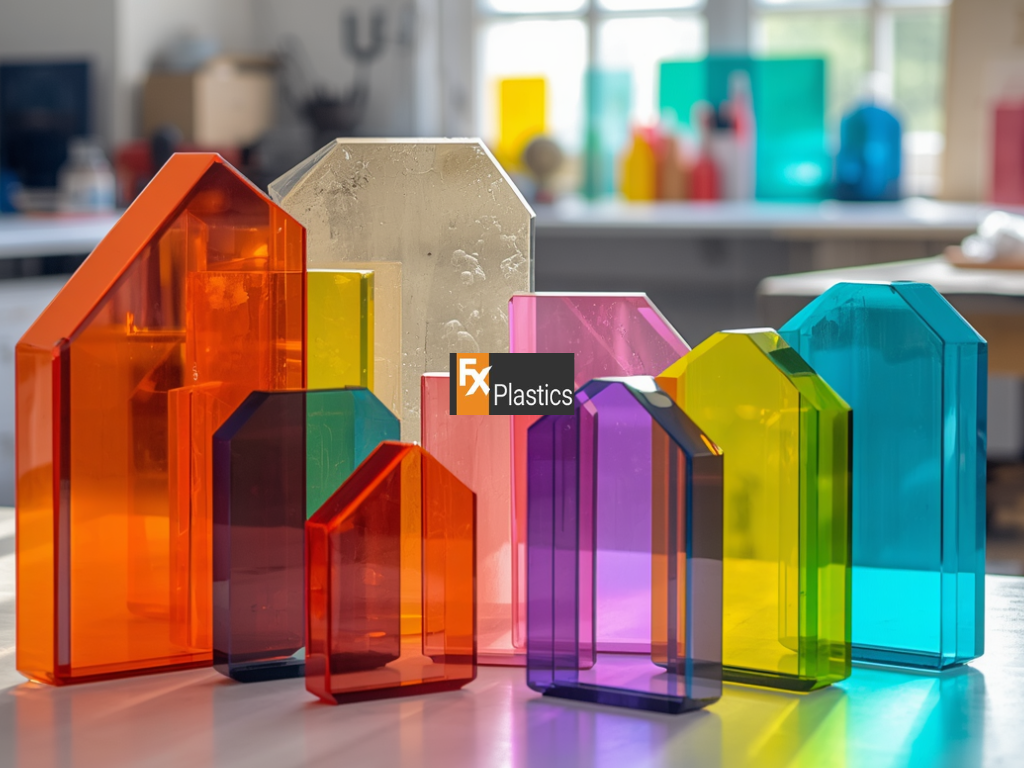
Coloured acrylic may be transparent, translucent or solid. Availability can vary according to colour and thickness.
Black, white and common opal grades may be available in more thicknesses than some specialised colours. Australian acrylic guidance notes that coloured sheets are often concentrated in thinner ranges, although exceptions exist.
Mirror acrylic can create a reflective surface without the same weight as glass mirror, but it needs suitable support to limit visible distortion.
The surface finish also matters. Gloss acrylic reflects more light and can show fingerprints, while matte or satin material may reduce glare and make handling marks less obvious.
Request a physical sample when colour, translucency or light diffusion is important. Screen images may not accurately represent the final material.
Match thickness to size, support and use
Thickness should be selected according to the panel dimensions and how it will be supported.
A small sign face may perform well in a thinner sheet, while a large unsupported panel may need greater thickness to reduce flexing.
Shelves, tabletops and horizontal covers need particular care because they may carry weight.
The distance between supports can matter as much as the overall length.
For vertical screens, the frame, brackets and fixing locations affect rigidity. A panel fixed around all four edges may behave differently from one attached only at two points.
Thicker acrylic can provide greater stiffness, but it also increases weight, cost and machining time.
The thickness can also change the appearance of polished edges. A thick clear edge may become a visible design element in display work.
Australian acrylic ranges can extend from thin sheets through to heavy panels, but stock availability depends on grade, colour and supplier.
A supplier should confirm the recommended thickness for the intended application rather than relying on one general rule.
Where the panel carries a load, forms part of a safety barrier or performs another critical function, appropriate engineering or compliance advice may be required [VERIFY].
Measure the Finished Part Accurately
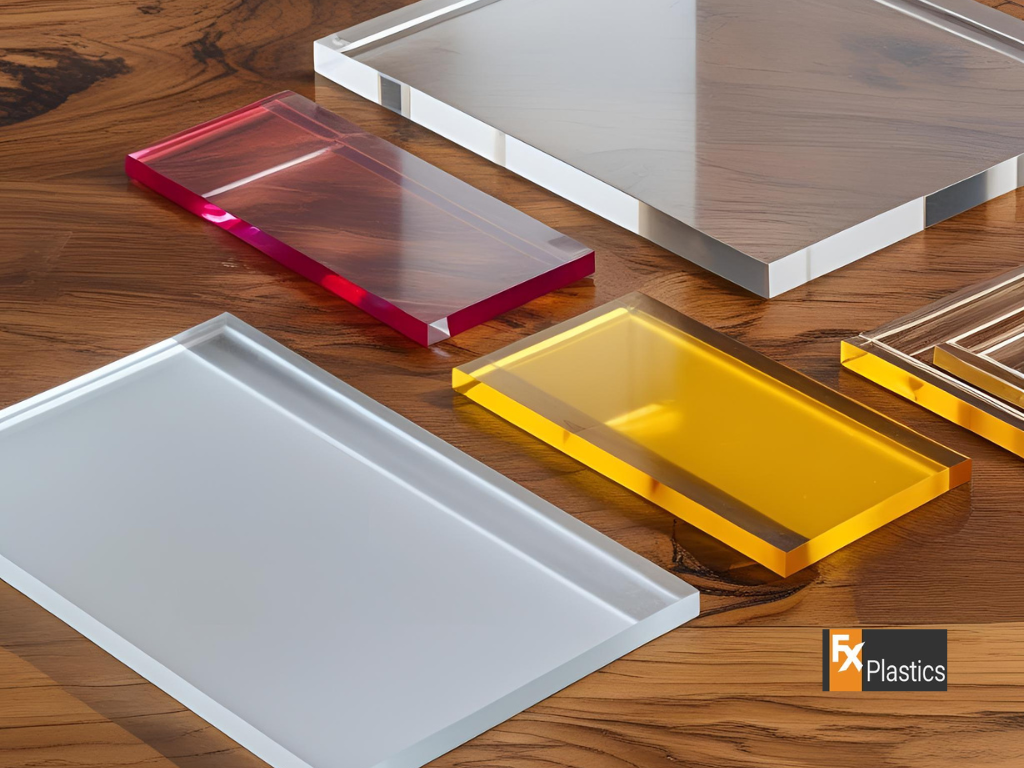
Record dimensions, holes and corner details
Cut-to-size orders should use finished dimensions.
Record the width and height in millimetres and make clear which measurement is which.
Do not assume the supplier will interpret a handwritten note in the same orientation as the customer.
Where the part includes holes, provide the hole diameter and the centre position measured from fixed edges.
For several holes, a labelled drawing is more reliable than a written description.
Slots, notches, cut-outs and curved sections should also be dimensioned.
Corner details need to be identified. A customer may require sharp square corners, slightly eased corners or a specific radius.
For circular or unusually shaped parts, a digital drawing, CAD file or physical template may be necessary.
If the piece must match an existing broken panel, check whether the original part has changed shape or lost material before using it as the only template.
Acrylic suppliers may state general cutting tolerances, but the exact tolerance can depend on the cutting method, thickness and shape. Some Australian cut-to-size services publish tolerances around plus or minus 0.5 millimetres for standard cutting, while tighter or different tolerances may apply to CNC work.
The quotation should confirm the tolerance required for the specific order.
Allow for frames, fittings and installation clearance
A panel intended to fit inside a frame should not automatically be ordered at the exact internal opening size.
A small clearance may be required for installation, thermal movement and manufacturing tolerance.
The amount depends on the panel dimensions, frame design, temperature range and fixing method [VERIFY].
Measure the frame at several points because existing openings may not be perfectly square.
For a replacement window or door insert, check both diagonals as well as width and height.
Where the panel is fixed with screws, the holes should normally be larger than the screw shank so the acrylic is not clamped too tightly. The exact allowance should follow the design and supplier guidance [VERIFY].
Hole centres should not be positioned too close to the edge.
Spacers, washers and suitable fasteners may help spread pressure, but the correct fixing system depends on the application.
For wall-mounted signs, consider the stand-off diameter and whether the hardware covers part of the panel.
For shelving, allow for brackets, supports and any edge treatment that changes the finished dimensions.
A careful drawing prevents the common problem of a correctly cut panel that does not fit because the frame, hardware or required clearance was not considered.
Compare Cutting and Edge-Finishing Methods
Different cutting methods suit different parts.
Panel saw cutting is commonly used for straight rectangular pieces. It can be efficient for standard Perspex cut to size orders and larger quantities.
Laser cutting can produce detailed profiles and a smooth-looking edge on suitable acrylic. It is often used for signage, lettering, decorative shapes and smaller components.
The appearance of a laser-cut edge depends on the material, thickness, machine settings and geometry.
CNC routing is useful for circles, curves, slots, holes and more complex profiles. It can also be appropriate for thicker materials and parts requiring controlled machining.
The chosen method affects tolerance, edge appearance and cost.
A straight rectangular panel may not need CNC machining, while an intricate shape may not be practical with a panel saw.
Ask whether the price includes setup, programming, tooling and edge finishing.
Some suppliers offer digital quoting or specify different precision levels for saw cutting, laser cutting and CNC machining. These published figures should be treated as supplier-specific rather than universal.
Where two components must fit together, explain the fit requirement rather than stating only a general tolerance.
The supplier may need to adjust the dimensions according to the cutting process and assembly method.
Choose a suitable edge finish for the application
A standard cut edge may be acceptable when it will be hidden inside a frame or covered by another component.
For visible furniture, displays and signs, a more refined finish may be needed.
Sanding removes cutting marks and can prepare the edge for further polishing.
Buffing can create a smoother appearance, while flame polishing uses controlled heat to produce a clearer edge on suitable acrylic.
Diamond polishing can create a consistent, high-quality finish on straight edges.
Laser cutting may leave a polished-looking edge without a separate finishing process, although the result varies by thickness and shape.
Australian acrylic fabricators commonly offer laser, diamond-polished, sanded, buffed and flame-polished edge options.
The best edge finish depends on where the part will be seen and handled.
A highly polished edge may be appropriate for a premium display, but unnecessary for a hidden protective panel.
Flame polishing may not suit every edge, material grade or later bonding process [VERIFY].
Ask the supplier whether the selected finish affects dimensions, lead time, cost or suitability for gluing.
Choose the Right Product and Supplier
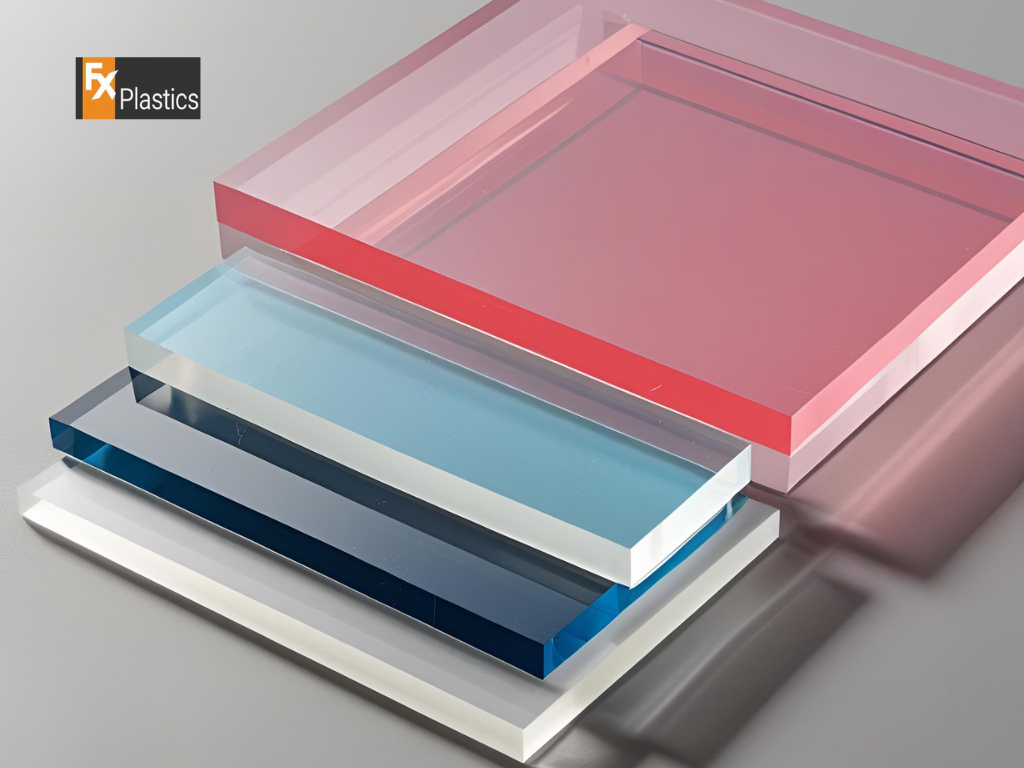
Compare tolerances, capabilities and quotation details
A useful quotation should describe more than the total price.
It should identify the acrylic type, colour, thickness, finished dimensions, quantity, cutting method and edge finish.
Holes, slots, rounded corners, bends and fabricated joins should be listed separately.
The quote should also state the general tolerance or identify where a special tolerance has been requested.
Ask whether protective masking will remain on the sheet during delivery.
For fabricated products, confirm whether the supplier is cutting parts only or assembling the completed item.
When comparing Perspex Cutting Sydney services, check whether the business can complete straight cutting, laser work, CNC routing, drilling, polishing, bending and bonding.
A supplier with several processes may be better placed to recommend the most suitable method rather than forcing every order through one machine.
However, capability claims should still be confirmed for the required sheet thickness, part size and quantity.
Ask whether setup charges apply and whether a prototype is recommended before a larger production run.
For repeat orders, confirm whether drawings or digital files will be retained and how revisions will be controlled.
Check material availability, fabrication and delivery
Material availability can affect lead time.
Clear acrylic is commonly stocked in many thicknesses, while specialised colours, textures and grades may have fewer options.
Confirm whether the quoted product is cast or extruded acrylic and whether that distinction matters for the planned fabrication [VERIFY].
Ask whether the supplier has enough material from one batch when visual consistency is important.
Delivery should also be considered.
Large acrylic panels can be awkward to transport and may scratch or flex when they are not supported properly.
The supplier should explain how the finished parts will be wrapped and whether delivery is available for the panel size.
Customers looking for Cut to Size Plastics Western Sydney may benefit from a nearby collection point, particularly for oversized pieces.
Penrith Plastics Cutting searches often reflect the same local need: accurate cutting, practical collection and access to fabrication advice without transporting full sheets across Sydney.
The most convenient supplier is not always the closest. Cutting capability, communication, packaging and clear specifications may be more important for a custom project.
Prepare for Installation and Maintenance
Acrylic can be drilled and machined, but the process needs suitable tools and technique.
Holes drilled with too much pressure or unsuitable geometry can chip or crack the material.
Where possible, request holes as part of the supplier’s cutting service.
This allows positions to be set from the same drawing used to cut the outside shape.
Fixings should not clamp the acrylic so tightly that the sheet cannot move.
Temperature changes can cause acrylic to expand and contract, particularly across larger panels and outdoor installations [VERIFY].
Allowances may be needed around holes, inside frames and between adjoining panels.
Rubber or plastic washers may help distribute pressure, depending on the fixing system.
Do not place a fastener directly against an unsupported edge.
For signs and covers, confirm whether the panel should be removable for cleaning or maintenance.
Where the part is bonded, use an adhesive and preparation method suitable for the acrylic grade and joint type.
An incorrect adhesive can damage the surface or contribute to stress cracking.
Clean and protect the completed acrylic panel
Acrylic should be cleaned with suitable products and soft materials.
Abrasive pads and harsh cleaners can scratch or haze the surface.
Loose dust should be removed carefully before wiping because dry particles can mark clear acrylic.
Use a soft cloth and a cleaner recommended for acrylic.
Avoid treating the material exactly like ordinary glass unless the cleaner is confirmed as suitable.
Protective masking should normally remain in place during transport and fabrication, but it should be removed according to the supplier’s guidance.
Do not leave temporary masking exposed outdoors for an extended period unless it is designed for that use [VERIFY].
For display panels and signs, inspect the edges and fixings during routine cleaning.
Cracks around holes, loose hardware and unsupported movement should be addressed before the damage spreads.
Acrylic can provide a long-lasting result when it is selected, installed and maintained appropriately, but it is not immune to scratching or poor handling.
When to Contact FX Plastics
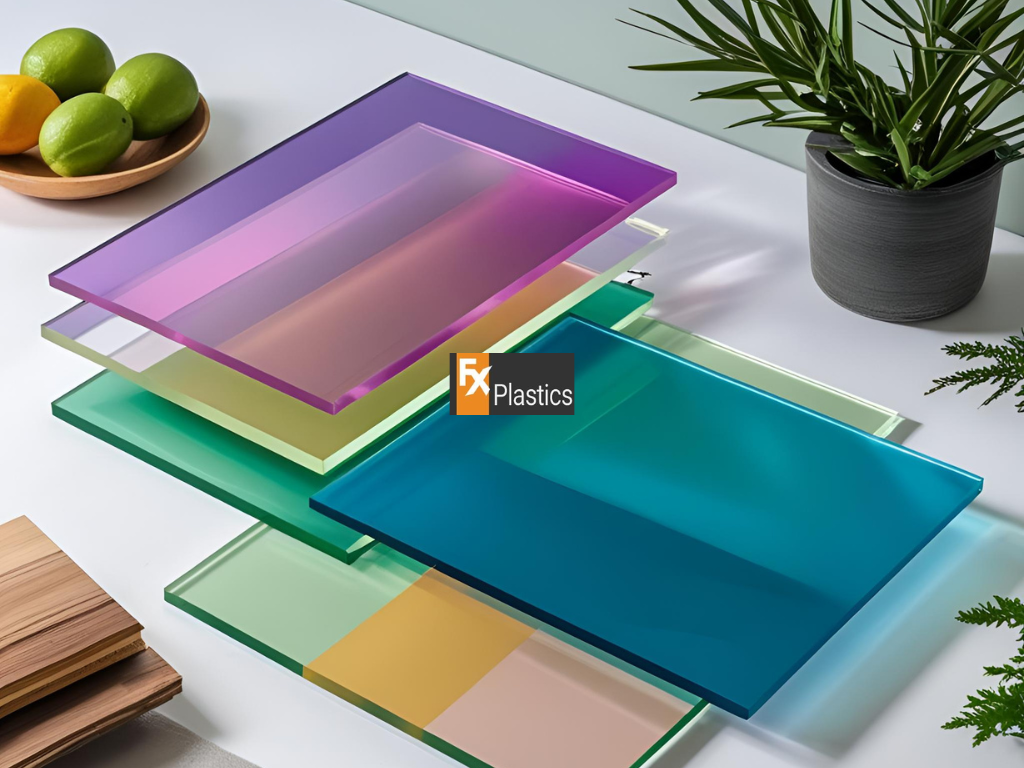
Request cut-to-size Perspex and fabrication advice
FX Plastics may be contacted when a homeowner, builder, designer or business needs help selecting and ordering custom acrylic parts.
Before making contact, explain what the finished piece will be used for.
Provide the width, height, quantity, preferred thickness and colour where known.
Identify whether the panel will be installed indoors or outdoors and whether it will be framed, drilled, screwed, bonded or bent.
For perspex cut to size Sydney enquiries, include a drawing when the part has holes, slots, notches or rounded corners.
If the material type is uncertain, describe the required clarity, strength, appearance and exposure conditions instead of choosing only by name.
FX Plastics can then discuss suitable sheet options, cutting methods and edge finishes.
Material availability, tolerances, fabrication requirements and lead times should be confirmed for the specific order.
Prepare the information needed for an accurate quote
An accurate quotation begins with an accurate brief.
Provide all dimensions in millimetres and clearly identify finished sizes.
For holes, include diameter and centre positions.
For curves, provide the radius or an approved digital drawing.
State which edges will be visible and which finish is required.
Explain whether dimensions are critical for fitting inside an existing frame or joining with another component.
Include photographs of the installation area when they help explain the project, but do not use photographs as a replacement for measurements.
Ask whether the quote includes material, cutting, polishing, drilling, fabrication, packaging and delivery.
Customers searching for perspex sheet Sydney, perspex Sydney or Penrith Plastics Cutting often need more than a rectangular sheet. Discussing the completed application can help identify fabrication details before material is cut.
The strongest Perspex Cutting Sydney order is based on a clear application, confirmed material, accurate drawing and realistic tolerance. These details help the supplier produce a part that fits the project rather than simply cutting a sheet to two approximate dimensions.