
For Australian companies selling goods into Europe, digital product passport regulation is becoming an increasingly important part of export planning.
The important point is that Digital Product Passport requirements do not automatically apply to every Australian business or every product entering Europe. Whether a passport is required depends on the product category, the relevant EU legislation and the economic operator responsible for placing the product on the European market.
For exporters, this means the first step is not choosing software or generating a QR code. It is understanding which rules apply to the product and whether the business already holds the information needed to support those requirements.
That information may include product identifiers, technical records, materials, supplier information, manufacturing details and supporting evidence. Preparing these records early can make future Digital Product Passport requirements easier to manage.
When Can Digital Product Passport Rules Affect Australian Exporters?
Australian businesses can be affected by Digital Product Passport requirements when products they manufacture or supply are placed on the EU market and fall within a regulated product category.
Being located outside the European Union does not necessarily remove the practical need to provide product information. Australian manufacturers may need to work with European importers, distributors or other economic operators that have responsibilities when products enter the market.
Why exporters need to understand their EU market role
For products covered by relevant EU rules, the economic operator responsible for placing the product on the market may need to confirm that applicable conformity and Digital Product Passport requirements have been addressed.
An Australian manufacturer may therefore need to provide its European partner with product identifiers, technical documents, supplier records or other required information.
This creates an important information relationship between the exporter and the organisation responsible for market entry.
Rather than treating digital product passport regulation as something that only concerns European companies, Australian exporters should consider how it may influence their own product information and export processes.
Requirements depend on the product category
Not every product entering the EU currently needs a Digital Product Passport.
Requirements are being introduced progressively through product-specific legislation. Those rules can determine what information needs to be available, how users access it and whether the relevant passport is created at model, batch or individual item level.
Batteries are among the first major product groups approaching mandatory passport requirements, with relevant battery passport obligations beginning in February 2027.
Other product categories are following separate implementation pathways.
For exporters, the starting point should therefore be identifying the legislation that applies to the actual product rather than assuming that every EU-bound product needs the same type of passport.
Understanding Who Holds Responsibility in Europe
Digital Product Passport requirements can involve several types of economic operators, including manufacturers, importers, distributors and authorised representatives.
Understanding these roles matters because responsibility for providing, maintaining or registering product information can depend on how the product enters the European market.
Sharing information with economic operators
Manufacturers may have responsibilities relating to product identification, conformity and technical documentation.
Importers can also have obligations relating to the products they place on the EU market.
For an Australian exporter, this does not automatically mean establishing a European operation. It does mean that the parties involved need a clear process for exchanging the required information.
This becomes particularly important when product specifications, supplier details or supporting evidence change after the initial product record has been prepared.
A clear division of responsibilities can make updates easier and reduce uncertainty about who maintains each part of the information.
Why supply chain information also matters
Digital Product Passport requirements can reach beyond the final manufacturer.
An Australian exporter may rely on material suppliers, component producers or contract manufacturers for important product information. The exporter may then need to provide that information to the European importer or another responsible party.
This means product information can move through several organisations before the product reaches the EU market.
If supplier records are incomplete, outdated or difficult to trace, those weaknesses can become a problem further downstream.
Exporters can prepare by identifying which suppliers hold important information and establishing clearer responsibility for collecting and maintaining those records.
Prepare Product Information Before the Export Deadline

A QR code can provide access to Digital Product Passport information connected to an exported product.
At its core, Digital Product Passport regulation is an information-management requirement.
The visible passport is only useful when the records behind it are properly structured and available when required.
For Australian exporters, improving that information foundation before products reach Europe can make later compliance work much easier.
Start with the information required for the product
The exact information needed will depend on the relevant product-specific legislation.
Depending on the category, requirements may involve product identifiers, manufacturer and importer information, technical documentation, facility details, conformity information and other product records.
Some product groups may also require information relating to materials, environmental characteristics, repair, reuse or recycling.
This is why exporters should avoid creating one universal passport template and assuming it will be appropriate for every product.
A stronger approach is to first determine what the relevant product rules require, then compare those requirements with the information already available internally.
Any gaps can then be addressed before they become an export problem.
Supplier records may be part of the passport process
Many businesses will find that not all required information exists within their own systems.
Material composition, component information, manufacturing records or environmental documentation may sit with suppliers.
Where those records currently arrive through spreadsheets, emails, PDFs or shared folders, the exporter may need a more structured way to connect them with the correct product.
This becomes more important as supply chains become more complex.
A finished product may include several components sourced from different suppliers, each supported by its own records.
Connecting products, materials, suppliers, facilities and evidence can make that information easier to review and maintain.
It can also contribute to trusted digital information by retaining information about source and context without implying that every supplier statement has automatically been independently verified.
Product Identifiers and QR Codes Are Only Part of the System
Digital Product Passport rules also address how physical products connect with their digital records.
Unique identifiers and data carriers play an important role here, but they should not be confused with the complete passport.
A QR code can provide access to a passport. It is not the passport itself.
Matching product identifiers with the correct record
A Digital Product Passport needs to remain connected with the product it describes.
Depending on the relevant rules, the passport may apply to a model, production batch or individual item.
That level of identification matters.
Where model-level information is permitted, several products may share the same underlying passport information. In other situations, more granular identification may be needed.
Australian exporters should therefore consider whether their existing product identifiers can be reliably connected with the Digital Product Passport records required for the relevant product category.
Internal identifiers that work well for inventory purposes may need to operate alongside identifiers used for external product information.
Understanding the role of the data carrier
A data carrier provides the physical connection between the product and the relevant digital information.
Depending on the rules, it may appear directly on the product, packaging or supporting documentation.
QR codes are one practical example.
When scanned, the code can direct the user to the appropriate digital record. The detailed information itself remains managed within the relevant digital environment.
This distinction matters when comparing technology.
A system that can generate a QR code may solve the access problem without solving the wider challenge of organising product, supplier, evidence and lifecycle information.
Exporters should therefore consider the information behind the code rather than evaluating software on QR functionality alone.
Product Passport Information Needs Ongoing Maintenance
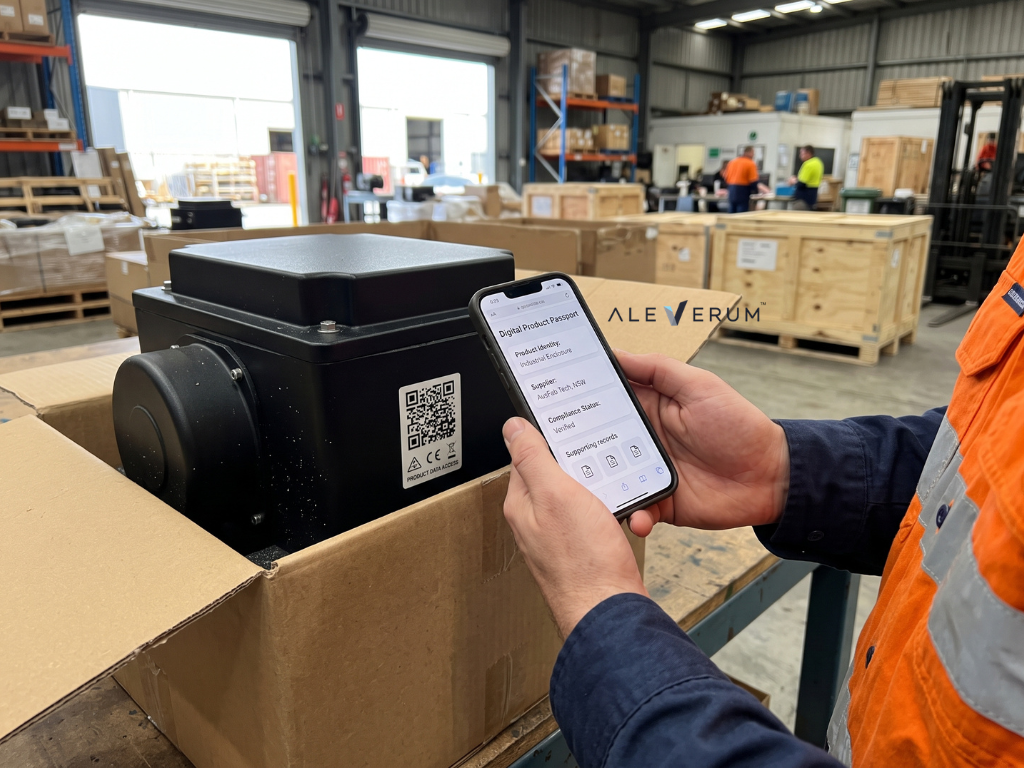
Supplier, material and component information can form an important part of Digital Product Passport preparation.
Creating the first passport is not the end of the information-management process.
Products, suppliers and documents can change throughout the commercial life of a product.
For exporters, the ability to maintain those changes may be just as important as preparing the initial record.
Maintain a history of important changes
Materials may be substituted. Suppliers may change. Manufacturing locations can move. Technical documentation may be revised.
Where those changes affect regulated product information, the associated Digital Product Passport records may also need attention.
A digital product passport platform can help maintain the relationship between current and earlier information without simply overwriting the historical record.
This can be particularly useful where different batches or product versions use different components or suppliers.
Maintaining a clear history allows teams to understand what information applied to a particular product at a particular time.
For businesses exporting multiple product lines, this can make later investigations and updates more manageable.
Keep the context behind the information
Digital Product Passport regulation also highlights the importance of information provenance.
Useful product records should make it possible to understand where important information originated, who provided it, what evidence supports it and whether it has subsequently changed.
This helps create a clearer basis for trusted digital information.
However, traceability and verification are not the same thing.
A platform may demonstrate that a declaration was provided by a particular supplier and supported by a particular document. That does not automatically establish that the supplier’s claim has been independently verified.
Keeping those concepts separate allows businesses to provide greater transparency without overstating what their information systems can prove.
Choosing Technology for Digital Product Passport Readiness
Digital Product Passport preparation can require more than publishing a product page.
The right level of technology depends on the complexity of the products, the business’s existing information systems and the amount of supplier information that needs to be managed.
A business with a small product range and already structured records may need something relatively straightforward.
A manufacturer with several product families and a multi-tiered supply chain may require much broader information governance.
Look beyond the public-facing passport
A useful Digital Product Passport platform should support the information work that takes place before and after the final passport is published.
For exporters, this may include product information, supplier records, material and component relationships, supporting evidence, identifiers, permissions and version history.
Integration is another important consideration.
Relevant information may already exist in ERP, PIM, PLM, procurement or document-management systems. Requiring teams to recreate all of that information manually can introduce unnecessary duplication.
A stronger approach is to consider how the platform exchanges information with existing enterprise systems.
Businesses should also review export and API capabilities so that important information can remain reusable if technology or regulatory requirements change later.
Compare different types of passport technology
Passport software solutions can perform very different roles.
Some are primarily designed to create a product page and make it accessible through a QR code.
Others provide deeper capabilities for product information governance, supplier records, supporting evidence and integration.
Aleverum™ is designed around a governed product and asset information foundation that can connect products, suppliers, materials, facilities and supporting evidence while maintaining Data Pedigree around source, evidence, methodology, history and governance context.
For Australian exporters comparing Aleverum™ with other Digital Product Passport platforms, the useful question is not simply which system has the most features.
Consider whether the platform can support the actual export workflow.
Can supplier information remain connected with the correct product? Can historical information be retained when records change? Can the required information move between internal systems and the organisations responsible for EU market access?
These practical questions provide a better basis for choosing a system than the appearance of the public passport alone.
Build Digital Product Passports Into Export Planning
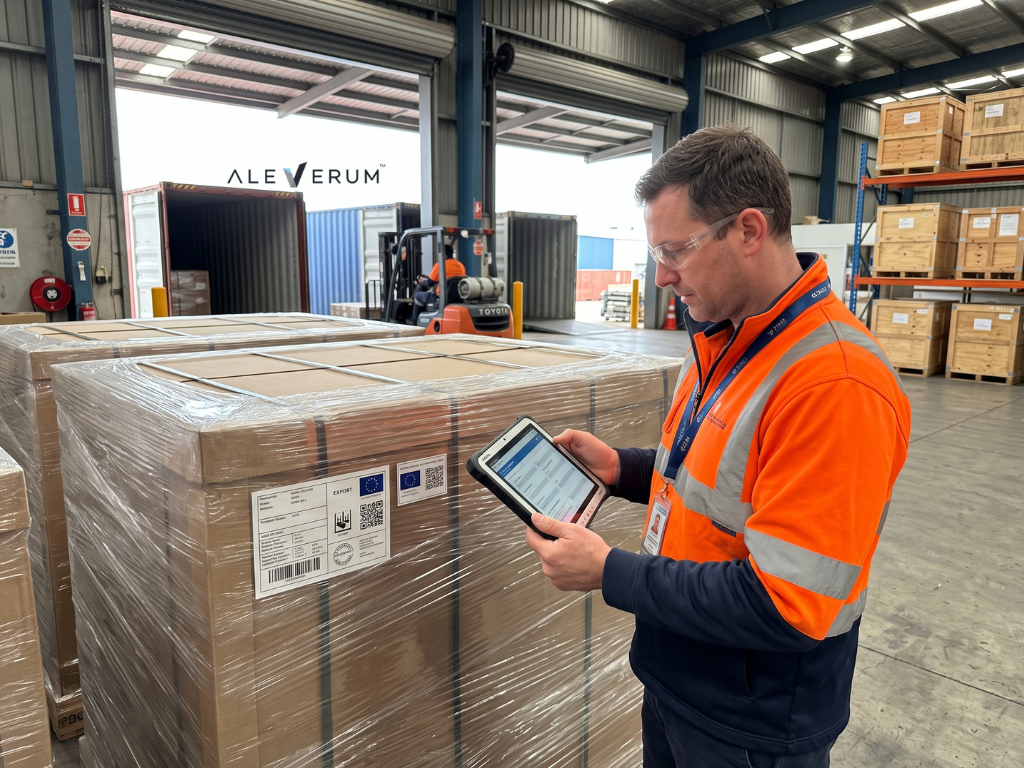
Structured product information can help Australian exporters prepare for evolving EU Digital Product Passport requirements.
Digital Product Passport regulation will continue developing as individual product categories move through their respective implementation processes.
Australian exporters therefore need an approach that can adapt as requirements change.
That does not mean trying to predict every future rule. It means building a product information foundation that can accommodate additional requirements without starting again each time.
Make product information part of normal export management
Digital Product Passport preparation is easier when it becomes part of routine product and export processes.
Businesses can begin by identifying which products are sold into Europe and determining which legislation applies.
The next step is understanding who places those products on the European market and which information needs to move between the exporter and that organisation.
From there, the business can review where the required information already exists.
Some records may sit in product management systems. Others may remain with suppliers or in technical documentation.
Where that information is already organised and connected, adapting it to future passport requirements can be more straightforward.
Where it remains spread across spreadsheets, email chains and unrelated document folders, improving the underlying information management may be the more immediate priority.
Build an information foundation that can evolve
Preparing for Digital Product Passport regulation does not require businesses to collect every conceivable product data point.
The more practical goal is to maintain the information that is already important in a consistent, reusable way.
Product identifiers, supplier relationships, facilities, evidence, information ownership and change history can provide a strong foundation.
The EU Digital Product Passport Registry became operational in July 2026, while product-specific requirements continue to develop.
For Australian exporters, this creates a useful opportunity to assess readiness before more products become subject to detailed requirements.
Start by identifying the products most likely to be affected, clarifying the role of the relevant European economic operators and reviewing whether the supporting product information can already be located and maintained reliably.
Where information remains fragmented, Aleverum™ can support a governed approach to connecting product, supplier, material, facility and evidence information.
The objective is not simply to create another digital record. It is to establish an information foundation that can remain useful as products, export relationships and Digital Product Passport requirements continue to evolve.