Commercial refrigeration is central to the daily operation of cafés, restaurants, bakeries, supermarkets, caterers and other food businesses. The right equipment helps staff store ingredients, organise stock and maintain suitable food temperatures throughout the working day.
However, the largest fridge or most advanced system is not automatically the best choice. A business needs equipment that fits the menu, available floor space, delivery schedule, kitchen workflow and expected volume of trade.
Commercial refrigeration sydney businesses compare may include upright cabinets, under-bench fridges, display refrigerators, freezers, commercial modular cool rooms, blast chillers and blast freezers. Each type serves a different purpose, so the selection process should begin with how the equipment will actually be used.
Australian commercial refrigerated cabinets used in retail and hospitality are covered by current Greenhouse and Energy Minimum Standards requirements. Covered products include refrigerated display cabinets, storage cabinets and some ice cream cabinets, with minimum energy performance and testing requirements applying to registered models.
A careful purchase decision should therefore consider capacity, temperature performance, energy information, installation conditions, cleaning, maintenance and after-sales support rather than focusing only on the initial price.
Match refrigeration to the menu and daily workflow
The menu has a direct effect on the type and amount of refrigeration required.
A café may need under-bench storage close to the coffee and food preparation areas, along with a display cabinet for sandwiches, cakes or drinks. A restaurant may require separate refrigeration for meat, seafood, vegetables, dairy products, sauces and prepared food.
A bakery may need chilled storage for cream, butter, fillings and finished products. A butcher, deli or supermarket may require display equipment that keeps products visible while maintaining controlled temperatures.
Before comparing commercial refrigeration equipment for sale, write down which foods will be stored, how often deliveries arrive and where the ingredients are used.
Equipment placed near the point of use may improve workflow. For example, an under-bench fridge beside a preparation station can reduce unnecessary movement, while bulk ingredients may be better stored in a cool room away from the busiest work area.
The business should also consider peak periods. A refrigerator that is adequate during quiet trade may become overcrowded before weekends, events or seasonal demand.
Refrigeration should support the kitchen rather than force staff to move products repeatedly between unsuitable locations.
Estimate storage capacity without overcrowding the kitchen
Capacity should be based on usable storage rather than the external size of the cabinet alone.
Shelves, door space, ventilation gaps and the shape of containers all affect how much stock can be stored safely and conveniently.
Overfilling a refrigerator can restrict airflow and make products difficult to find. It can also encourage poor stock rotation when new deliveries are placed in front of older ingredients.
At the same time, buying equipment that is much larger than required may use valuable kitchen space and increase operating costs.
Measure the typical stock held between deliveries. Include busy periods, but avoid basing the entire system on one unusual event unless that level of demand occurs regularly.
Door configuration also affects practical capacity. Solid doors may suit back-of-house storage, while glass doors allow staff to see stock before opening the cabinet.
Drawers may be useful beneath a preparation bench, while full-height upright cabinets may provide better vertical storage where floor space is limited.
A supplier should help compare internal dimensions, shelf arrangements and loading limits rather than relying only on total litre capacity.
Compare the Main Refrigeration Options
Commercial fridges Sydney businesses use can include upright cabinets, under-counter units, preparation counters, drinks fridges and display cabinets.
An upright fridge can suit general kitchen storage because it provides several shelves within a relatively small floor area.
Under-bench equipment keeps ingredients close to the work surface and may suit cafés, bars, sandwich shops and compact commercial kitchens.
Preparation counters combine refrigerated storage with a worktop. Some also include ingredient wells for pizza, salads or sandwich preparation.
Display refrigerators are designed to store products while keeping them visible to customers. Airflow, lighting, shelf arrangement and door design may all affect how well the product is presented.
A freezer is required where products must remain frozen rather than chilled. The cabinet should suit the food type, packaging and frequency of access.
Do not use household equipment as an automatic substitute for commercial refrigeration. Commercial kitchens may place greater demands on door openings, loading, ambient temperature and daily operating hours.
The chosen model should be suitable for the intended environment and product type. Supplier claims about temperature performance should be supported by current specifications and registration details where applicable.
When commercial modular cool rooms are more suitable
Commercial modular cool rooms may be more practical when the business needs bulk refrigerated storage that cannot be handled efficiently by several separate cabinets.
A cool room can provide walk-in access, shelving flexibility and space for large deliveries. It may suit restaurants, hotels, caterers, food manufacturers, supermarkets and venues with high stock turnover.
However, a cool room requires careful planning. The business needs enough floor space, suitable access, insulated panels, refrigeration equipment, lighting and a door location that works with the kitchen layout.
The room should not be selected only according to its external dimensions. Shelving, aisle space and evaporator placement affect the usable capacity.
The floor, drainage and surrounding structure may also need consideration, depending on the system and site.
Staff should be able to enter, locate stock and rotate products without blocking the doorway or placing items where airflow is restricted.
A modular system may allow some flexibility in size and layout, but the supplier should confirm what can realistically be changed or expanded later.
Before choosing a cool room instead of several cabinets, compare installation cost, maintenance access, stock organisation and the operational effect if the system develops a fault.
Understand Blast Chilling and Blast Freezing
When a commercial blast chiller may be useful
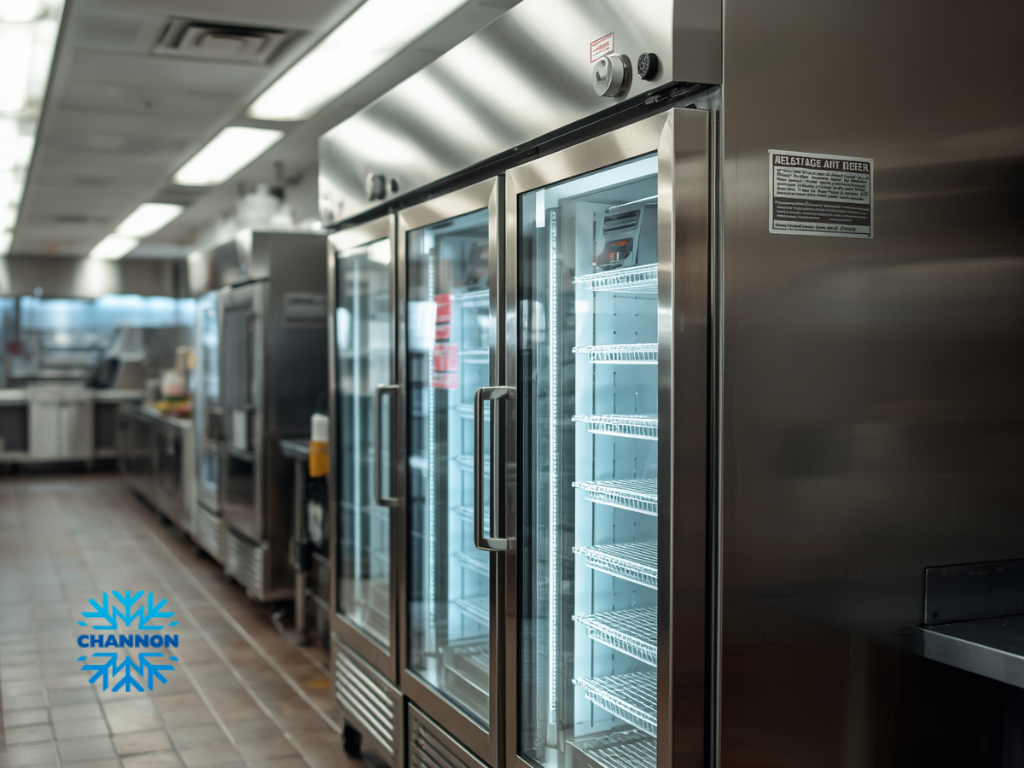
A commercial blast chiller is designed to reduce the temperature of cooked or prepared food more quickly than ordinary refrigeration.
It may be useful for caterers, restaurants, bakeries, production kitchens and food businesses that prepare batches in advance.
A standard refrigerator is primarily intended to hold food at a controlled chilled temperature. Placing large quantities of hot food inside can increase the cabinet load and may affect other stored products.
A blast chiller is designed for rapid cooling using strong, controlled airflow. The required cooling process should still follow the food business’s approved procedures and current food-safety requirements.
The equipment should be selected according to batch size, tray type, food depth and the number of cycles required each day.
Buying a unit that is too small may create delays, while an oversized unit may add cost without improving the workflow.
The business should also plan what happens after the chilling cycle. Products may need to be labelled, covered and transferred to suitable chilled storage.
A blast chiller is not a substitute for the normal refrigerator. It supports a specific cooling stage before food is stored or used.
How a blast freezer serves a different purpose
A blast freezer is intended to freeze food rapidly rather than simply reduce it to a chilled temperature.
This may help businesses that produce frozen meals, bakery products, desserts or prepared food for later distribution or sale.
The correct equipment depends on the target temperature, product type, package size and production volume.
A blast freezer may require more electrical capacity and produce a greater heat load than a smaller commercial refrigerator. These requirements should be checked before purchase.
The business should also confirm whether the kitchen has enough room for loading trays, transferring products and cleaning the unit.
A product advertised as a combined blast chiller and freezer may offer more flexibility, but the specifications should be reviewed carefully. Capacity can differ between chilling and freezing cycles.
When comparing a blast chiller with a blast freezer, focus on the actual production process. A business that only needs rapid chilling should not pay for freezing capability it will rarely use.
Likewise, a standard freezer should not be assumed to perform the same rapid process as equipment designed for blast freezing.
Check Installation and Site Requirements
Measure space, access, ventilation and power
Commercial refrigeration equipment should not be ordered until the installation area has been measured properly.
Check the width, depth and height of the space, including any benches, pipes, shelving, door frames and ceiling restrictions.
Delivery access is equally important. A cabinet may fit the final location but be too wide to pass through a doorway, corridor, lift or kitchen entrance.
Door swing and drawer clearance should be included in the measurements. Staff need enough room to open the unit and remove shelves or trays.
Refrigeration equipment also releases heat. The manufacturer’s ventilation requirements should be followed so the condenser can operate effectively.
Placing equipment in a hot, enclosed or poorly ventilated area may affect performance and make maintenance more difficult.
Power requirements must be confirmed before installation. Some equipment may require a dedicated outlet, higher electrical capacity or three-phase power.
Do not assume the existing outlet is suitable because it is physically close to the proposed location. An appropriately qualified electrician may need to assess the supply.
Large cool rooms, blast chillers and blast freezers may also require coordination between refrigeration technicians, electricians, builders and kitchen equipment installers.
Plan drainage, door clearance and service access
Some refrigeration equipment may require drainage for condensate, defrost water or cleaning.
The supplier should explain whether a drain is needed, where it must be located and whether a pump or other arrangement is included.
The floor should be level and suitable for the weight of the equipment. Adjustable feet or castors may help with positioning, but they do not correct every site issue.
Service access should remain available after installation. Technicians may need to reach condensers, control panels, fans or electrical components.
Installing a cabinet tightly between walls or permanent joinery can make future repairs slower or more expensive.
For modular cool rooms, allow enough room around the panels and refrigeration system for installation and maintenance.
The door should not interfere with staff movement, emergency paths or other kitchen equipment.
If the unit will be positioned near cooking appliances, consider the effect of heat, grease and restricted airflow.
A site plan or photographs may help the supplier prepare an initial recommendation, but a site inspection can still be necessary for larger or more complex systems.
Choose the Right Equipment and Supplier
Compare performance, capacity and total ownership cost
The purchase price is only one part of the cost of commercial refrigeration.
Businesses should also consider expected energy use, servicing, cleaning, replacement parts and the effect of equipment failure.
Commercial refrigerated cabinets covered by Australian requirements must meet relevant minimum energy performance standards. Energy Rating information also allows registered products and applicable efficiency data to be checked, although a physical Energy Rating Label is not mandatory on every covered commercial cabinet.
When comparing models, review the stated energy consumption and test conditions. Actual use can vary according to ambient temperature, loading, door openings, maintenance and operating practices.
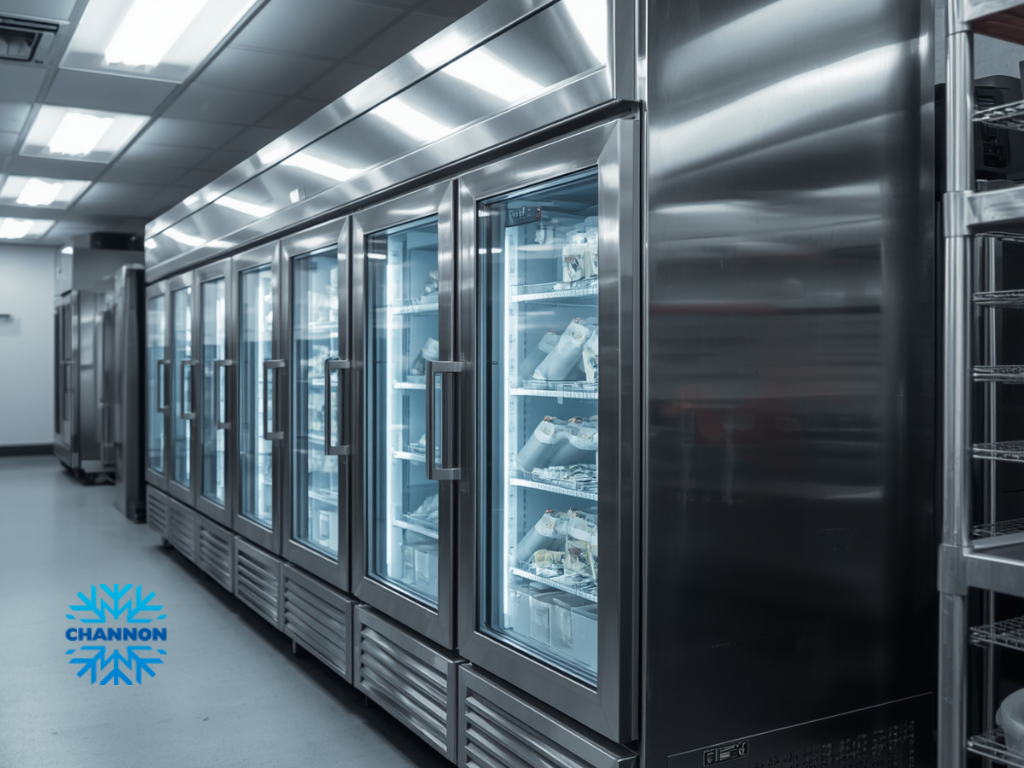
Cabinet construction also matters. Shelves, hinges, door seals, handles and internal surfaces should suit frequent commercial use.
Check how easily the condenser, filters, shelves and drainage areas can be cleaned.
The temperature range must suit the intended products. A drinks cabinet may not be the correct choice for storing all food types.
Businesses comparing commercial refrigeration sales Sydney suppliers offer should request a clear product specification rather than relying only on promotional descriptions.
Review warranties, servicing and product support
A commercial refrigerator may operate every day, so after-sales support can be as important as the original purchase.
Ask who handles warranty service and whether support is provided by the seller, manufacturer or another authorised technician.
The warranty should explain the coverage period, included parts, labour conditions and exclusions.
Check whether servicing is available in Sydney and whether common replacement parts can be sourced.
A supplier should also explain whether installation is included or arranged separately.
For larger systems, ask who commissions the equipment and what records are supplied after installation.
Training may be useful when the equipment includes programmable cycles, temperature logging or specialised controls.
The business should know who to contact when the equipment shows an alarm, fails to reach temperature or develops excessive condensation.
No supplier can guarantee that equipment will never fail. Claims about fixed energy savings, maintenance-free operation or guaranteed equipment life should be supported by current documentation.
Plan for Food Safety and Ongoing Maintenance
Commercial refrigeration should support the food business’s temperature-control procedures.
Staff should know which products belong in each unit and what action to take when a temperature reading is outside the expected range.
A suitable thermometer or monitoring system may be needed, depending on the equipment and food-safety process.
Readings should be checked using the method required by the business’s food-safety procedures. The cabinet display should not automatically be treated as the only verification method.
Shelves should be organised so that air can circulate and raw products are separated appropriately from ready-to-eat food.
Containers should be covered, labelled and rotated according to the business’s stock-control system.
Door openings should be kept practical. Staff should know where products are located before holding a door open for an extended period.
A refrigeration alarm should not be ignored or repeatedly reset without investigation.
NSW enforcement reporting has continued to identify failures involving food stored or displayed without proper temperature control, reinforcing the importance of equipment performance and daily operating procedures.
Maintain seals, airflow and cleaning routines
Routine cleaning and inspection can help refrigeration equipment operate as intended.
Door seals should be checked for splitting, looseness or areas where the door no longer closes properly.
Condenser areas and filters should be cleaned according to the manufacturer’s instructions. Dust and grease can restrict airflow and make the system work harder.
Air vents inside the cabinet should not be blocked by boxes, trays or containers.
Drainage areas should be kept clear, and unexplained water or ice should be investigated rather than treated as normal.
Staff should report unusual noise, frequent cycling, temperature changes, condensation or damaged doors.
Maintenance should be completed by appropriately qualified technicians where refrigeration, electrical or sealed-system work is involved.
Keep service records, warranty information and equipment model details in an accessible location.
A planned maintenance schedule should reflect the equipment type, environment, operating hours and manufacturer’s advice rather than one generic interval for every unit.
When to Contact Channon
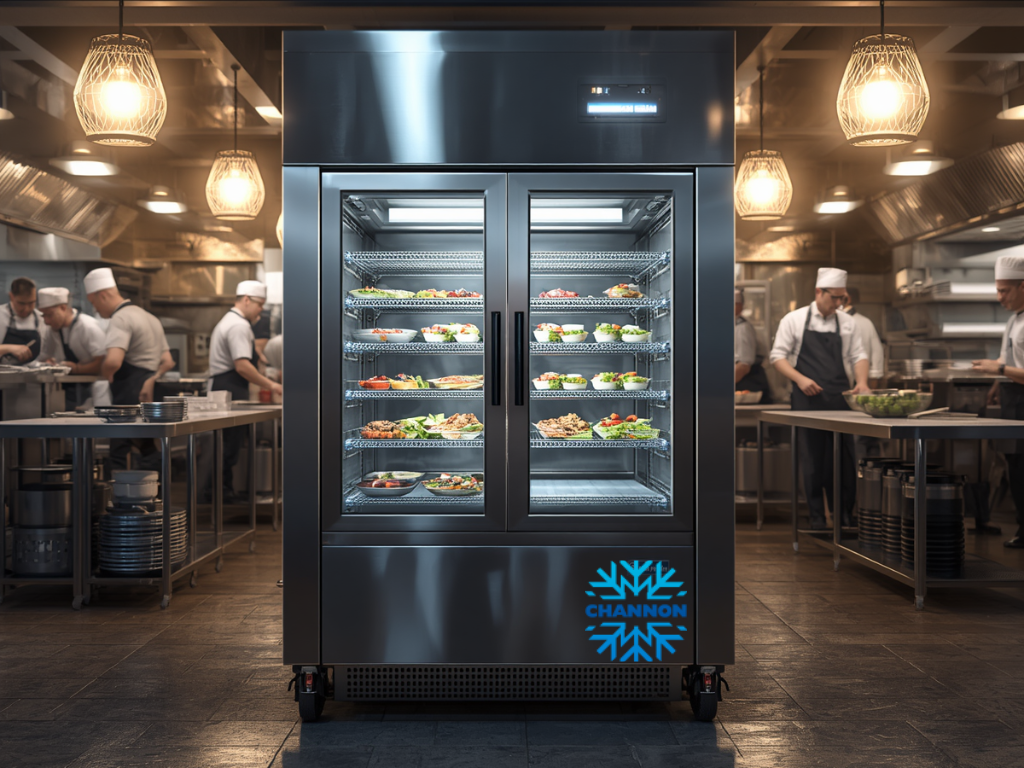
Requesting help with equipment selection and layout
Channon may be contacted when a Sydney food business needs help comparing commercial refrigeration equipment, planning capacity or selecting equipment for a new kitchen.
Before making contact, prepare a list of the foods being stored, expected stock volume and delivery frequency.
Provide the available space, doorway measurements, power information and photographs of the proposed installation area where possible.
Explain whether the equipment is for back-of-house storage, preparation, customer display, rapid chilling or freezing.
For commercial modular cool rooms, provide the proposed room dimensions, access requirements and any available floor plan.
For a commercial blast chiller or blast freezer, describe the batch size, tray format and number of daily cycles.
Channon can then discuss suitable equipment types and whether further site assessment is needed.
Stock availability, specifications, installation arrangements and warranty terms should be confirmed before an order is finalised.
Planning a new kitchen, replacement or larger refrigeration system
Contact Channon early when refrigeration forms part of a new commercial kitchen, renovation or business expansion.
Refrigeration equipment often needs to be coordinated with benches, plumbing, drainage, electrical work, ventilation and delivery access.
Early planning can help prevent a cabinet being selected after joinery or services have already fixed the available space.
When replacing existing equipment, provide the model information and explain what is no longer working well. The problem may involve capacity, temperature stability, repair frequency or an unsuitable layout.
If the business is expanding, avoid choosing equipment only according to current stock levels. Discuss realistic future demand without oversizing the system unnecessarily.
Ask for a written quotation that identifies the equipment, accessories, delivery, installation, exclusions and warranty conditions.
Commercial refrigeration sydney businesses purchase should support the complete operation. The right system is one that stores the required products, fits the available site, can be maintained properly and works with the kitchen’s daily routine.