Choosing an excavator is about more than finding a machine that can dig. Before arranging Equipment Hire Leppington, it helps to understand exactly what the job involves, how the machine will reach the work area, how deep you need to excavate and what conditions it will face once it arrives.
A compact residential project may have narrow side access, existing landscaping and limited room for excavated soil. A larger building or landscaping site may provide more space but require greater digging depth, reach or material-moving capacity. These differences can change which excavator is suitable.
Preparing this information before contacting a hire company can make the selection process much easier. It can also help you discuss the right machine, attachments, transport arrangements and hire period instead of choosing an excavator based only on its size or daily rate.
Measure the Whole Access Route
Start by working out how the excavator will get from the delivery point to the excavation area.
Measure gates and narrow passages rather than estimating them by eye. Check the space between the house and boundary fence, driveway width, retaining walls, garages, trees and other fixed structures. If the machine needs to negotiate a corner, think about whether there is enough space for it to turn as well as enough width to pass through.
Height can matter too. Carports, branches, building eaves, powerlines and other overhead obstacles should be considered before machinery enters the property. SafeWork NSW identifies contact between mobile plant and overhead or underground services as an important excavation risk.
When comparing excavators, use the manufacturer’s or hire company’s actual machine dimensions rather than relying on descriptions such as “compact” or “small”.
For example, Macarthur Hire currently lists its Kubota U55-4 Excavator as approximately 5,500 mm long, 2,550 mm high and 1,960 mm wide. Those dimensions are useful when assessing whether that particular machine could physically travel through a site, but customers should still confirm current equipment details before booking.
Make Sure the Machine Can Work Once It Gets Inside
Access does not end once the excavator gets through the gate.
The machine also needs enough room around the excavation to position itself and carry out the work. Think about where the boom will operate, where excavated material will be placed and whether the machine needs to reposition during the job.
A backyard may have enough room for the excavator itself but very little space for a spoil pile. If soil needs to be loaded into a truck, trailer or dumper, you also need to think about how those vehicles or machines will interact with the excavator.
People should be kept clear of moving plant during operation. SafeWork NSW identifies plant striking people and plant rollover among significant risks associated with excavation and earthmoving work, with ground conditions and working close to excavation edges among the factors that require attention.
Taking a few measurements and photos before contacting the hire company can therefore provide much more useful information than simply saying you need an excavator for a backyard job.
Know How Deep and How Much You Need to Excavate
The next question is what the machine actually needs to accomplish.
A shallow landscaping excavation may have different requirements from a drainage trench, footing excavation or larger site-preparation job. Before choosing a machine, estimate the depth and length of the excavation as accurately as possible.
Reach matters as well as depth. The excavator may need to work from one side of an area because a fence, structure or other restriction prevents it from moving closer.
Machine specifications should therefore be compared with the actual work rather than with another excavator’s name or appearance.
If you are uncertain about the required digging depth, tell the supplier what you are constructing or preparing. Clear project information gives the hire provider a better basis for discussing an appropriate machine.
Consider How Much Material Has to Be Moved
Digging depth is only part of the workload. The volume and type of material being removed also matter.
A narrow trench may be relatively deep but involve a smaller volume of material. Removing a broad layer of soil across a larger area may involve much more material even though the excavation is shallow.
You should also decide what will happen to the spoil.
If it can remain on the property, you need enough space to place it without blocking the work area. If it needs to be transported away, the project may require additional equipment or vehicle planning.
A larger machine is not automatically the better choice. Greater capacity can be useful on an open site, but extra size provides little benefit if the machine cannot comfortably manoeuvre around the work area.
The goal is to find an excavator with enough capability for the work while still fitting the physical constraints of the property.
Check Underground Services Before Any Excavation Begins
Find Out What Is Beneath the Work Area
This is one of the most important checks to complete before digging.
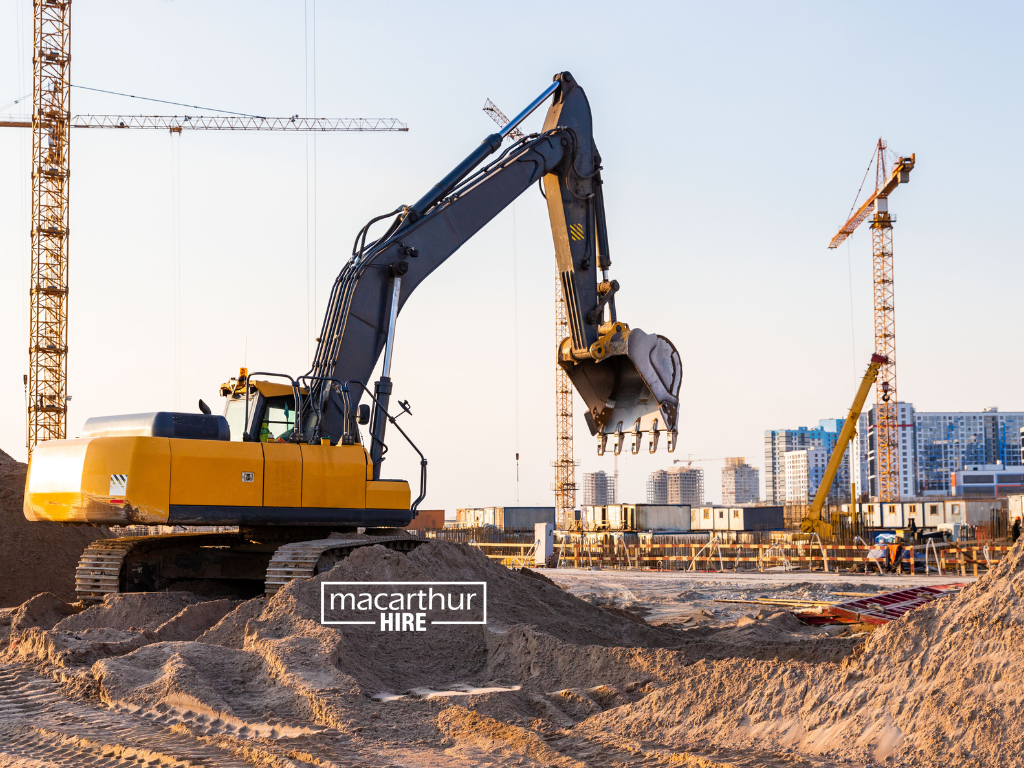
Underground electricity, gas, telecommunications, water and other infrastructure may be present around a property or construction site. Their locations should never be guessed simply by looking at where the house, meter or street connection appears to be.
SafeWork NSW states that current essential-services information must be obtained for the workplace and relevant adjacent areas before excavation work begins. It directs people carrying out underground excavation to Before You Dig Australia for underground asset information.
Before You Dig Australia provides a referral service where users can lodge a proposed work area and receive plans or information from participating infrastructure asset owners. BYDA also cautions that not every infrastructure owner is necessarily represented, so plans should form part of a broader safe-excavation process rather than being treated as proof that no other infrastructure exists.
In NSW, BYDA also notes specific legal requirements relating to excavation near gas and electricity networks.
This should be dealt with before the machine arrives, not after the first bucket enters the ground.
Mark and Plan the Excavation Area Clearly
Once you understand the proposed work area and available service information, clearly identify where the excavation is intended to take place.
Knowing the trench line, footing position or soil-removal area makes it easier to assess machine access and positioning. It can also help you identify whether existing infrastructure, fences, structures or other obstacles are likely to affect the job.
BYDA recommends a staged approach that starts with planning and reviewing utility information before excavation proceeds. Its guidance also recommends looking for visible infrastructure clues and following asset-owner instructions where further locating or potholing is required.
The person carrying out the excavation should have access to the relevant information. SafeWork NSW specifically requires essential-services information to be provided to people carrying out the work and kept readily available while the excavation is underway.
This preparation is relevant whether you are arranging Equipment Hire Leppington for a residential landscaping job or organising machinery for a larger construction project.
Ground Conditions Can Change Which Excavator Is Suitable
Two properties with similar excavation jobs can require different planning because their ground conditions are different.
Look at the path the machine will travel as well as the actual digging area. Soft, wet or uneven ground may affect how machinery moves and positions itself. Sloping areas also require additional consideration.
SafeWork NSW specifically identifies ground conditions, work on hills or near trench edges, loading and unloading, and plant rollover as issues that need to be managed when earthmoving machinery is used.
Do not hide difficult site conditions from the hire provider because you are concerned they may recommend a different machine. Those details are exactly what the supplier needs when helping you assess equipment suitability.
The same principle applies to people comparing nearby local searches such as Equipment Hire Catherine Field or equipment rental oran park. The suburb itself does not determine the machine. Site conditions do.
Leave Suitable Room Around the Excavation
Think carefully about how close the machine will need to operate to the edge of the excavation.
The excavated material also needs somewhere to go. A spoil pile placed in the wrong area can restrict machine movement, obstruct access or interfere with other site activities.
On smaller residential blocks, this becomes particularly important because usable working space can disappear quickly once machinery, excavated material, tools and workers are all present.
SafeWork NSW guidance highlights exclusion zones, ground assessment and separation between mobile plant and people as important controls around excavation activities.
If the job involves a deeper trench or another form of higher-risk excavation, additional work health and safety requirements may apply. SafeWork NSW identifies trenches deeper than 1.5 metres and several other excavation circumstances as high risk construction work requiring specific safety planning.
For commercial construction work, those requirements should be addressed as part of site planning rather than treated as an equipment-hire decision alone.
Choose the Excavator and Attachments Around the Job
Compare Real Machine Specifications
Once access, digging requirements and ground conditions are understood, you can make a more useful machine comparison.
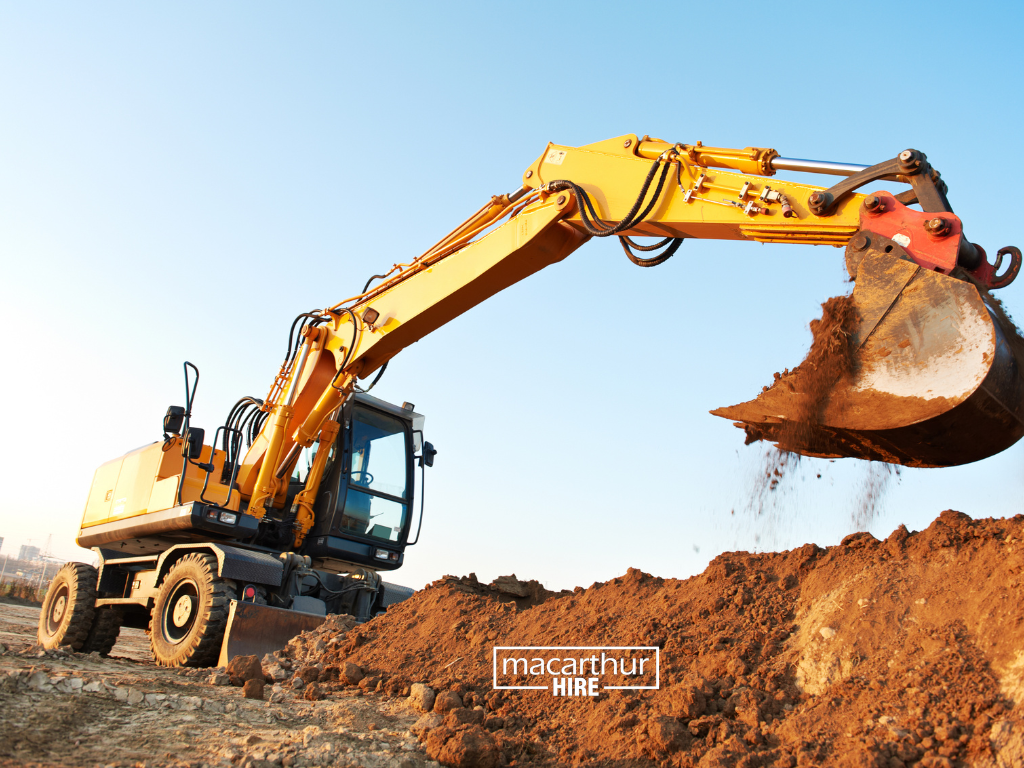
Check machine width, height, reach, digging capability and transport requirements. Then compare those figures with the measurements and work requirements you have already collected.
Macarthur Hire currently lists several items within its earthmoving category, including Kubota excavators and a Takeuchi TB210R, as well as equipment such as a mini dumper and plate compactor. This is an example of why it can be useful to discuss the overall job rather than assuming the first excavator you find is automatically the right option.
Its Kubota U55-4 page also currently lists a set of buckets and a ripper with that machine, although customers should confirm current inclusions and availability for their booking.
If you are considering Macarthur Hire for a Leppington project, provide your site measurements and job requirements and confirm that the available equipment and delivery arrangements suit the location before committing to the hire.
Choose Attachments Based on What You Are Doing
The excavator itself is only one part of the job.
General digging, trenching and harder ground conditions may call for different tools. Rather than asking only which excavator is available, explain what material you expect to excavate and what shape or type of excavation you need to create.
This gives the supplier an opportunity to discuss available buckets or other attachments that may suit the work.
Do not assume that every attachment shown with one machine is available with every excavator or on every hire date. Confirm exactly what is included in your booking.
Customers researching equipment hire currans hill or Equipment Rental Rosemeadow face the same practical decision. Matching the machine and attachment to the job is more useful than choosing equipment based purely on suburb, brand or price.
Plan Delivery and the Hire Period Before Booking
An excavator must first be transported to the project.
Think about where the delivery vehicle can stop and where the machine will be unloaded. Narrow streets, restricted driveways, parked vehicles, low branches, overhead services and limited turning areas can all affect delivery planning.
Macarthur Hire’s current listing for its Kubota U55-4 states that transport is by tilt tray or float. This is useful information because the delivery vehicle itself can require considerably more space than the excavator once it has been unloaded.
When requesting a quote, tell the supplier if the property has unusual access or limited unloading space.
This applies equally when comparing equipment hire menangle park, equipment hire camden or equipment rental camden. Delivery logistics form part of equipment suitability, not just an additional detail after the machine has been selected.
Macarthur Hire currently identifies Camden as one of its published service areas, but customers in any location should confirm current delivery coverage and charges directly for the specific booking.
Estimate a Realistic Hire Period
It can be tempting to book an excavator for the shortest possible period to reduce the advertised hire cost.
However, the machine can only start productive work when the site is ready.
Underground-service checks, excavation marking, access preparation and arrangements for removing soil should ideally be completed beforehand. Weather and unexpected ground conditions may also affect the job.
Consider how much excavation can realistically be completed during the planned period rather than assuming every hired hour will be spent digging.
Current Macarthur Hire equipment pages show different daily, weekend and weekly arrangements for some machines, with prices noted as subject to change and delivery or other fees potentially additional. That is a good reminder to compare the complete current hire arrangement rather than relying on an old advertised daily rate.
Before booking, confirm when the hire period starts and ends, how collection works and what happens if the job takes longer than expected.
When Should You Contact an Equipment Hire Company?
Contact the Supplier When You Are Unsure About Machine Size
You do not need to know the exact excavator model before contacting a hire company.
In fact, it is often better to describe the project first.
Tell the supplier what you are excavating, the approximate depth, the amount of material involved, the narrowest access measurement and any difficult ground conditions. Mention whether the excavated material will remain on site or needs to be loaded and removed.
Photos can add useful context when there are narrow passages, retaining walls, slopes or other restrictions.
Macarthur Hire’s current FAQ encourages customers to discuss their needs with its staff when arranging equipment, and its published equipment range includes excavators and other construction and landscaping machinery.
That makes contacting the supplier useful when a project requires more than simply selecting a machine from an online listing.
Give the Hire Company the Information Needed for a Useful Quote
Before requesting Equipment Hire Leppington, have your basic project information ready.
The useful details are the project location, excavation type, approximate digging depth, narrowest access width, available working space, ground conditions, expected hire dates and any attachments you think may be required.
Also explain any delivery restrictions you already know about.
If the excavation is near underground infrastructure, complete the relevant service checks and make sure the people undertaking the work have the required information before excavation begins. SafeWork NSW also requires operators of earthmoving plant to be competent and to receive appropriate information, instruction, training and supervision.
Ultimately, hiring the right excavator is easier when the decision begins with the site rather than the machine.
Measure the access, understand the excavation, investigate underground services, assess the ground, plan the delivery area and estimate a realistic hire period. Once those details are clear, you can have a much more useful conversation with the hire provider and choose equipment based on what the project actually requires.