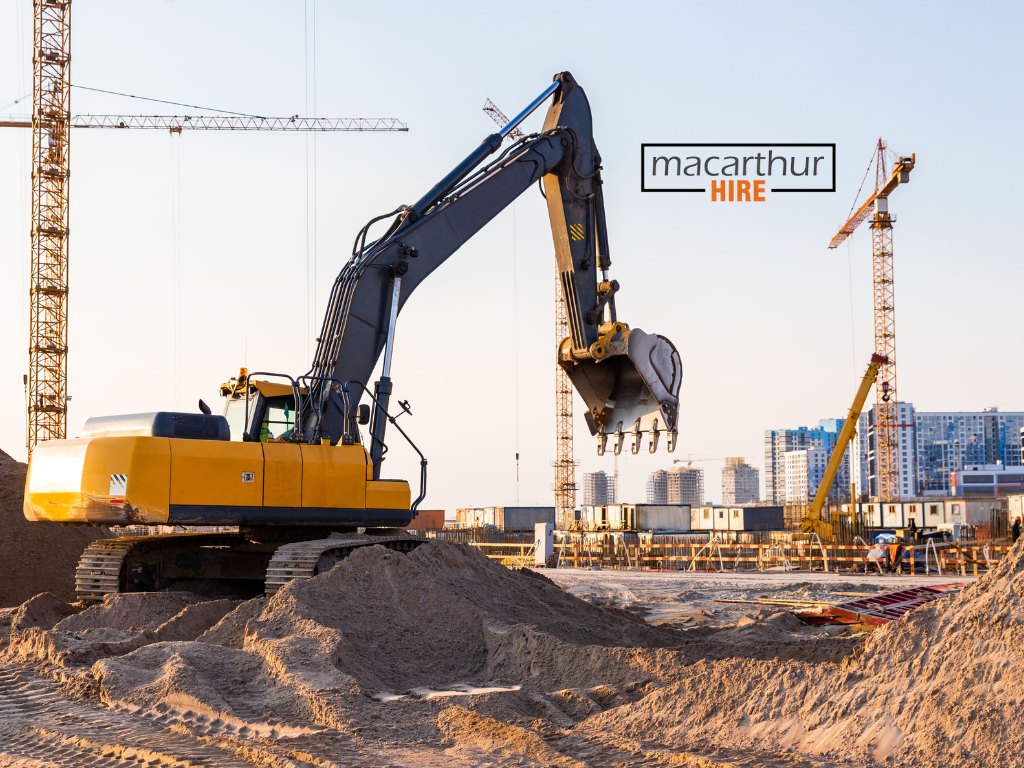
Construction equipment rental can help contractors, landscapers, builders and other businesses access machinery without the capital cost and ongoing responsibility of ownership. However, the advertised daily or weekly rate does not always represent the complete cost of a hire. Transport, fuel, cleaning, additional usage, damage responsibilities and extended hire periods can all affect what a project ultimately costs.
Australian equipment-hire agreements vary between suppliers, so customers should never assume that the conditions applying to one provider will be the same elsewhere. Current Australian hire terms commonly show that delivery and collection, refuelling, excessive cleaning, damage, additional operating hours and late returns can create costs beyond the base rate.
The practical way to manage construction equipment rental costs is to understand the entire hire arrangement before the machine reaches the site. That means comparing more than the headline price, choosing equipment that suits the actual job and confirming what the hirer remains responsible for during the rental period.
Construction Equipment Rental: Understand the Base Rate
Construction equipment rental prices are commonly influenced by the type of machine and how long it is required.
A daily rate may suit a short task, while weekly or longer hire arrangements may be structured differently. Macarthur Hire, for example, states that its rental rates vary depending on the equipment and the duration of the rental.
That headline figure is therefore only the starting point.
Before comparing Equipment Hire providers, customers should determine exactly what the quoted amount covers. The machine itself may be included, but transport, fuel, attachments, additional operating hours or other services may be treated separately depending on the agreement.
This matters particularly when comparing two quotes that initially appear similar.
One provider may include certain attachments or allowances while another lists them as separate charges. The less expensive advertised rate may therefore not necessarily produce the lowest final project cost.
For business equipment rentals, the useful question is not simply, “What is the daily price?” It is, “What will this machine cost for the complete period and conditions of my job?”
Construction Equipment Rental: Ask for the Full Hire Cost
Construction equipment rental should be compared using the likely total cost.
Current Australian hire terms illustrate why. Some agreements separately identify delivery, collection, fuel, cleaning, excess usage, damage and loss as potential charges in addition to ordinary hire fees.
The actual conditions will depend on the supplier and rental agreement, so they should be confirmed before booking.
A contractor expecting to use a machine for five days, for example, should clarify whether that period includes any operating-hour limits, when the hire officially ends and what happens if collection cannot occur immediately.
It is also useful to ask what would cause the final invoice to differ from the original quote.
This can uncover costs that may otherwise only become apparent after the job.
For businesses regularly needing equipment rental, keeping these details with project estimates can also make future quoting more accurate. Instead of budgeting only for the machine rate, the business can account for the real cost of getting the equipment onto the site, operating it and returning it under the agreed conditions.
Check Delivery and Collection Charges
Construction Equipment Rental: Confirm Transport Costs
Construction equipment rental often involves machinery that cannot simply be placed in the back of a work vehicle.
Excavators and other plant may require appropriate transport to and from the project site, and those transport arrangements can affect the total hire cost.
Australian equipment-hire terms commonly treat delivery and collection separately from the basic hire charge. Some agreements also allow additional waiting costs where access problems or site delays prevent a scheduled delivery or collection from proceeding normally.
Customers should therefore confirm transport arrangements when requesting the quote rather than leaving them until the day of delivery.
The supplier will usually need accurate information about the project location and equipment being hired.
If a business is comparing excavator hire Macarthur options, transport distance is only one consideration. The site must also provide a practical location for unloading and collecting the machine.
Macarthur Hire states that it operates services around NSW and offers equipment and vehicle rental from its Macarthur-based operation. Customers should still confirm current transport arrangements and pricing for their specific worksite before booking.
Construction Equipment Rental: Plan Site Access Before Delivery
Construction equipment rental can become more expensive when the selected machine cannot reach the intended work area or delivery vehicles cannot access the site as expected.
Before booking, measure gates, driveways, passages and other restricted areas. Consider overhead obstacles, turning space, ground conditions and the area available for unloading.
Macarthur Hire’s current construction equipment rental guidance specifically recommends checking access width, ground conditions, overhead restrictions, unloading space and working room before choosing machinery.
This is not only a cost issue.
SafeWork NSW requires risks associated with moving plant to be managed, and operators must be competent and provided with appropriate information, training and supervision. Site controls may also be needed to separate workers from moving plant.
A site-access problem discovered after the machine arrives can lead to delays, an unsuccessful delivery or the need to exchange the equipment.
Providing the hire company with accurate site information before delivery gives them a better opportunity to help identify an appropriate machine.
Construction equipment rental planning should therefore begin with the job site, not simply the equipment catalogue.
Understand Fuel, Cleaning and Usage Charges
Construction Equipment Rental: Check Fuel Requirements
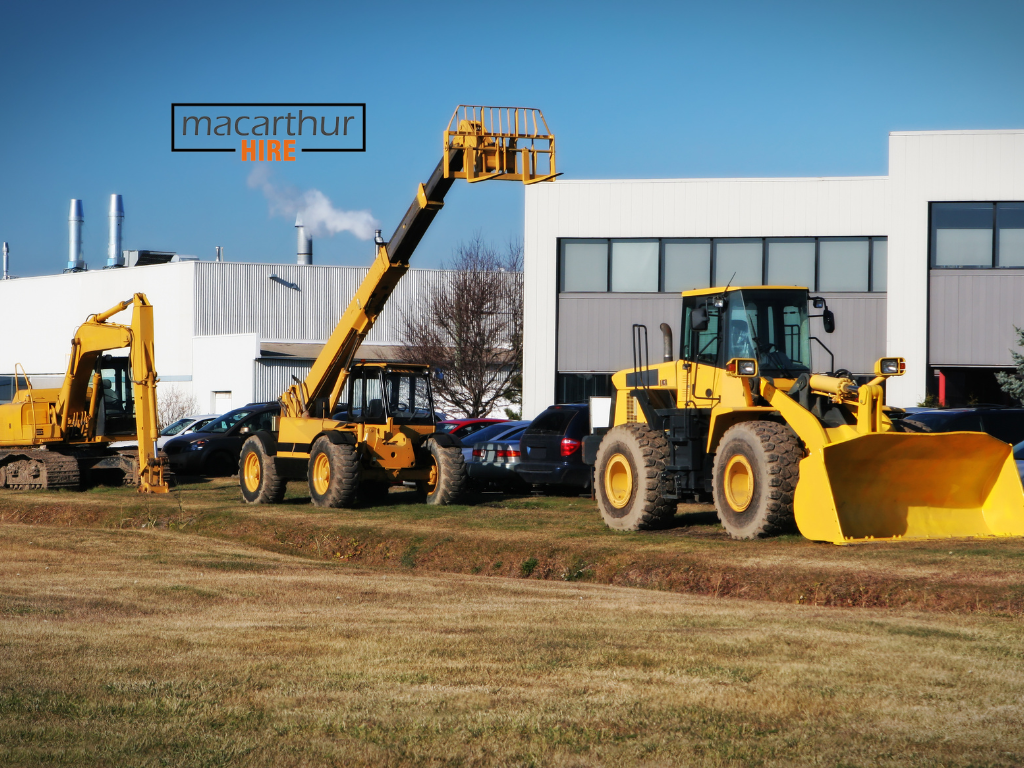
Construction equipment rental agreements can place responsibility for fuel on the hirer.
Some Australian hire businesses supply equipment with a full fuel tank and expect it to be returned at the same level. If it is not, refuelling charges may apply. Other agreements also identify consumables, oils or lubricants as costs that may be passed on to the hirer.
The important point is to check the specific agreement.
Before using the machine, find out which fuel it requires, whether the hire rate includes any fuel and what condition the fuel tank should be in when the equipment is returned.
This can also prevent operational problems.
Using the wrong fuel can cause damage that is far more expensive than the original refuelling charge.
For longer projects, fuel consumption may also be useful when comparing different machines.
A larger machine might complete certain work faster, but that does not automatically make it the most economical option. The right calculation should consider the task, hire duration, transport and likely operating costs together.
Construction Equipment Rental: Know the Cleaning Conditions
Construction equipment rental is commonly used for work where machinery becomes dirty.
Excavation, landscaping, demolition and site preparation can leave machinery covered in soil, mud and other material. Some hire agreements distinguish between reasonable use and excessive cleaning, with additional charges applying where equipment is returned in poor condition.
Customers should clarify the return standard before using the equipment.
A little soil from normal operation may be treated very differently from hardened concrete, heavy clay or waste that requires substantial cleaning.
If the project is likely to create unusually dirty conditions, that can be factored into site planning.
Setting aside time to clean the equipment appropriately before collection may be less disruptive than discovering an additional cleaning charge afterwards.
The same principle applies when several workers will operate the machine.
Someone should be responsible for checking its condition before return rather than assuming another person has already done it.
Construction equipment rental becomes easier to manage when return requirements are known from the beginning.
Review Damage, Wear and Insurance Responsibilities
Construction Equipment Rental: Understand Damage Liability
Construction equipment rental transfers possession of valuable machinery to the hirer for a defined period.
The rental agreement should explain who is responsible if that machinery is damaged, lost or misused.
Australian hire conditions commonly distinguish normal wear from damage caused during the hire period. Depending on the agreement, hirers may remain responsible for repairs or replacement associated with misuse, negligence or other excluded circumstances.
This is why equipment condition should be checked when it is received.
If there is existing damage, raise it with the supplier before the machine begins work.
The equipment should also be operated within its intended limits.
SafeWork NSW states that earthmoving plant should be adequately maintained and used for the purpose for which it was designed, with competent operators receiving appropriate information, instruction, training and supervision.
Trying to make an unsuitable machine perform work beyond its intended application can create both safety and financial risks.
A lower hire price is therefore not a saving if the equipment is wrong for the job.
Construction Equipment Rental: Check Insurance and Waivers
Construction equipment rental customers should understand what protection applies during the hire.
Do not assume that the rental price automatically covers every type of accidental damage, theft or loss.
Some hire agreements include or offer damage or loss waivers, but exclusions, excess amounts and customer responsibilities can still apply. The details vary considerably between suppliers, which makes the individual contract more important than general assumptions about equipment rental.
Businesses should review these conditions before the machine is accepted.
If something is unclear, ask the supplier to explain what the hirer would pay in a realistic scenario such as accidental machine damage, theft from the site or damage caused through misuse.
Businesses may also need to consider their own insurance arrangements.
The purpose of this review is not to predict every possible incident.
It is to avoid finding out after an incident that a cost the business assumed was covered remains its responsibility.
For regular business equipment rentals, having someone responsible for reviewing these terms can make comparisons between providers more consistent.
Choose the Right Machine for the Job
Construction Equipment Rental: Avoid Paying for Oversized Equipment
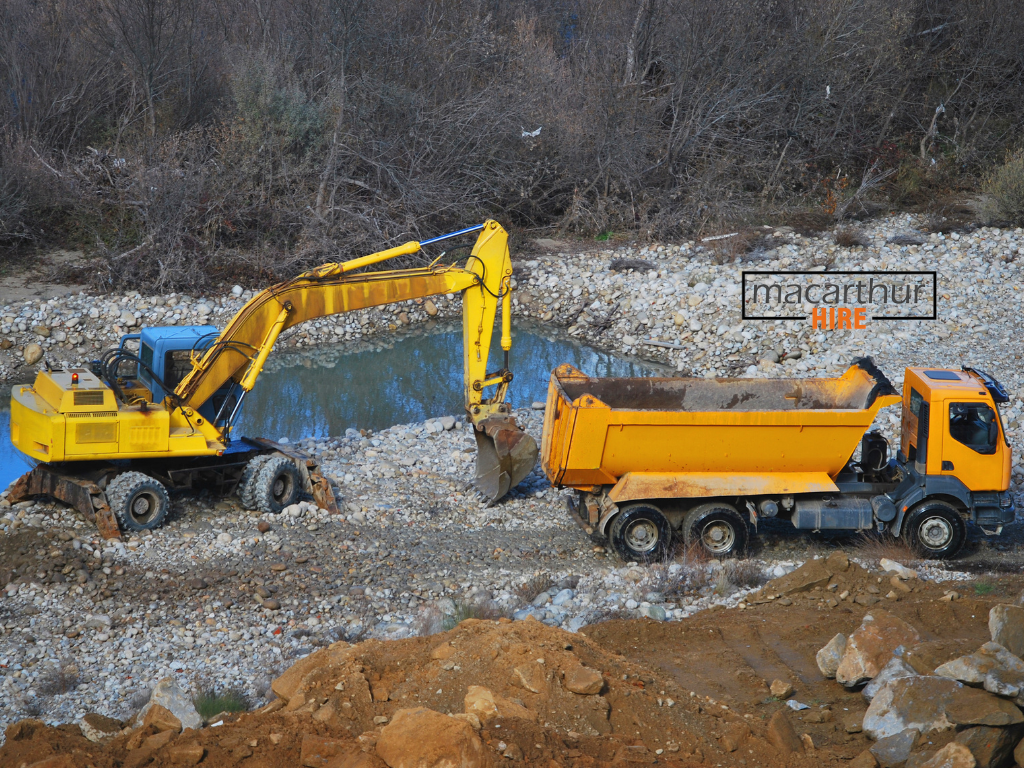
Construction equipment rental should match the machine to the actual work rather than automatically choosing the largest equipment available.
A larger machine may carry a higher rental rate and can also require different transport, operating space and access conditions.
At the same time, choosing equipment that is too small can also increase costs if the job takes significantly longer or the machine cannot complete the required work.
The right choice sits between those extremes.
Macarthur Hire’s recent equipment-rental guidance recommends comparing machinery based on the work and site rather than looking at the hire rate in isolation. It specifically highlights machine dimensions, digging capabilities, attachments and site requirements when evaluating excavators.
Before booking, define the task clearly.
For excavation, that may include required digging depth, reach, material being moved, access width and available operating area.
When those details are supplied to the hire provider, it becomes easier to discuss equipment appropriate to the job.
Construction Equipment Rental: Match Excavators to Site Needs
Construction equipment rental customers comparing excavators should avoid selecting a machine based only on the brand name.
Someone searching for excavator hire Macarthur may encounter several machine sizes and configurations.
Macarthur Hire currently lists a Kubota U55-4 Excavator among its equipment range. Its own guidance notes that customers should still confirm current availability and whether that particular machine suits the job before booking.
A Kubota excavator may be appropriate for certain earthmoving, landscaping or construction tasks, but suitability depends on the actual machine and site.
Relevant considerations include operating dimensions, digging depth, reach, weight, attachments and available working space.
This is particularly important on residential or restricted-access sites.
A machine may have the digging capability required but still be impractical if it cannot pass through the available access or manoeuvre safely once inside.
For construction equipment rental, the best machine is therefore not necessarily the biggest or cheapest option.
It is the machine capable of completing the work effectively within the site’s physical and operational constraints.
Watch Hire Periods and Late Return Costs
Construction Equipment Rental: Choose the Right Hire Duration
Construction equipment rental rates often vary according to the length of the hire.
Macarthur Hire states that its rates depend partly on rental duration, while Australian hire agreements commonly use daily, weekly or longer charging structures.
That makes realistic project scheduling important.
Booking equipment for too short a period can create pressure to extend the hire, while booking it much earlier than required may mean paying for machinery sitting unused.
Before deciding on the period, consider when the site will actually be ready.
If excavation cannot begin until another trade finishes, there may be little value in having the machine delivered days in advance.
Weather, approvals and other project dependencies may also affect timing.
Businesses using Equipment Hire regularly can improve cost control by linking machinery bookings more closely to the construction programme instead of simply reserving equipment for broad project windows.
When you rent equipment, productive utilisation matters just as much as the advertised rental rate.
Construction Equipment Rental: Understand Overtime and Late Fees
Construction equipment rental agreements may continue charging until the equipment has been formally off-hired or returned according to the supplier’s process.
This is an important detail.
Some Australian hire agreements make clear that reaching the expected finish date does not necessarily stop charges automatically. The hirer may need to notify the provider correctly and make the machine available for collection. Excess operating hours can also trigger additional charges under some agreements.
Customers should therefore ask how the hire officially ends.
Find out whether equipment must be returned by a particular time, whether an off-hire notification is required and what happens when collection occurs after the project has finished.
Also check any operating-hour allowance.
A machine hired for one day may have a defined number of included operating hours rather than unlimited continuous use.
Understanding these conditions helps businesses compare equipment rent and hire costs more accurately.
A slightly higher base rate with terms that suit the project may ultimately cost less than a cheaper hire with conditions the site is likely to exceed.
Compare the Total Cost Before You Rent Equipment
Construction Equipment Rental: Compare Quotes on Equal Terms
Construction equipment rental quotes should be compared on a like-for-like basis.
A useful comparison includes the same machine class, hire duration, transport requirements and expected operating conditions.
The quote should then be considered alongside potential delivery and collection costs, fuel conditions, cleaning requirements, included operating hours, damage responsibilities and any attachments needed for the job.
Current Australian hire agreements demonstrate how these items can materially change the amount payable beyond the advertised hire charge.
Service and equipment availability also matter.
Macarthur Hire currently lists a broader rental range that includes excavators, earthmoving equipment, landscaping equipment, site services, trailers and vehicles. For projects around Macarthur and surrounding NSW areas, that may make it useful to compare when a project requires several categories of equipment rather than a single machine.
The choice should still depend on the individual job.
For business equipment rentals, the lowest headline price is only useful when the machine, service arrangements and rental conditions all meet the project requirements.
Construction Equipment Rental: Confirm the Terms Before Booking
Construction equipment rental should finish with a clear understanding of the agreement before the booking is confirmed.
Read the quote and rental terms rather than relying entirely on assumptions from previous hires.
Confirm the equipment being supplied, hire period, transport arrangement, fuel requirements, return condition and any operating limits relevant to the machine.
If something is unclear, ask before the equipment arrives.
This is also the right time to confirm whether the machine suits the site’s access and working conditions.
SafeWork NSW states that businesses controlling plant must manage risks associated with its use, while earthmoving plant operators need appropriate information, training and supervision.
For customers considering Macarthur Hire, the company states that customers can discuss their needs directly with staff or browse its equipment range and submit a rental request online. Its FAQ also recommends discussing requirements so appropriate equipment can be identified for the project.
The same principle applies whichever provider you choose.
Before you rent equipment, understand the complete cost and the responsibilities attached to the hire.
Construction equipment rental can be a flexible way to access machinery for a specific job without purchasing and maintaining equipment permanently. The best value, however, comes from selecting the right machine, planning transport and access carefully, understanding the hire conditions and budgeting for the full rental arrangement rather than focusing only on the advertised rate.
That preparation can make Equipment Hire easier to manage and reduce the likelihood of unexpected costs appearing after the project is already underway.