Choosing a lawn mower involves more than comparing engine size or price. The right mower should suit the area you need to cut, the shape of the yard and how often you plan to use it.
A small, flat suburban lawn may only need a compact push mower. A larger property may justify a ride on mower. Some homeowners may prefer an automower that maintains the grass through regular scheduled cutting.
Your storage space, physical comfort and maintenance preferences also matter. A mower that looks powerful in a showroom may feel heavy or difficult to turn in a tight yard.
This guide explains how to compare the main options. It also covers useful features, supporting garden tools and the questions to ask before buying.
Measure the area you actually mow
Begin with the part of the property that contains mowable grass. Do not judge the mower only by the total block size.
A large block may include a house, pool, garden beds, paving and sheds. The remaining lawn may be small enough for a standard push mower.
In contrast, a smaller property may contain one wide and open lawn. A mower with a broader cutting deck could reduce the number of passes needed.
Measure the approximate length and width of each lawn section. Then consider how the areas connect.
Narrow side access can limit the mower size you can move between the front and rear yard. Gates, steps and raised garden beds may create similar restrictions.
Also think about the time you want to spend mowing. A compact mower may complete the work well, but a slightly wider deck could reduce the mowing time.
However, a wider deck is not always better. It may be harder to guide around trees, curved garden edges and tight corners.
The ideal mower balances cutting coverage with easy movement through the property.
Check slopes, trees and narrow sections
Terrain can have more influence on mower choice than total lawn size.
A flat and open yard gives you many options. Slopes, uneven ground and soft areas require more care.
A heavy mower may feel difficult to push uphill. A self-propelled model can reduce physical effort, but the drive speed should still feel comfortable.
Traction also matters on slopes. The mower needs stable contact with the ground and predictable steering.
Ride-on equipment requires enough space for safe turning. Trees, garden beds and narrow passages can slow the work if the machine is too large.
Robotic models also need a suitable layout. Some modern robot mowers use advanced navigation and mapping features, although complex yards can still require careful setup.
Walk around the yard before comparing products. Note steep sections, exposed roots, drainage areas and low branches.
This simple inspection can prevent you from buying a mower that suits the lawn area but not the actual conditions.
Compare the Main Lawn Mower Types
When a push mower is the practical choice
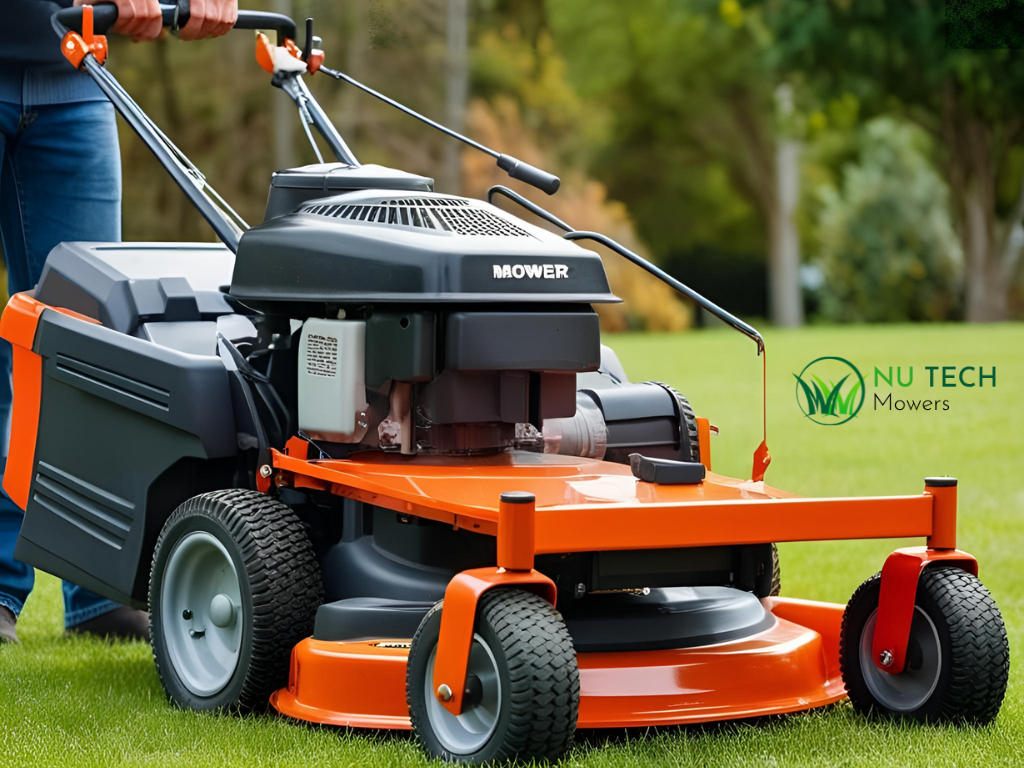
A push mower suits many Australian homes. It offers direct control and can move around common backyard obstacles.
These mowers range from simple manual models to petrol, electric and battery-powered machines. Some require the operator to provide all forward movement. Others include self-propelled drive.
A compact mower may suit a small lawn with narrow access. It is also easier to store in a limited shed or garage.
For a medium lawn, consider how much physical effort the job requires. A heavier mower may become tiring on slopes or thick grass.
Self-propelled drive can help where the lawn is larger or the terrain is uneven. However, it can increase the mower’s weight and cost.
Check whether the handle height feels comfortable. Poor handle position can make a short mowing job feel difficult.
You should also test how easily the mower turns. A machine that moves well in a straight line may still feel awkward around trees and corners.
A push mower remains a practical choice when you want direct control and have a lawn that you can complete comfortably.
When a ride on mower or automower may suit better
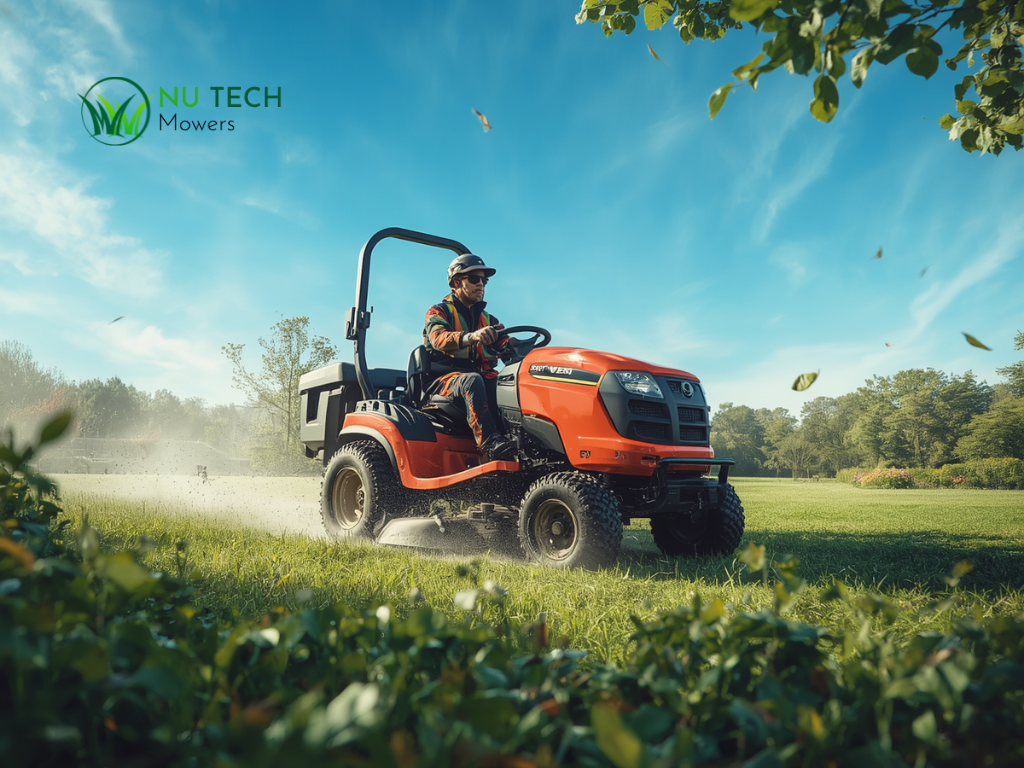
A ride on mower may suit a large, open property where walking behind a mower takes too much time.
It allows the operator to sit while mowing and can cover broad areas more efficiently than a small walk-behind model.
However, it needs suitable access, turning room and secure storage. It also requires careful operation on slopes.
The size of the cutting deck should match the yard. A broad deck can work well in open areas but may become difficult near narrow gates or dense landscaping.
A robotic automower offers a different approach. Instead of completing one large weekly cut, it can maintain the grass through frequent scheduled mowing.
This option may suit homeowners who want to reduce manual mowing time. It may also provide a more regular lawn appearance.
Before choosing one, check the yard layout, slope rating, charging position and navigation method. Ask how the unit handles separate lawn zones and narrow passages.
Also consider pets, toys, fallen branches and other objects that may enter the mowing area.
Neither a ride-on nor a robotic mower is automatically better than a push model. The right choice depends on the property and the owner’s routine.
Choose the Right Power Source
Compare petrol and battery-powered mowing
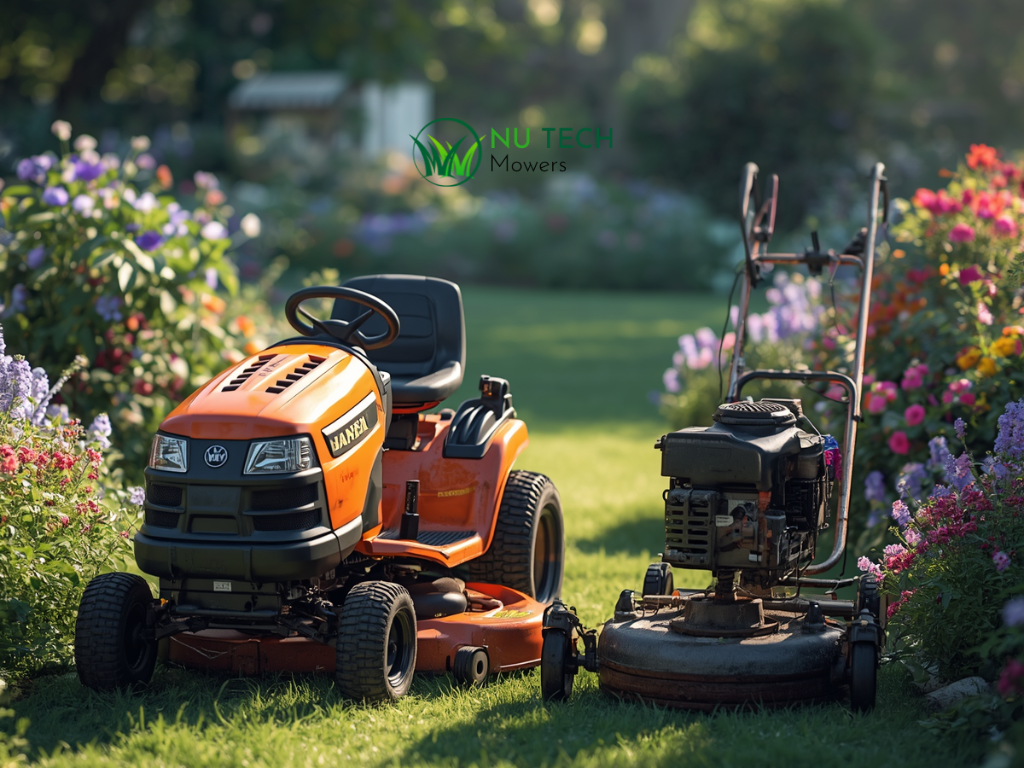
Petrol mowers remain useful where owners want strong performance and do not want to pause for battery charging.
They may suit larger lawns, thicker grass and users who already understand routine engine care.
However, petrol equipment needs fuel and regular servicing. Owners may need to check oil, air filters, spark plugs and other engine parts.
Battery mowers offer quieter operation and simpler starting. They also avoid the need to store petrol.
Modern battery machines can suit many residential lawns. Their real performance depends on the mower, battery capacity, grass condition and cutting load.
A wide deck, long grass or wet conditions may increase energy use. For this reason, buyers should compare expected runtime with their actual lawn.
Ask whether the battery system works with other garden tools. A shared platform may allow one set of batteries to power a mower, trimmer or leaf blower.
Also check charging time and replacement battery cost. These details affect long-term convenience.
Battery-powered models are becoming more capable, including self-propelled options designed for larger spaces.
The best choice depends on how much grass you cut, where you store the mower and how much maintenance you want to complete.
Consider robotic mowing for regular lawn care
A robotic mower changes the mowing routine rather than simply replacing the power source.
The machine returns to its charging station and can operate according to a schedule. Some units use boundary wires, while newer designs may use satellite positioning, cameras or other navigation systems.
The lawn needs to suit the model’s rated area and slope capacity. The charging station also needs a suitable location.
Robotic mowing works best when the yard remains reasonably clear. Toys, hoses and loose branches can interrupt operation.
Edges also need consideration. A robotic mower may maintain the main lawn well, but some borders may still require a trimmer.
Ask how the model handles rain, narrow passages and separate zones. You should also understand how theft protection and software updates work.
A husqvarna mower from the robotic range may offer different features from a standard walk-behind husqvarna model. Compare the specific machine rather than relying only on the brand name.
Installation and setup can influence the result. A suitable machine with poor boundary planning may not move through the yard efficiently.
Robotic mowing can reduce the need for long mowing sessions. However, owners still need to inspect the lawn, clean the unit and replace blades when required.
Look Closely at Features That Affect Daily Use
Cutting width, height and grass handling
Cutting width affects how much grass the mower covers in each pass.
A wider deck can reduce mowing time in an open area. A narrower deck provides better control in tight spaces.
Cutting-height adjustment is equally important. Different grass types and seasons may need different mowing heights.
A convenient adjustment system makes regular changes easier. Some mowers use one lever, while others require adjustment at several wheels.
Grass handling also affects daily use.
A catcher collects clippings and may leave a tidy result. However, the user needs to stop and empty it.
Mulching returns finely cut material to the lawn. This can reduce collection work when conditions and mowing frequency are suitable.
Side discharge may suit some open areas, but it can leave visible clippings. It also requires care near paths, people and property.
Ask how easily the mower changes between collection, mulching and discharge modes. Some products require extra parts or tools.
The best setup depends on how often you mow and how you want the finished lawn to look.
Comfort, control and storage
A mower should feel manageable before you buy it.
Check the handle position and grip. Make sure you can reach the controls without stretching.
If the mower has self-propelled drive, test how the speed changes. A fixed speed may feel too fast in a small yard.
Weight matters when turning, loading or moving the mower without power. It also affects how easily you can push it into storage.
Folding handles can save space. However, the folding system should feel secure and simple to use.
A ride-on model needs a wider storage area. Measure the doorway and available floor space before buying.
Robotic models require less indoor space, but the charging area still needs planning. Owners may also want secure off-season storage.
Noise can matter in suburban areas. Consider your mowing times and nearby homes when comparing petrol, battery and robotic products.
Comfort features do not replace cutting performance, but they strongly affect how often you will use the machine.
Plan the Rest of Your Garden Equipment
Decide whether you need a trimmer
A mower cannot reach every part of a garden.
Grass often grows along fences, walls, trees and raised garden beds. Tight corners may also sit outside the mower deck.
A trimmer can manage these areas and create a cleaner finish.
Before buying one, consider the amount of edging work in the yard. A small garden may only need a light battery model.
Larger properties may need greater runtime or power. Weight and balance become important when the tool is used for longer periods.
Check the line-feed system and guard design. The controls should feel comfortable in both open areas and narrow spaces.
If you already use battery equipment, compare compatible tools within the same platform. Shared batteries can reduce the number of chargers you need.
However, do not choose a weak tool only because it accepts an existing battery. The equipment still needs to suit the work.
A trimmer should support the mower rather than compensate for buying a deck that is too large for the yard.
Add a leaf blower only where it saves useful time
A leaf blower can help clear paths, patios and driveways after mowing.
It may also remove light garden debris before the mower starts. This can reduce the chance of the blades striking hidden objects.
However, not every property needs one. A small paved area may be easy to clear with a broom.
Consider the amount of clean-up, storage space and expected use. Also think about noise and nearby neighbours.
Battery models may suit routine residential clean-up. Petrol options may provide longer operating time for larger properties, but they require fuel and engine care.
Check the blower’s weight and handle position. A powerful machine can still become tiring if it feels poorly balanced.
A vacuum or mulching function may help with leaf collection, although it can add weight and complexity.
When comparing equipment, focus on the complete lawn-care routine. The mower, trimmer and leaf blower should work together without creating unnecessary cost.
Choose a Product and Supplier With Confidence
Compare suitability rather than brand name alone
A recognised name can provide confidence, but the product still needs to suit the yard.
Husqvarna offers several types of outdoor equipment, including walk-behind, ride-on and robotic options. Yet a husqvarna mower that suits a large open property may not fit a small garden with tight access.
Start with the required mower type and cutting width. Then compare power, weight, controls and grass-handling options.
Ask about parts availability and servicing. A mower needs ongoing care, even when it has fewer engine parts.
Warranty terms also deserve attention. Check what the warranty covers and whether the owner must follow a service schedule.
For battery machines, ask about battery and charger coverage. Also confirm the expected availability of replacement batteries.
For robotic models, ask about installation, software, blade replacement and technical support.
Price should form part of the decision, but it should not stand alone. A cheap mower can become frustrating if it feels difficult to use or cannot handle the grass.
The right product should suit the property, the operator and the expected maintenance routine.
Ask for a practical product demonstration
A demonstration can reveal details that do not appear on a specification sheet.
Ask the supplier to show how the mower starts, stops and changes cutting height.
For a push model, check how it turns and how the catcher attaches. Lift the front slightly to judge the weight.
If the mower folds, try the storage mechanism. Make sure the controls do not catch or require excessive force.
For a ride-on model, sit in the operating position. Check visibility, pedal reach and steering.
Ask how the cutting deck works around edges and obstacles. Also review the safe procedure for slopes.
For an automower, request an explanation of mapping, charging and no-go zones. Ask what happens when the mower loses connection or meets an obstacle.
A useful supplier should ask about your lawn before recommending a product. Advice based only on budget or brand may overlook important conditions.
Bring rough measurements, photos and access details to the discussion. This information can make the recommendation more accurate.
When to Contact Nu Tech Mower
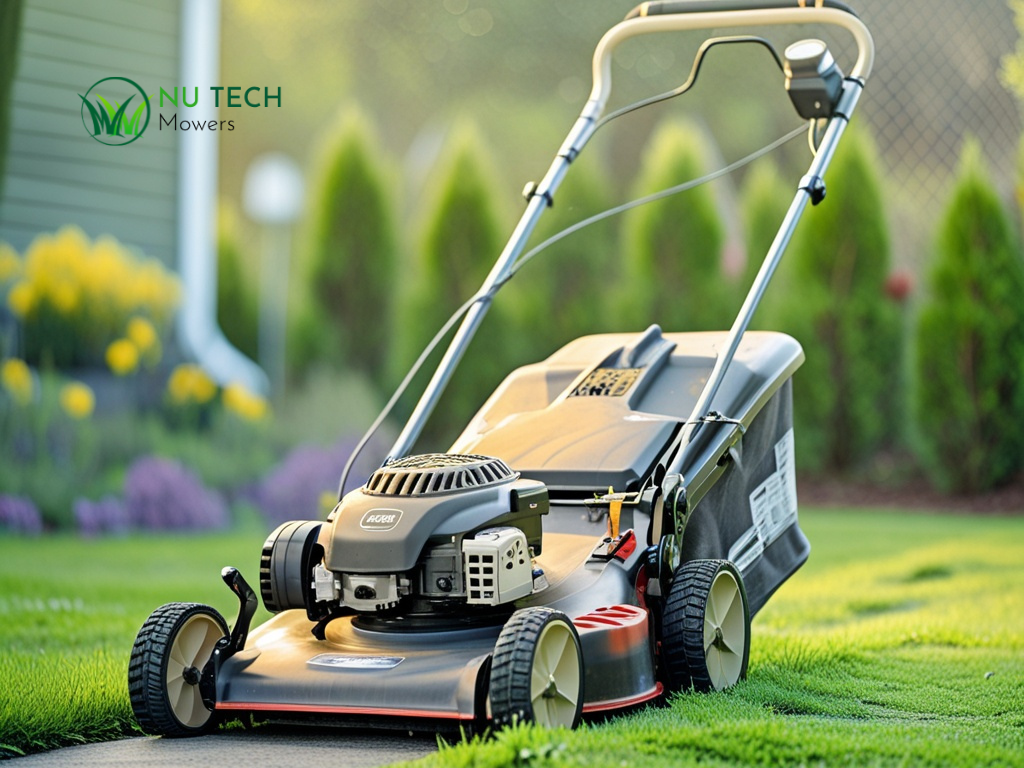
Seek advice when the yard has difficult conditions
Professional advice can help when the lawn includes steep slopes, uneven ground or narrow access.
It may also help when the property has several separate grass areas. In this case, the best solution may not be obvious.
A specialist can compare the time and effort required for a push mower, ride on mower or robotic system.
Advice is also useful when you are changing from petrol to battery equipment. The supplier can help estimate battery needs based on the yard and grass conditions.
Homeowners considering a husqvarna or other premium machine may also want to compare specific models before committing.
Nu Tech Mower can discuss deck width, power, storage, terrain and supporting equipment. This helps narrow the options to products that suit the real property.
Bring photos, approximate lawn measurements and gate widths when possible. Mention slopes, thick grass and any difficult corners.
The aim should be to select a practical machine rather than the largest or most advanced option.
Arrange servicing when performance or safety changes
A lawn mower needs attention when it starts behaving differently.
Poor cutting may point to blunt or damaged blades. Uneven results can also come from deck, wheel or height-setting problems.
Unusual vibration needs prompt investigation. Continuing to use the mower may cause further damage or create a safety risk.
Petrol machines may need service when they become difficult to start, lose power or produce unusual smoke.
Battery equipment may need inspection when runtime drops sharply or charging becomes unreliable.
Robotic models may show repeated navigation, charging or cutting errors. Cleaning and basic checks may help, but ongoing faults need proper diagnosis.
Stop using equipment when guards, controls or safety switches do not work correctly.
Nu Tech Mower can assess mower condition, explain available repairs and help owners decide whether servicing or replacement makes better sense.
Good maintenance protects cutting quality and helps the mower remain dependable. It also gives the operator a safer and easier mowing experience.