An ai readiness audit helps Australian businesses understand whether their employees have the skills, confidence and support needed to use artificial intelligence effectively. Before investing in AI tools, businesses should assess how prepared their teams are to adopt new technology and apply it to everyday work.
AI can assist with administrative tasks, document processing, customer enquiries and information management. However, introducing new software does not automatically improve business operations.
Employees need to understand what AI can do, where it may produce errors and when human judgement remains necessary.
For example, a business may introduce AI to help organise customer emails. If employees cannot review the results or correct inaccurate information, the new process may create additional work instead of reducing it.
This is why workforce readiness matters.
A structured assessment can help identify training needs, communication gaps and processes that require improvement before implementation.
Why Employee Readiness Matters Before Introducing AI
Employees play an important role in determining whether an AI initiative becomes part of everyday operations.
A business might purchase an AI platform with useful features. However, those features offer limited value when staff do not understand how to use them.
Some employees may feel confident experimenting with new applications. Others may be concerned about making mistakes or changing familiar processes.
These differences are normal.
AI readiness does not mean every employee needs advanced technical skills.
Instead, employees should understand how approved AI tools support their responsibilities.
They should also recognise when information requires checking.
For example, an administration employee may use AI to prepare a meeting summary. The employee still needs to confirm that the summary accurately reflects the discussion.
A customer support employee might use AI to draft a response. However, the employee should check that the information is accurate and suitable for the customer.
Businesses should explain these responsibilities before introducing AI into regular work.
Clear expectations can help employees develop confidence while maintaining appropriate oversight.
How an AI Readiness Audit Evaluates Your Workforce
An ai readiness audit examines more than whether employees have used an AI chatbot.
It considers how people work, which technologies they already use and where additional support may be required.
For example, an assessment may review how employees manage documents, enter customer information or complete repetitive administrative tasks.
It may also explore their familiarity with AI tools and their understanding of data privacy.
Employee feedback provides valuable information.
A team may identify problems that managers do not see during daily operations.
For example, staff might spend time copying information between disconnected systems.
An assessment can help determine whether the problem requires AI, conventional automation or changes to the existing workflow.
It can also identify employees who need introductory training before using more advanced tools.
The aim is to understand current capabilities and develop realistic improvement priorities.
Recognising Whether Your Employees Are Ready for AI
Businesses often focus on whether their software supports AI rather than whether employees can use it effectively.
An ai readiness audit helps bring workforce capabilities into the discussion.
Employee readiness involves practical knowledge, confidence, clear responsibilities and access to suitable training.
Understanding these factors can help businesses avoid introducing tools that employees struggle to use.
Common Signs Your Team Needs More AI Training
Employees do not need to be technology specialists to work with AI.
However, some everyday challenges may suggest that additional training would help.
For example, employees might avoid using approved AI features because they do not understand how the tools work.
Others may use AI regularly but trust every result without checking the information.
Both situations deserve attention.
Some staff may also be unsure which business information they can enter into an AI application.
This can create privacy and security concerns.
Another sign is inconsistent use across departments.
For example, one team may have established a useful process for reviewing AI-generated summaries. Another department may use the same tool without clear approval procedures.
A structured ai readiness assessment can help businesses understand these differences.
It also provides an opportunity to ask employees what support they need.
Training should address actual workplace requirements rather than assume everyone has the same knowledge.
Understanding Employee Confidence and Digital Skills
Digital skills and AI confidence are related but different.
An employee may be highly experienced with spreadsheets, email and customer management software.
However, that experience does not automatically mean they understand how generative AI produces information.
Another employee may use AI tools confidently but have limited knowledge of their privacy or accuracy risks.
Businesses should assess both practical ability and responsible use.
For example, an employee may know how to ask AI to summarise a document.
The next question is whether they can identify missing information or recognise an unreliable summary.
A useful assessment should also consider how employees respond when technology produces unexpected results.
Do they know how to correct the information?
Can they identify when a task needs human attention?
Do they understand which AI tools the business has approved?
These questions help organisations identify meaningful training needs.
They also encourage managers to view readiness as an opportunity for development rather than a test that employees must pass.
Assessing Workforce Skills With the Right Tools
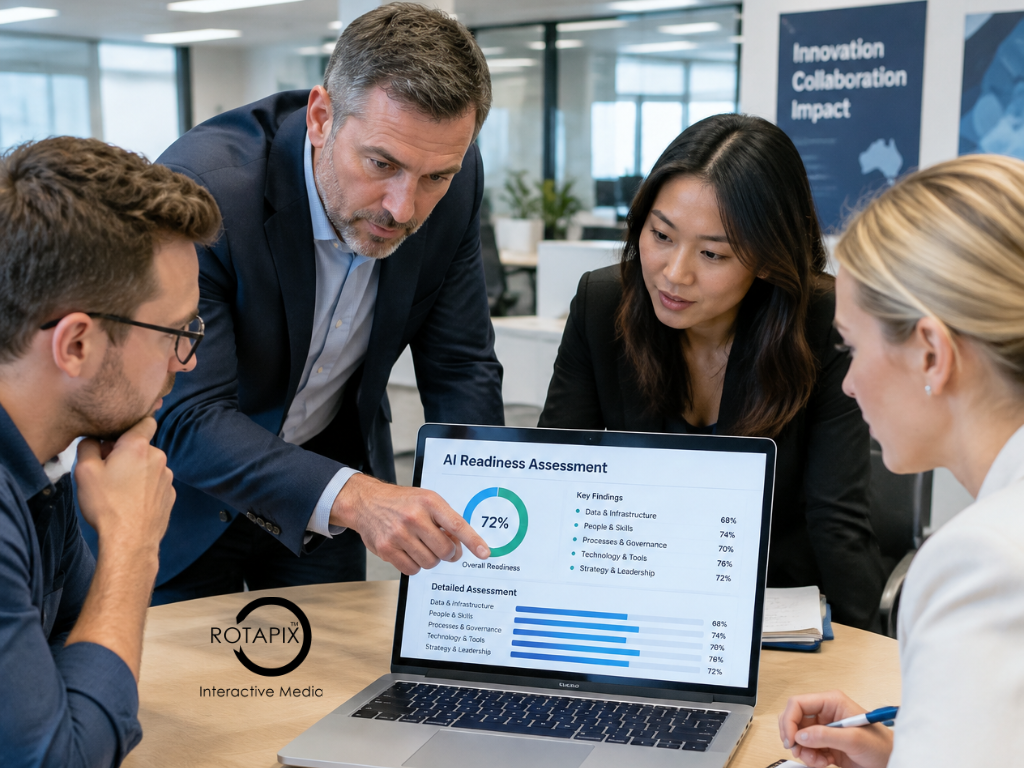
A workforce assessment should give businesses a clearer understanding of current skills and training requirements.
An ai readiness audit can use questionnaires, discussions and workflow reviews to identify areas that need attention.
The appropriate method depends on the organisation’s size, existing technology and plans for AI adoption.
What an AI Readiness Assessment Tool Should Measure
An ai readiness assessment tool can help businesses organise information about employee preparedness.
For example, the assessment may examine digital confidence, familiarity with AI tools and understanding of appropriate information handling.
It may also consider whether employees can review AI-generated content and identify errors.
Workplace responsibilities should influence the questions.
An administration team may need skills for document processing and information management.
A customer service team may need to understand how to review AI-assisted responses.
Managers may need additional knowledge about approvals, accountability and performance monitoring.
These groups should not necessarily receive identical assessments.
A useful tool should help businesses understand how employee capabilities relate to their actual work.
However, assessment results need careful interpretation.
A questionnaire alone cannot prove that someone can use AI safely in every situation.
Where appropriate, practical demonstrations and employee discussions can provide additional context.
The purpose is to identify training opportunities, not create an unrealistic measure of employee ability.
Using an AI Readiness Audit Tool to Identify Skills Gaps
An ai readiness audit tool can help businesses compare current capabilities with the skills required for proposed AI activities.
For example, a business might want to introduce AI-assisted document processing.
Before doing so, employees should understand how to review extracted information and identify missing details.
If the assessment reveals limited experience with these tasks, training may be necessary before implementation.
The organisation may also discover that existing processes need improvement.
For example, inconsistent document formats could make automated processing more difficult.
In that situation, standardising the workflow may be more useful than introducing AI immediately.
A well-structured assessment should connect findings with practical recommendations.
These may involve employee training, clearer procedures or changes to how information moves between systems.
The results should also help managers prioritise improvements according to business needs.
Understanding Your Organisation’s AI Maturity
Workforce readiness is only one part of successful AI adoption.
An ai readiness audit can reveal whether employees are prepared, but businesses also need suitable technology, information and internal processes.
An organisation may have enthusiastic employees while still lacking the systems required to support reliable AI integration.
This is where broader maturity assessments become relevant.
How an AI Maturity Audit Differs From Employee Readiness
An ai maturity audit examines an organisation’s overall ability to use AI effectively.
It may review business strategy, data quality, technical infrastructure, governance and operational processes.
Employee readiness is one part of that broader assessment.
For example, a sales team may understand how AI could help prepare customer follow-ups.
However, the business may store customer information across several disconnected applications.
Without reliable information and suitable integrations, the proposed automation could produce inaccurate results.
An ai maturity assessment helps organisations consider these wider requirements.
It may identify areas where the business needs stronger processes before expanding AI use.
The distinction is important.
Workforce readiness focuses on people’s capabilities.
Organisational maturity considers whether the business has the necessary systems, management practices and support arrangements.
Both perspectives can contribute to better implementation decisions.
When to Use an AI Maturity Assessment Before Expanding AI
An ai maturity assessment can be useful when a business plans to introduce AI across several departments.
For example, an organisation may already use AI for drafting documents and summarising meetings.
It may now want to connect AI with its CRM, accounting platform or internal databases.
These changes introduce additional technical and operational considerations.
The business needs to understand whether its systems can support those connections.
An ai maturity audit tool may help document current capabilities and identify areas requiring improvement.
Depending on the provider, it may examine data management, governance, technical readiness and existing workflows.
However, tools do not all use the same scoring criteria.
A high score from one assessment should not automatically be compared with a score from another provider.
Businesses should focus on what the results reveal about their actual requirements.
The most useful outcome is a clearer understanding of what the organisation can implement now and what needs preparation.
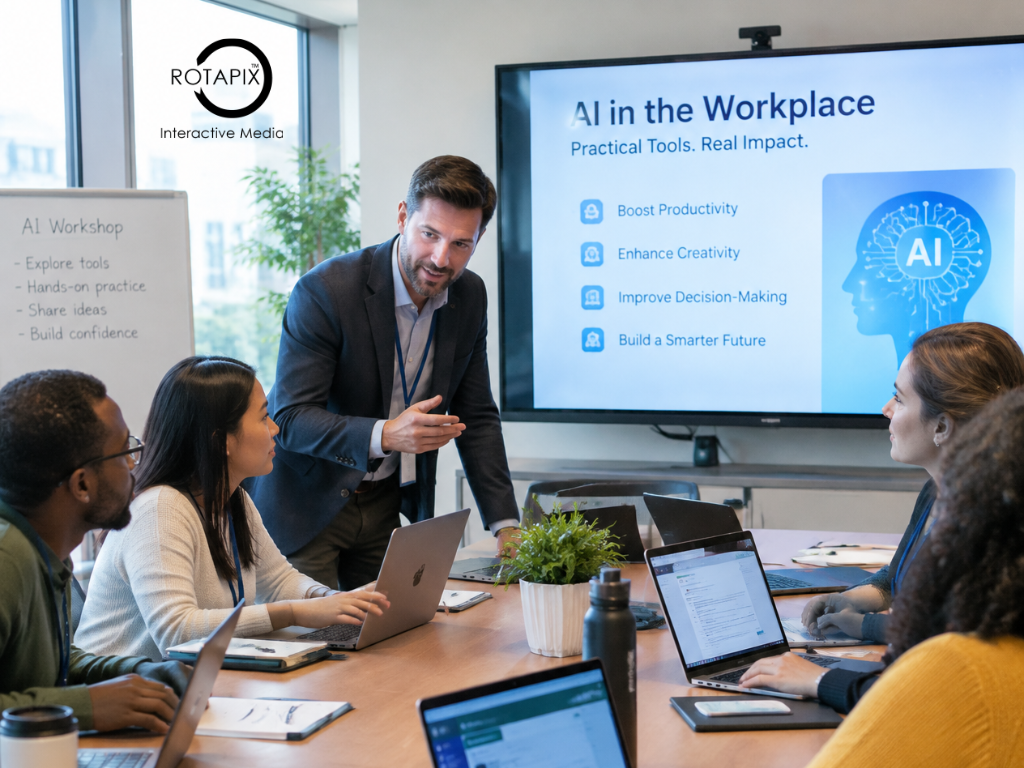
Preparing Employees for AI in Everyday Work
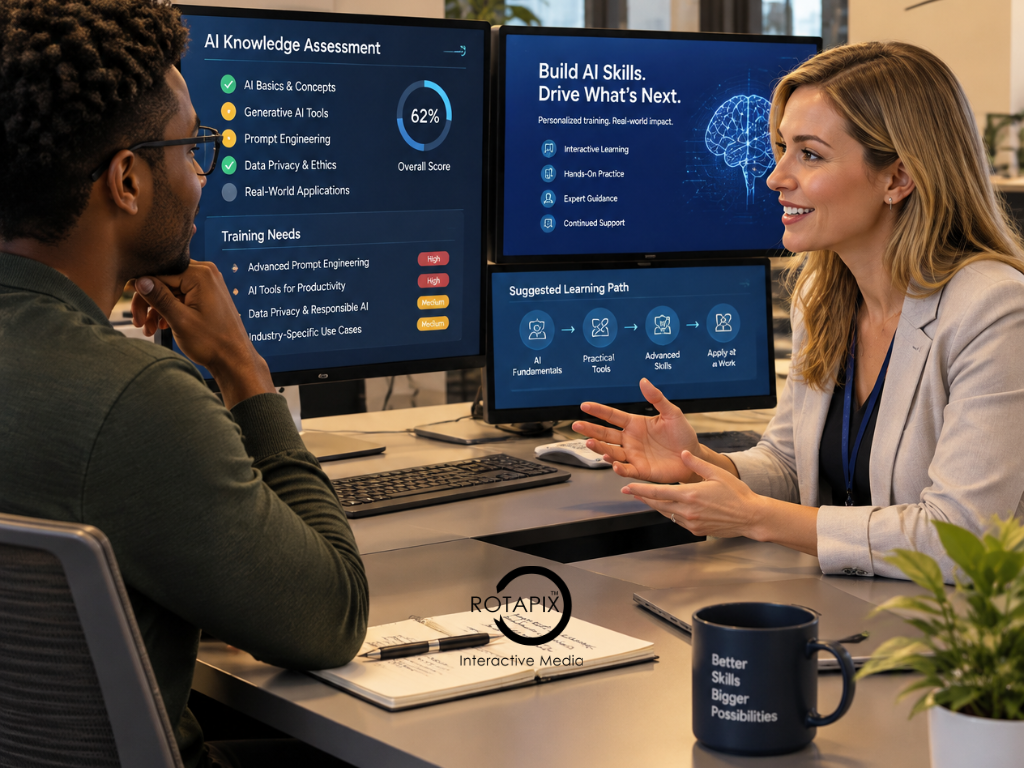
After identifying readiness gaps, businesses need a practical approach to employee development.
An ai readiness audit can help determine which skills deserve attention first.
Training should relate to real workplace tasks and the tools employees are expected to use.
There is little value in teaching every employee advanced AI features that do not support their responsibilities.
Building Practical AI Skills Without Overwhelming Staff
Effective training starts with manageable tasks.
For example, an administration employee might learn how to use an approved AI tool to prepare a draft meeting summary.
A sales employee may practice organising notes from customer enquiries.
A manager could learn how to review AI-generated information before using it in a business decision.
These activities provide opportunities to develop practical skills without changing every process at once.
Training should also explain how AI works at a basic level.
Employees need to understand that AI-generated information may sound convincing even when it is incorrect.
They should learn how to provide clear instructions and check results against reliable information.
Businesses can introduce training gradually.
An introductory session may explain common uses and limitations.
Further training can focus on tasks relevant to particular departments.
Employees should have opportunities to ask questions and provide feedback.
This approach helps businesses identify problems early and improve training as needs change.
Encouraging Safe AI Use and Human Oversight
Responsible AI use requires clear workplace rules.
Employees should understand which applications the business has approved and what information they can share.
For example, a staff member may use AI to improve the wording of a general email.
However, entering confidential customer records into an unapproved public tool may create privacy risks.
Businesses should explain these differences.
Training should also cover the importance of reviewing AI-generated content.
An AI system may produce an incorrect answer, omit important details or misunderstand a request.
Employees need to recognise when they should stop and check the result.
Human oversight becomes particularly important when AI supports customer communications, financial information or important business decisions.
Australian Government guidance on AI adoption highlights the importance of AI literacy, appropriate training and clearly assigned responsibilities.
Businesses can use these principles to develop practical internal procedures.
The aim is to help employees work confidently with AI while maintaining accountability.
Choosing the Right AI Readiness Assessment Approach
Businesses have different needs when evaluating AI readiness.
A small company exploring its first AI tool may require an introductory assessment.
An organisation planning complex integrations may need a more detailed review.
An ai readiness audit should match the business’s current situation and intended use of AI.
Understanding the available options helps decision-makers compare services more effectively.
What to Expect From a Free AI Readiness Audit
A free ai readiness audit may provide an initial overview of how prepared a business is for AI adoption.
Depending on the provider, it could involve an online questionnaire or a preliminary discussion.
Some assessments focus on leadership awareness and employee confidence.
Others may consider existing software, data quality and opportunities for process improvement.
However, free services vary considerably.
A short online assessment may identify useful discussion points without reviewing the business’s systems in detail.
It may also rely on self-reported information.
Businesses should understand what the assessment includes before relying on its conclusions.
For example, a general readiness score may not reveal whether an organisation’s customer database is suitable for a particular integration.
Likewise, a questionnaire may not demonstrate whether employees can review AI-generated information accurately.
An introductory assessment can still provide value.
It may help businesses identify questions worth exploring before committing to a larger project.
When Your Business Needs a More Detailed Assessment
A detailed ai readiness assessment may be appropriate when a business plans to connect AI with important systems or customer information.
For example, an organisation may want AI to process enquiries, update CRM records and prepare internal reports.
These activities involve more than employee familiarity with AI tools.
The business also needs to review information quality, access permissions, workflow requirements and human approval procedures.
A comprehensive assessment can help identify these dependencies.
Before choosing a provider, ask how the assessment works and what the final report includes.
You should also understand whether employee interviews, technical reviews and workflow analysis form part of the service.
For businesses comparing providers, Rotapix offers an AI Readiness Audit covering business strategy, data and infrastructure, and team capabilities.
Its published service information describes a structured evaluation process and recommendations for improving organisational readiness.
Businesses should confirm the current scope, deliverables and costs directly before proceeding.
A suitable provider should help you understand your next steps rather than simply recommend purchasing more software.
Turning AI Readiness Findings Into an Action Plan
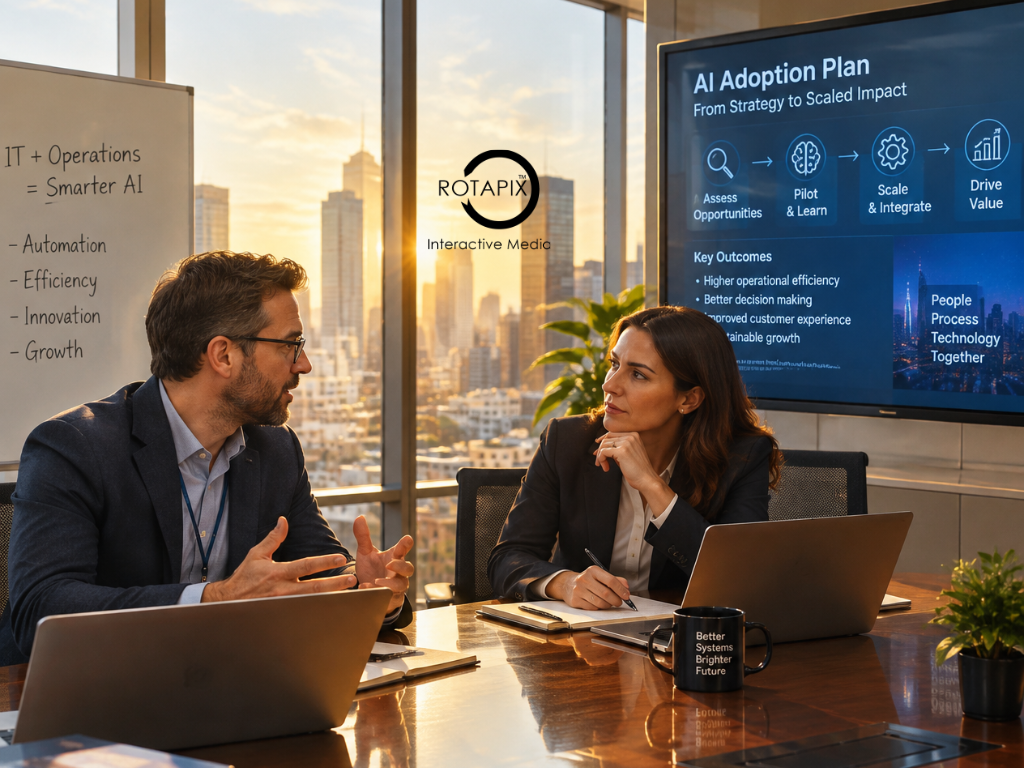
Completing an assessment is only the beginning.
An ai readiness audit becomes more useful when businesses turn its findings into practical improvements.
The next step is to identify training priorities, address workflow problems and select suitable opportunities for AI adoption.
The plan should reflect available resources and the organisation’s existing capabilities.
How an AI Readiness Audit Helps Set Training Priorities
Assessment results can help businesses determine which employees need support and what training should cover.
For example, a customer service team may understand AI chatbots but need guidance on checking responses.
An administration team may need training in handling documents and recognising inaccurate information.
Managers may require support in evaluating risks, approving processes and monitoring results.
These needs should inform the training plan.
Businesses can begin with essential skills before introducing more advanced applications.
Training should also connect with operational improvements.
For example, if an assessment identifies inconsistent customer records, the business may need to improve data management before automating related tasks.
Clear priorities help organisations avoid spreading their efforts across too many projects.
Progress can be reviewed through employee feedback and practical demonstrations.
The aim is not simply to complete training sessions.
It is to help employees perform relevant tasks confidently and responsibly.
Preparing Your Team for Responsible AI Adoption
Responsible adoption requires ongoing communication between employees, managers and technical providers.
Before introducing AI into a workflow, businesses should explain its purpose and expected benefits.
Employees should understand what will change and which responsibilities remain with people.
Starting with a limited, manageable workflow can help the organisation evaluate results.
For example, a business may first test AI-assisted meeting summaries with employee review.
The team can examine accuracy, time spent checking results and whether the process supports daily work.
If the approach proves useful, the organisation can consider further applications.
However, a successful demonstration does not automatically mean a system is ready for wider deployment.
Businesses should review security, information quality, employee responsibilities and ongoing support before expanding.
An ai readiness audit can provide a foundation for these decisions by identifying current strengths and areas needing improvement.
Australian businesses do not need every employee to become an AI expert.
They need people who understand the tools they use, recognise their limitations and know when human judgement matters.
Before committing to new AI software or automation projects, assess your team’s current capabilities and the processes you want to improve.
If your organisation needs a clearer picture of its preparedness, consider discussing an AI readiness assessment with a provider that can evaluate both workforce capabilities and the systems supporting everyday work.
With suitable training, clear responsibilities and realistic priorities, businesses can introduce AI in ways that support their employees and operational goals.