
AI automation services are becoming an important consideration for Australian businesses looking to reduce repetitive administration, improve operational efficiency and make better use of their existing technology. Whether you manage a small business, professional services firm or growing organisation, the challenge is often knowing where to begin.
Artificial intelligence can assist with tasks such as processing documents, organising customer enquiries, updating business records and transferring information between connected systems. However, implementing AI does not automatically make a business more efficient. Successful automation depends on choosing the right processes, working with reliable information and ensuring the technology supports genuine operational needs.
For many Australian businesses, the most practical starting point is not purchasing an expensive AI automation platform or attempting to automate an entire department. It is identifying one business process that consumes valuable time and determining whether technology can improve how that process works.
This guide explains how to identify suitable automation opportunities, assess your existing systems, review data quality and prepare for your first AI automation project.
Why Australian Businesses Are Exploring AI Automation
Many Australian businesses rely on several digital systems to manage their daily operations. Customer enquiries arrive through websites and email, financial information is processed through accounting software, and project updates are recorded in separate management platforms.
Although these systems help businesses operate, employees may still spend considerable time transferring information between them.
For example, a customer submits an enquiry through a website. A staff member reads the request, creates a customer record, sends an acknowledgement, notifies the appropriate team member and schedules a follow-up.
Each task may take only a few minutes, but the combined administrative workload can become significant when the process is repeated throughout the day.
AI automation can help organisations examine these workflows and identify opportunities to reduce unnecessary manual steps.
The potential benefits are not limited to saving time. Better information handling, more consistent workflows and clearer task ownership can also support everyday operations.
However, these improvements depend on how the solution is designed, implemented and maintained.
Understanding AI Automation Services Before You Begin
AI automation services generally involve assessing business processes and implementing technology that can perform or assist with selected tasks.
This may include traditional workflow automation, artificial intelligence, software integrations and custom development.
For example, a straightforward automation might transfer information from an approved online form into a customer relationship management system.
A more advanced process could use AI to interpret an incoming enquiry, identify the type of request and suggest which department should handle it.
The difference is important because not every repetitive task requires artificial intelligence.
Some activities can be managed more reliably using predefined rules, existing software features or standard integrations.
Professional AI automation services may include workflow assessments, technical planning, system integrations, custom AI development, testing and ongoing support.
Before investing, businesses should understand which processes need improvement and what success would look like.
Identify Business Processes Worth Automating
The first practical step towards automation is understanding where employees spend time performing repetitive work.
Not every manual task is inefficient, and not every process should be automated. Some activities require professional judgement, personal communication or careful consideration of individual circumstances.
Businesses exploring ai automation services should begin by identifying tasks that are frequent, clearly defined and suitable for consistent handling.
Find Repetitive Tasks That Consume Staff Time
Start by examining the work employees repeat throughout a typical week.
Administrative tasks often provide useful starting points because they involve predictable sequences of actions.
For example, a business may regularly receive invoices by email, download attachments, enter invoice details into accounting software and forward documents for approval.
Another business might manually copy customer information from website enquiries into a CRM before assigning follow-up tasks.
Document-heavy businesses may also spend time extracting information from purchase orders, application forms, contracts or other records.
These workflows may contain opportunities for automation, particularly when the information follows recognisable patterns.
To understand whether a process is worth reviewing, consider how frequently it occurs and how much employee time it requires.
For instance, a task taking five minutes and occurring 40 times per week represents approximately 200 minutes of weekly manual effort.
This does not mean automation will eliminate that entire workload. Employees may still need to verify information, manage exceptions or approve actions.
However, the calculation gives the business a useful starting point for assessing potential improvements.
Decide Where AI Automation Services Could Add Value
Once you have identified repetitive activities, evaluate which processes offer the clearest opportunities.
A suitable starting project usually has a defined beginning, a predictable sequence of actions and an outcome that can be measured.
For example, routing customer enquiries to the correct department may be easier to assess than attempting to automate an entire customer service function.
Consider whether the process involves structured information, whether errors occur regularly and whether staff spend time correcting or transferring data.
It is also important to identify where human judgement remains necessary.
AI may help classify customer messages, extract information or prepare suggested responses. However, staff may still need to approve communications or make decisions involving financial, contractual or sensitive information.
A practical automation opportunity should make work easier without introducing unnecessary complexity.
Starting with a clearly defined process also makes it easier to evaluate results before expanding automation into other areas.
Review Your Existing Business Software and Systems
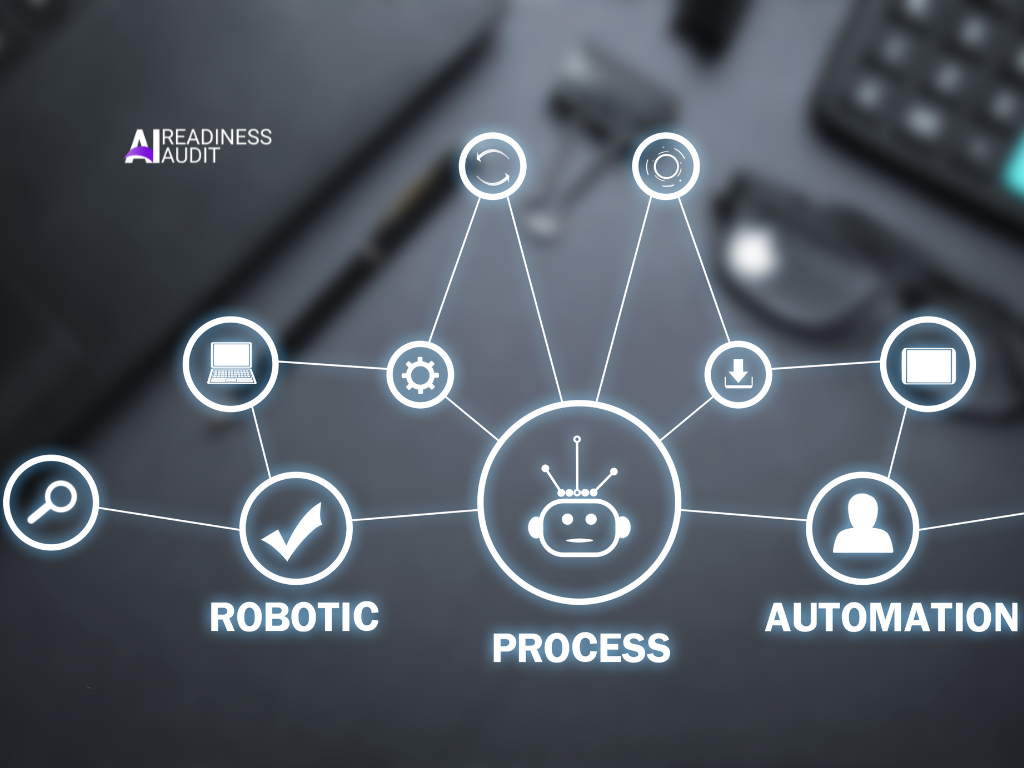
Before introducing new technology, understand how your current business software operates.
Many Australian businesses already use CRM platforms, accounting applications, project management tools, booking systems and email services.
Some of these systems include automation features that may not yet be fully utilised.
When considering ai automation services, reviewing your existing technology can reveal opportunities to improve workflows without replacing software that already performs its main purpose effectively.
Check Your CRM, Accounting and Operational Platforms
Begin by examining how information moves between your current systems.
For example, a business may use a website contact form to collect customer enquiries, a CRM to manage customer relationships and a project management platform to assign work.
If employees manually transfer information between these systems, investigate whether supported integrations can connect them.
Some platforms include built-in workflow rules, notification features and automation tools.
Using existing functionality may be more appropriate than introducing a separate AI solution.
Consider how frequently records are duplicated, whether staff need to enter the same information multiple times and whether information becomes outdated when systems are not synchronised.
Also review which employees use each platform and what access they require.
Understanding these relationships makes it easier to identify where technology can support a more consistent process.
The objective is not necessarily to replace existing systems. It is to improve how they work together.
Understand AI Automation Platform and Integration Options
An AI automation platform may connect different business applications and coordinate actions based on predefined conditions or AI-assisted interpretation.
For example, an approved integration could transfer information from a customer enquiry form into a CRM and trigger an internal notification.
Application programming interfaces, commonly called APIs, allow compatible systems to exchange information according to defined rules and permissions.
However, not every application supports the same integration methods.
Some software providers offer direct connections, while others require middleware, third-party integration platforms or custom development.
Before choosing a platform, confirm whether it supports your existing systems and whether the necessary permissions and integration features are available.
It is also important to understand what happens when information cannot be transferred successfully.
An appropriate workflow should identify errors, prevent unnecessary duplicate records and provide a way for employees to correct problems.
For more complex requirements, custom AI development may be useful when standard integration tools cannot adequately support the business process.
The best option depends on the workflow rather than the popularity of a particular platform.
Assess Data Quality, Security and AI Readiness
AI automation depends on the quality and availability of the information it uses.
If business records contain outdated contact details, duplicate entries or inconsistent formats, automating a workflow may cause those problems to spread across connected systems.
For Australian businesses considering ai automation services, preparing data and assessing security requirements should be part of the planning process rather than something addressed after implementation.
Prepare Accurate Data for Artificial Intelligence
Before introducing AI into a business process, review the information that the system will need to access.
For example, an automated customer enquiry workflow may rely on names, email addresses, service categories and details about the customer’s request.
If records are incomplete or inconsistent, the automation may produce incorrect classifications or transfer information to the wrong destination.
Data preparation can involve standardising fields, reviewing duplicate records and identifying information that is no longer required.
Businesses should also consider which information is genuinely needed for the proposed automation.
An enquiry classification system may only need the customer’s message and selected service category rather than unrestricted access to every customer record.
For document processing, review whether incoming files are sufficiently consistent for automated extraction.
AI may help interpret different document layouts, but its output can still contain mistakes.
A practical workflow should therefore include validation checks, especially where extracted information affects financial records, customer details or other important decisions.
Reliable information provides a stronger foundation for automation and reduces the amount of manual correction required later.
Evaluate Security Before Using AI Automation Services
Data security and privacy are particularly important when AI systems interact with customer records or confidential business information.
Before implementing an automation, determine what information the system will receive, where it will be processed and who can access the results.
Consider whether personal information will be transferred to an external service and whether that use is consistent with applicable Australian privacy obligations.
The Office of the Australian Information Commissioner advises businesses to assess privacy and security risks, investigate AI products before adoption and establish suitable human oversight. It also recommends avoiding the entry of personal and particularly sensitive information into publicly available generative AI tools as a best practice.
For businesses handling financial information, customer records or commercially sensitive documents, data access should be limited to what the workflow genuinely requires.
Employee permissions, authentication, secure integrations and appropriate record handling should also be considered.
Human approval may be necessary before an automated system changes important records, sends external communications or triggers financial transactions.
For instance, AI could extract invoice details and prepare a record for review without independently approving payment.
Australian Government guidance also recommends clear accountability, internal AI policies and processes for identifying and managing risks.
Responsible implementation means understanding both the benefits and the limitations of the technology before allowing it to perform business actions.
Choose the Right AI Tools for Your Business Needs

Different business challenges require different technical solutions.
A company trying to improve customer enquiry handling may not need the same technology as a business processing hundreds of documents or analysing historical demand.
When evaluating ai automation services, it helps to understand the main types of automation tools and what they are designed to achieve.
Compare Chatbots, Workflow Automation and Predictive Analytics
Chatbots are commonly used to help customers find information, answer routine questions or provide details before submitting an enquiry.
A website chatbot may guide visitors towards relevant services, collect information about their requirements or direct them to an appropriate contact option.
However, chatbots should have clear limitations. Customers should be able to reach a person when the system cannot answer accurately or the situation requires human assistance.
Traditional workflow automation works differently.
It generally follows predefined instructions, such as creating a task when an enquiry form is submitted or sending a notification when a record changes status.
These activities may not require artificial intelligence at all.
AI-assisted document processing can be useful when information needs to be interpreted from invoices, forms, emails or other documents with varying layouts.
Predictive analytics serves another purpose. It uses historical data and analytical methods to identify patterns or estimate future outcomes, such as demand or workload.
However, predictions depend on data quality, appropriate methods and the conditions under which the model operates. They should not be treated as guaranteed outcomes.
Choosing suitable technology involves matching its actual capabilities to the business problem.
A simple workflow rule may be more reliable and cost-effective than an AI system when the task does not require interpretation or complex analysis.
When Custom AI Development Makes Sense
Existing software tools are often sufficient for straightforward automation requirements.
For example, a business may be able to connect its enquiry form and CRM using existing integration features.
Custom AI development becomes more relevant when a workflow has unusual requirements that standard tools cannot adequately support.
A company might need to interpret specialised documents, apply business-specific classification rules or connect several systems that lack direct integration options.
Another organisation may need an AI-assisted workflow that reflects particular approval stages or internal operating procedures.
In these situations, custom development may provide greater flexibility.
However, it can also introduce additional responsibilities involving testing, maintenance, infrastructure, system updates and technical support.
Before committing to custom development, compare the requirements with the capabilities of existing software.
Consider whether the proposed system needs to handle sensitive information, whether the business has sufficient technical resources and who will maintain the automation.
The decision should be based on operational needs and realistic costs rather than assuming a custom solution is always more effective.
Plan a Small and Measurable Automation Project
Once your business has identified a suitable workflow, the next step is to test whether automation can improve it.
Starting with a manageable project makes it easier to understand the technology, involve employees and identify issues before expanding its use.
Businesses investing in ai automation services should establish measurable objectives and a clear implementation process rather than attempting a large transformation without an initial assessment.
Select One Workflow and Define Success
Choose a business process that is sufficiently consistent and easy to evaluate.
For example, a company might begin by reviewing how customer enquiries move from its website into its CRM.
The existing process may require staff to read submissions, identify the appropriate service category, create records and notify relevant employees.
An automation project could aim to reduce the time spent transferring information while maintaining accurate customer records.
Before implementation, document how the current process works.
Record the approximate number of enquiries received, the manual steps involved and the time required to complete those steps.
It is also helpful to identify common problems, such as incomplete information, duplicate records or delayed follow-ups.
These observations establish a baseline for comparison.
Once the workflow is automated, the business can review whether manual processing time has decreased and whether the information remains accurate.
Other useful measurements may include correction rates, processing costs, response times and employee feedback.
A successful pilot should demonstrate an operational improvement that matters to the business, not simply that the technology can perform a task.
Test AI Automation Services Before Expanding
Testing should reflect the situations that employees encounter during normal business operations.
For an automated enquiry workflow, this may involve testing complete submissions, missing contact details, unusual questions and requests that do not match an existing service category.
The system should be able to handle predictable errors without creating incorrect records or triggering inappropriate actions.
Where AI interprets information, employees should review outputs and identify situations where the system performs inconsistently.
A practical implementation may begin with AI preparing suggested classifications while staff confirm the results.
Once the workflow demonstrates acceptable reliability, suitable low-risk actions may be automated further.
Employee feedback is important because staff understand the exceptions and workarounds involved in everyday processes.
Businesses should also evaluate costs, including software subscriptions, implementation, employee training and ongoing support.
The Australian Government’s Guidance for AI Adoption recommends managing AI through appropriate governance, risk assessment and implementation practices rather than treating deployment as a one-time activity.
If the initial project produces useful results, the business can consider expanding automation to related workflows.
However, scaling should follow demonstrated performance and a clear understanding of the risks involved.
Know When to Seek Professional AI Automation Support
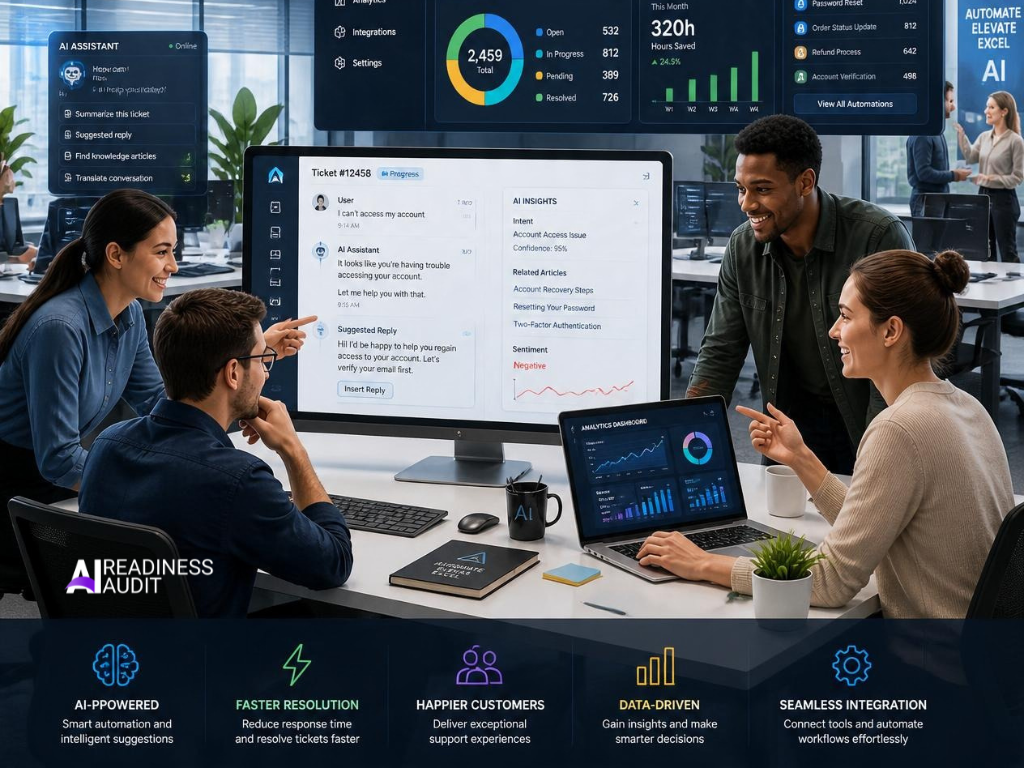
Some businesses have the technical knowledge and resources to implement simple workflows internally.
Others may need assistance understanding their existing systems, identifying suitable opportunities or developing integrations.
When considering ai automation services, the decision to engage a specialist should depend on the complexity of the work and the skills available within the organisation.
Professional support can be particularly useful when a project involves multiple software platforms, confidential information or business-specific requirements.
What to Ask AI Automation Companies Before Hiring
When comparing ai automation companies, begin by understanding how they assess business requirements.
A suitable provider should be able to discuss your current processes, identify potential limitations and explain why a particular solution may be appropriate.
Ask how the proposed automation will connect with existing systems and whether the project requires additional software subscriptions or licensing.
The provider should also be able to explain how information will be handled, what access is required and where human approval will remain necessary.
Implementation costs deserve careful review.
A quotation may include initial development but exclude ongoing subscriptions, maintenance, technical support or future modifications.
Businesses should understand these arrangements before proceeding.
It is also worth asking who will own the developed workflow, how documentation will be provided and what happens if the business changes service providers.
For complex projects, request a clear scope describing the processes involved, expected outputs, testing requirements and acceptance criteria.
Avoid relying on promises of guaranteed savings or complete automation without reviewing the actual workflow.
A useful provider should be willing to explain when a simpler solution is appropriate and when AI may introduce more complexity than value.
Take the First Step With AI Automation Services
Getting started with AI automation does not require changing every part of your business.
A more practical approach begins with understanding where repetitive work occurs and identifying one process that could benefit from improvement.
Review how information currently moves between your systems, whether employees frequently repeat the same actions and which problems affect productivity or customer experience.
Then consider whether traditional workflow automation, AI-assisted processing or custom development is the most appropriate solution.
For Australian businesses unsure where to begin, an AI readiness assessment can provide a structured way to review current processes, existing software, data quality and potential automation opportunities.
AI Readiness Audit focuses on helping businesses identify where AI and automation may fit within their operations before committing to implementation.
An initial workflow review can help clarify the business problem, establish priorities and identify questions that need to be resolved before selecting technology.
The goal is not to introduce artificial intelligence into every activity. It is to use appropriate technology where it can deliver a practical, measurable benefit while maintaining human oversight.
If your business is spending valuable time on repetitive administration, disconnected workflows or manual information handling, explore AI Readiness Audit to investigate suitable opportunities and consider which business process could be reviewed first.
Starting with one clearly defined problem can provide a more manageable foundation for adopting AI automation and making informed decisions about future technology investments.