Web Development plays an important role in creating an online store that customers can use with confidence. For Australian businesses, a successful eCommerce website needs more than an attractive design. It should help customers find products, understand their options and complete purchases without unnecessary difficulty.
A well-planned online store also needs reliable systems behind the scenes. Business owners must manage products, payments, orders, inventory and customer information. If these functions do not work together, everyday operations can become harder to manage.
Whether you are launching a new store or improving an existing website, the right approach depends on your business needs.
A small retailer may find everything it needs in an established eCommerce platform. Meanwhile, a wholesaler with complex ordering rules may require additional development.
The goal is not to choose the most advanced technology. It is to create a website that works well for customers and remains practical for the business to operate.
Why Web Development Matters for Online Stores
Professional web development focuses on how a website functions, not just how it looks.
An eCommerce store needs clear product pages, accurate information, working shopping carts and a dependable checkout process.
Customers should be able to browse products, compare options and understand what they are buying.
For example, an Australian retailer selling clothing may need size options, stock availability and delivery information on each product page.
A business selling industrial equipment may require detailed specifications, product variations and quotation options.
These stores have different requirements, even though both sell products online.
The development process should account for these differences.
It should also consider how the business will manage orders, update products and maintain the website after launch.
Good development creates a reliable foundation for these everyday activities.
What Makes an eCommerce Website Useful to Customers?
Customers visit online stores because they want to find information or purchase something.
They should not need to search through confusing menus or complete unnecessary steps.
Useful product pages include clear descriptions, relevant images, pricing and availability details.
Navigation should help visitors move between product categories without losing their place.
Search functions and product filters can also help customers find suitable items.
For Australian shoppers, delivery costs and payment options are important parts of the buying process.
A store should explain shipping arrangements and return conditions before customers commit to a purchase.
Contact details and customer support information should also be easy to find.
These features help people understand the business and make informed decisions.
When planning an eCommerce website, consider the complete customer journey. Every step should help visitors move from product discovery to purchase.
Choosing the Right eCommerce Platform
Selecting a platform is one of the most important decisions in Web Development for online retailers.
The platform affects how you manage products, accept payments and connect other business systems.
Shopify, BigCommerce and WordPress with WooCommerce are common options.
Each offers different features, responsibilities and opportunities for customization.
The right choice depends on your products, budget, technical requirements and plans for future growth.
Shopify, BigCommerce and WordPress Development Compared
Shopify provides a hosted eCommerce platform that includes tools for managing products, orders and online payments.
Businesses can choose from available themes and add features through supported applications.
Shopify may suit retailers that want a managed platform without taking responsibility for maintaining their own web server.
However, businesses should review subscription costs, app charges and platform limitations before choosing it.
BigCommerce is another hosted eCommerce solution.
It supports product management, online ordering and integrations with other business applications.
Businesses with larger catalogue or more complex selling requirements may consider BigCommerce alongside other suitable platforms.
The final decision should depend on the specific features required.
WordPress Development offers a different approach.
WordPress is a content management system. Businesses commonly add WooCommerce to provide online shopping functionality.
This combination can support stores that need flexible content management and greater control over their website environment.
However, WordPress and WooCommerce also require suitable hosting, software updates and ongoing maintenance.
No platform is automatically the best option for every retailer.
Before making a decision, compare the total cost, available integrations, management responsibilities and features your business needs.
When a Standard eCommerce Platform Is Enough
Many businesses do not need a completely custom-built online store.
Established platforms already provide common shopping features.
These include product catalogue, shopping carts, checkout functions, discount options and order management.
For example, a retailer selling a standard range of products may be able to operate effectively using Shopify, BigCommerce or WooCommerce.
The business can then focus on product information, customer support and order fulfillment.
A standard platform may also reduce the amount of custom software the business needs to maintain.
However, you should review available features carefully.
Some requirements may need paid extensions or external applications.
Other functions may not be available without additional development.
Choose a platform that supports your current operations while allowing reasonable changes as your business develops.
The best solution is one that meets your needs without introducing unnecessary complexity.
Designing a Shopping Experience That Works
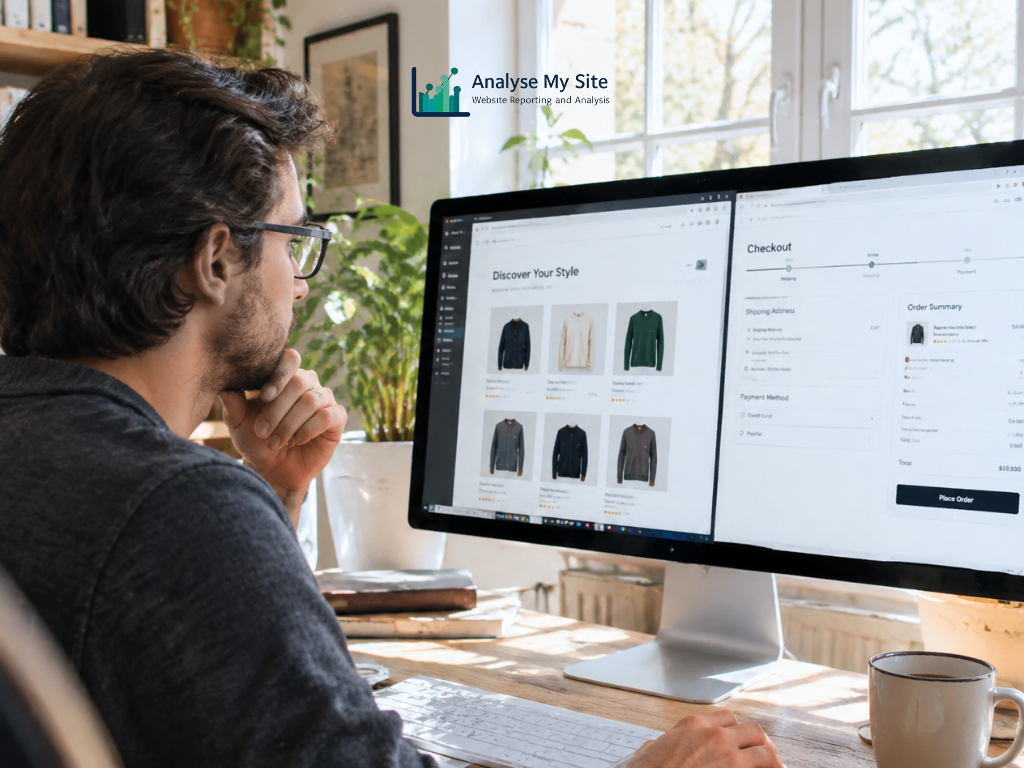
An effective online store should make shopping straightforward.
UI/UX Design is an important part of eCommerce Web Development because it affects how customers interact with your website.
UI refers to the user interface, including buttons, menus and page layouts.
UX means user experience. It considers how easy and practical the website is to use.
Both influence how customers find information and complete purchases.
How UI/UX Design Helps Customers Find Products
Product discovery should feel simple and predictable.
Clear categories help visitors understand what your store sells.
For example, an online hardware supplier may organise products by equipment type, application or manufacturer.
Customers should be able to move between these categories without confusion.
Useful search filters can narrow products by size, price, material or other relevant features.
Product pages should provide enough information to support a buying decision.
Images should accurately represent the product, while descriptions should explain its important features.
If a product comes in several sizes or colours, customers should understand which option they are selecting.
Availability information should also be accurate.
Good UI/UX Design reduces unnecessary steps and helps customers find what they need.
It also supports accessibility.
Readable text, clear labels and keyboard-friendly controls can make a website easier for more people to use.
These details should be considered during development rather than treated as optional improvements.
Making Mobile Shopping and Checkout Easier
Many customers browse online stores using mobile devices.
Your website should therefore work comfortably on smaller screens.
Responsive web design adjusts the layout to suit different screen sizes.
However, a responsive layout alone does not guarantee a good mobile experience.
Buttons must be easy to select, product images should display correctly and menus should remain usable.
The checkout process deserves particular attention.
Customers should understand the information they need to provide and why it is required.
Forms should use clear labels and avoid unnecessary fields.
Where suitable, offering guest checkout may help customers who do not want to create an account.
Payment options should work reliably on supported devices.
Customers should also see the total purchase cost before placing an order.
For Australian retailers, this includes clear information about relevant taxes, shipping fees and other charges.
Testing the complete shopping process on different devices can reveal problems that desktop reviews may miss.
When Your Online Store Needs Custom Development
Standard eCommerce platforms support many common business requirements.
However, some organisations need functionality that existing themes, extensions or applications cannot provide.
Custom Web Development may help when a business has specialised ordering processes, internal systems or customer requirements.
The key is understanding which problem requires a tailored solution.
Using Laravel for Specialised eCommerce Requirements
Laravel is a PHP development framework used to build web applications.
Developers can use Laravel to create systems that support specialised business processes.
For example, a wholesale supplier may need customer-specific pricing, account approvals or detailed product configuration.
A company might also require an internal portal for managing orders and customer records.
Laravel can support these types of applications when developers design the system around the business requirements.
However, Laravel is not a direct replacement for Shopify, BigCommerce or WooCommerce.
Those platforms already provide eCommerce functionality.
Laravel provides a framework for building software that may include custom ordering features or connections to other systems.
A business could use a Laravel application alongside its existing online store.
This approach may be useful when standard platform features cannot support a particular workflow.
Before choosing custom development, assess the ongoing responsibilities.
Custom applications require testing, security updates, technical documentation and maintenance.
Businesses should understand these requirements before making an investment.
When a Customized Web Application Makes Sense
A Customized Web Application can provide functionality that standard software does not support.
For example, a business may need customers to select multiple product options before receiving a calculated price.
Another organisation might require approval from an account manager before processing a wholesale order.
A tailored application could support these workflows.
Custom development may also help connect an online store with inventory, accounting or enterprise management systems.
However, not every integration requires custom software.
Many eCommerce platforms already offer supported connections to popular business applications.
Before commissioning a custom solution, review the features and integrations available through your current platform.
You should also compare the cost of configuration with the cost of building and maintaining new software.
Custom development makes sense when it solves a defined problem that simpler options cannot address effectively.
For most businesses, the objective should be a practical solution rather than a complicated technical system.
Website Speed, Progressive Web Apps and Integrations

Website performance affects how customers experience your store.
Slow pages, unresponsive buttons and unexpected layout changes can make shopping difficult.
Web Development should therefore consider performance from the beginning.
Businesses also need reliable connections between their store and the systems that support daily operations.
How Performance Affects the Online Shopping Experience
Customers should be able to open product pages, view images and interact with shopping features without unnecessary delays.
Large image files, poorly configured extensions and inefficient code can affect website performance.
Hosting arrangements can also influence how reliably a store operates.
Businesses should test important pages, including product listings, individual products, shopping carts and checkout.
Google provides Core Web Vitals to help website owners assess loading performance, responsiveness and visual stability.
These measures can identify technical issues that affect the customer experience.
However, a good performance score does not automatically mean a website provides useful information or an effective shopping experience.
Both technical performance and content quality matter.
Image optimisation, suitable caching and efficient code can support faster loading.
Developers should also check whether third-party applications create unnecessary delays.
Regular testing helps businesses identify problems as products, content and website features change.
When a Progressive Web App Is Worth Considering
A Progressive Web App, or PWA, is a website that uses supported web technologies to provide additional application-like features.
Depending on its design and browser support, a PWA may offer installation options, caching or selected offline functions.
These capabilities can be useful for certain businesses.
For example, an online store with frequent returning customers may want to explore a more app-like shopping experience.
However, a PWA does not automatically improve sales or replace the need for a suitable eCommerce platform.
Businesses should consider whether customers will benefit from its features.
Development and maintenance requirements also matter.
For many retailers, improving their existing mobile website may be a more practical first step.
Integrations are another important consideration.
An online store may need to exchange information with inventory systems, shipping providers, accounting software or customer management applications.
Reliable integrations can reduce duplicate data entry and help teams manage orders.
Before adding a new application or custom connection, confirm that the integration supports your actual business workflow.
A connected system should make daily operations easier, not create more technical work.
Keeping Your eCommerce Website Secure and Reliable
Security is an essential part of eCommerce Web Development.
Online stores handle customer information, order details and payment processes.
Businesses must also protect administrative accounts and maintain reliable website operations.
Security should remain a priority after the store launches.
Protecting Payments, Customer Details and Store Access
Online stores should use reputable payment providers and suitable security controls.
Where possible, businesses can use payment services that handle sensitive card information through their own secure systems.
This can reduce the need for the store to process or store card details directly.
However, using a payment provider does not remove every security responsibility.
Website administrators still need strong account protection and appropriate access permissions.
Businesses should use HTTPS to protect information during transmission.
They should also review how customer information is stored and who can access it.
Australian online retailers need to provide accurate product information and clear purchasing conditions.
The Australian Competition and Consumer Commission explains that online sellers must follow applicable consumer laws.
These include consumer guarantees and rules against misleading claims.
Businesses should also provide clear refund and return information.
Store policies must not remove rights that customers hold under Australian Consumer Law.
Privacy obligations vary according to the business and the information involved.
Retailers should review their responsibilities and maintain suitable information-handling practices.
Security, transparency and clear customer information all contribute to a more dependable shopping experience.
Why Website Maintenance Matters After Launch
Launching an online store is not the end of the development process.
Website software, payment integrations and business requirements change over time.
Regular maintenance helps keep the store functional and secure.
For WordPress Development, this includes reviewing updates for WordPress, WooCommerce, themes and plugins.
Businesses should test important shopping functions after significant changes.
For example, an update may affect product variations, payment processing or shipping calculations.
Backups are also important.
A suitable backup process can support recovery if a technical problem affects website data or functionality.
Hosted platforms such as Shopify and BigCommerce manage parts of the underlying infrastructure.
However, store owners remain responsible for areas such as account access, application configuration and their own business processes.
Custom applications require appropriate technical maintenance as well.
Businesses should understand who handles updates, security reviews and troubleshooting.
A clear maintenance arrangement can help reduce avoidable disruption and support reliable online operations.
Choosing a Web Development Partner for Your Store
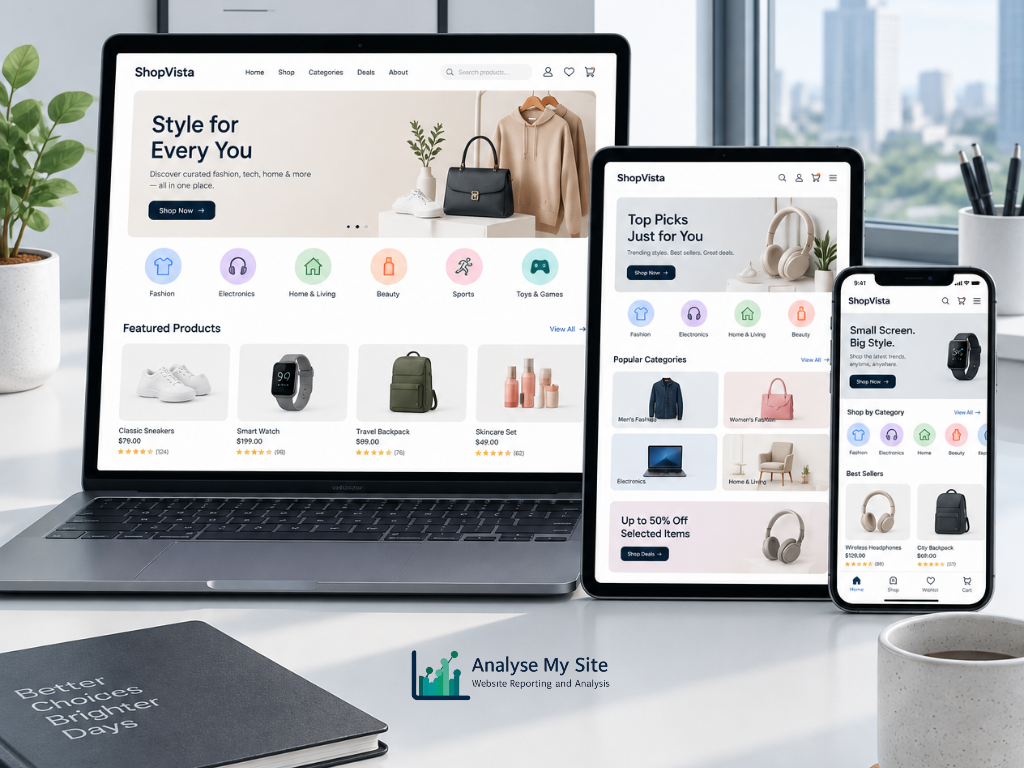
Selecting a suitable provider is an important decision when planning an online store.
A professional Web Development partner should understand your business requirements before recommending technology.
The right provider should also explain what the proposed solution includes and what responsibilities remain with your business.
Clear communication helps you compare different options.
What to Ask About Web Development Before Hiring
Before choosing a developer or agency, explain what your store needs to achieve.
Discuss your products, customers, ordering process and existing software.
Ask how the provider plans to manage important features such as payments, inventory and shipping.
If you are considering Shopify, BigCommerce or WooCommerce, request an explanation of why the platform suits your business.
For custom applications, ask how the development team will test and maintain the system.
You should also understand the project scope.
A quotation may include website design and development but exclude product uploads, content preparation or ongoing support.
Clarify these details before approving the project.
Discuss the ownership of your domain, website accounts, content and custom code.
For businesses comparing providers in Sydney or elsewhere in Australia, relevant experience and reliable support matter more than location alone.
It is also useful to review your existing website before paying for a complete rebuild.
Analyse My Site provides website analysis covering performance, SEO structure, user experience and conversion pathways.
A website review can help identify existing problems and support informed discussions about development priorities.
This is especially useful when a business is unsure whether it needs a redesign, technical improvements or a different platform.
Planning a Store That Can Support Future Business Needs
Your online store should meet today’s requirements while allowing reasonable changes.
For example, a retailer may begin with a small product range and later introduce more categories or customer account features.
A wholesaler might eventually need connections to new inventory or accounting systems.
These possibilities are worth discussing during development.
However, businesses should avoid paying for complex functions they may never use.
Start with the features needed to operate effectively.
Then consider whether the chosen platform can support future changes without unnecessary redevelopment.
Ongoing costs should form part of this decision.
Compare hosting, subscriptions, extensions, maintenance and technical support alongside the initial development price.
The best eCommerce solution is not necessarily the most expensive or feature-rich.
It should make shopping straightforward for customers and daily management practical for your team.
Before starting a new project, consider reviewing your current website’s usability, performance and technical structure.
A website analysis through Analyse My Site can help identify areas that may need attention.
This can provide a clearer starting point when comparing website improvements, platform changes or professional development services.
Effective web development begins with understanding how customers shop and how your business operates.
By choosing suitable technology, clear design and reliable systems, Australian retailers can create online stores that support both customer needs and everyday business activities.