Choosing aged care south west is about more than finding an available room or comparing facilities. For many older people, language, culture, faith, food, family relationships and familiar routines are closely connected to feeling safe, respected and at home. These factors deserve the same careful consideration as personal care, nursing support and the physical environment.
This is particularly relevant in South Western Sydney. South Western Sydney PHN reports that about 42% of residents were born overseas and 51% speak a language other than English at home. Its latest needs assessment identifies the region as having one of Australia’s largest culturally and linguistically diverse populations.
Australia’s strengthened Aged Care Quality Standards, which have applied since 1 November 2025, also place greater emphasis on diversity, individual preferences and culturally safe care. The standards say an older person’s identity, culture, beliefs, life experiences and communication needs should help shape the care they receive.
For families comparing aged care nursing homes, this means looking beyond appearances and asking how a home will support the individual person who may be living there.
Aged Care South West: Understand What Matters Day to Day
Aged care south west should begin with understanding the older person rather than starting with a list of facilities.
Culture can influence many parts of daily life. Language may affect how comfortable someone feels speaking with staff. Faith may influence routines, celebrations or dietary choices. Familiar foods, music, social customs and family relationships can all contribute to a person’s sense of identity.
These details can become even more important when a person is moving into residential aged care.
The Aged Care Quality and Safety Commission states that providers must understand and value each person’s identity, culture, diversity, beliefs and life experiences and tailor funded aged care services around their needs, goals and preferences.
That gives families useful questions to consider when comparing an aged care nursing home Sydney residents may be considering.
Does the person have a preferred language? Are particular religious practices important? Are there meals they particularly enjoy or avoid? Which family relationships and community connections should continue after the move?
These are not minor lifestyle details.
They help describe what respectful, person-centred care should look like for that individual.
Aged Care South West: Include the Older Person in Decisions
Aged care south west decisions should include the older person as much as their circumstances allow.
Family members often play an important role, particularly when health or cognitive changes make the process more difficult. However, the person’s own preferences should remain central rather than being replaced automatically by what relatives assume would be best.
The strengthened Quality Standards emphasise autonomy, choice, supported decision-making and partnership with the person receiving care. They also state that older people have the right to make decisions about their care with support when they need it.
For families, this may mean discussing several options rather than presenting one decision as already made.
An older person may have strong views about location, room privacy, food, language, religious practices or how often they want to participate in social activities.
The fact that a home offers a particular cultural program does not mean every resident from that background will want to take part.
Culturally safe care is personal.
The Aged Care Quality and Safety Commission specifically notes that only the person receiving care can ultimately determine whether care feels culturally safe to them.
Check Language and Communication Support
Aged Care South West: Ask How Staff Support Different Languages
Aged care south west providers operate in one of Australia’s most linguistically diverse regions, so language support can be an important part of comparing homes.
South Western Sydney PHN reports that Arabic, Vietnamese, Assyrian Neo-Aramaic, Cantonese and Mandarin are among the most commonly spoken languages other than English in the region. Its current needs assessment also reports that 11% of South Western Sydney residents speak English “not well or not at all”, more than twice the NSW proportion recorded in the same data.
Families should therefore ask how the home communicates with residents who prefer another language.
Some homes may have multilingual staff. Others may use interpreting services or have established processes for documenting a person’s preferred language and communication needs.
The important point is not simply whether someone on staff happens to speak the language.
Ask what happens during personal care, clinical conversations, medication discussions or a change in the resident’s health when clear communication becomes especially important.
The strengthened Quality Standards require providers to identify and understand each person’s communication needs and preferences as part of person-centred care.
Aged Care South West: Consider Communication During Care
Aged care south west families should also think about communication in everyday situations.
Understanding a resident is not limited to translating words.
Staff may need to understand how a person expresses discomfort, asks for help, communicates preferences or responds when they are worried.
This can be particularly important for people living with dementia or other cognitive changes.
Familiar language, tone of voice, gestures and routines may help staff understand the person more effectively.
Families can ask how communication preferences are recorded in the care plan and how that information is shared between staff members.
It can also help to ask how the home communicates with family members when care needs change.
A culturally safe service should not rely on the resident or family repeatedly explaining the same important cultural and communication needs to different people.
The current Quality Standards expect care planning and service delivery to reflect the person’s needs, goals and preferences and to be culturally safe and appropriate for people from diverse backgrounds.
Look at Food, Faith and Cultural Practices
Aged Care South West: Review Meals and Dietary Preferences
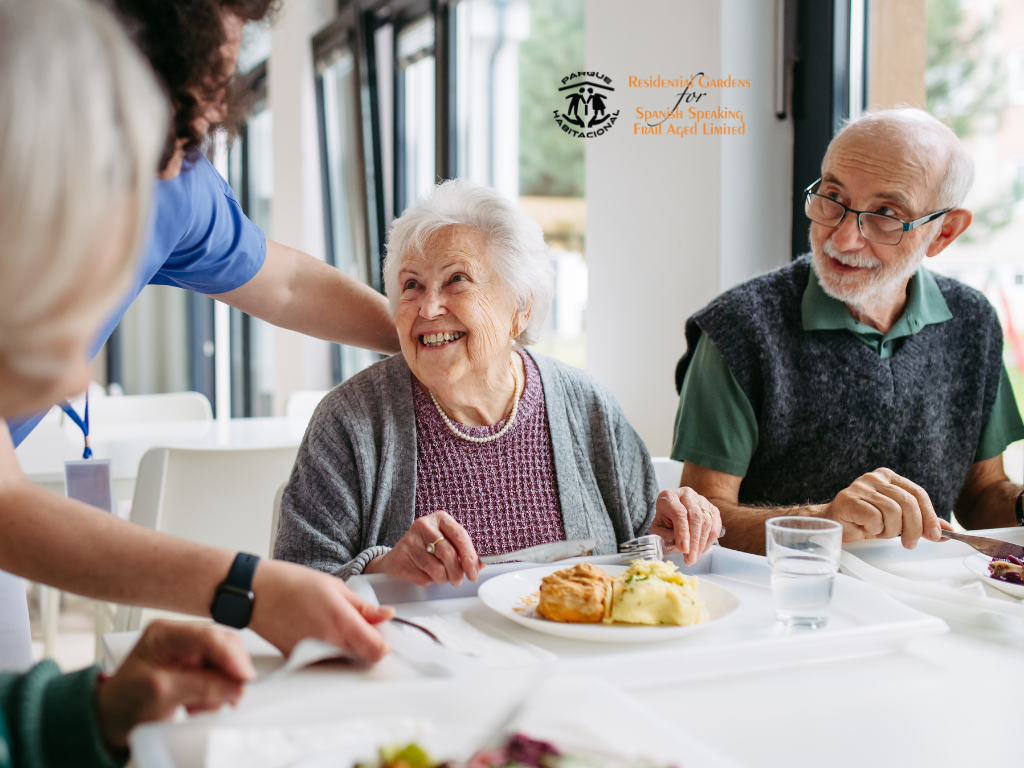
Aged care south west families should pay close attention to food because meals are part of everyday comfort, identity and social life.
The strengthened Aged Care Quality Standards include a dedicated Food and Nutrition standard for residential care. Providers are expected to work with older people to understand their food and drink preferences, including cultural needs.
When visiting a home, families can ask how menus are planned and whether residents can request culturally familiar meals.
Dietary needs should also be distinguished from preferences.
Some residents may require modified textures or medically appropriate diets, while still wanting familiar flavours and foods where possible.
A modern nursing home may have an attractive dining room, but the more important question is whether the food experience reflects the people living there.
Ask how feedback about meals is collected and whether residents can influence menu choices.
For many older people, familiar food can provide comfort during a significant life change.
Aged Care South West: Ask About Faith and Cultural Traditions
Aged care south west should also allow people to maintain meaningful spiritual, religious and cultural practices where they choose to do so.
This may involve attending services, observing significant dates, receiving visits from faith leaders, participating in cultural celebrations or having privacy for prayer and reflection.
The current Quality Standards recognise cultural, spiritual, religious and social needs as part of person-centred aged care.
Families should therefore ask what actually happens in the home rather than relying on broad statements such as “we support diversity”.
Ask whether residents can continue important traditions and how individual preferences are recorded.
Residential Gardens, located in Rooty Hill in Western Sydney, says it was originally established to support Spanish-speaking older people and currently lists cultural-day celebrations, pastoral care and religious services among its residential services. It also provides residential and respite care.
This is the type of provider-specific information families can compare when cultural continuity is important to the person entering care.
Compare Daily Life and Social Connection
Aged Care South West: Explore Lifestyle in Aged Care
Aged care south west should support more than personal and clinical care.
Lifestyle in aged care includes the person’s daily routine, social relationships, activities, interests and opportunities to remain connected with the wider community.
Two residents may want very different experiences.
One person may enjoy organised group activities and outings. Another may prefer gardening, reading, spending time with family or having quiet conversations with a small number of people.
A good comparison therefore looks at choice rather than the number of activities printed on a calendar.
The strengthened Quality Standards recognise quality of life, independence, relationships and social connection as important parts of person-centred care.
When considering aged care nursing homes, families can ask what happens if a resident does not enjoy the standard activity program.
Ask whether activities are adapted around individual interests and cultural backgrounds.
Meaningful daily life should not require every resident to enjoy the same things.
Aged Care South West: Look Beyond Modern Facilities
Aged care south west families may naturally notice rooms, gardens, lounges and dining spaces when visiting modern nursing homes.
The physical environment matters, but it only tells part of the story.
Observe how staff speak with residents.
Notice whether people are addressed respectfully and whether residents appear able to make everyday choices.
Ask how staff learn about a person’s history and interests.
Consider whether family photos, meaningful personal belongings and familiar objects can be brought into the room.
The strengthened Quality Standards now include a specific Residential Community standard because an aged care home becomes an important part of the person’s everyday community and relationships.
A modern building can be valuable, but it does not by itself demonstrate culturally safe care.
The stronger signs are often found in everyday interactions, individual choice and whether residents appear known as people rather than simply cared for as patients.
Understand Family Visits and Involvement

Aged Care South West: Ask How Families Stay Involved
Aged care south west does not need to separate an older person from the family relationships that matter to them.
Family members may provide companionship, cultural connection, emotional support and useful knowledge about the person’s routines and preferences.
They may also help staff understand a resident whose first language is not English or whose communication has changed because of dementia.
The Aged Care Quality and Safety Commission supports partnerships in care, where a person chosen by the resident may continue to provide companionship and aspects of routine support.
Families comparing aged care nursing homes can ask how they are involved in care discussions and how changes in the resident’s needs are communicated.
They can also ask whether family members can participate in cultural celebrations or important occasions.
Family involvement should still respect the wishes and privacy of the resident.
The resident remains the central person in the relationship.
Aged Care South West: Check Visiting Arrangements
A common question for aged care south west families is: can you visit nursing homes in NSW?
Yes, visiting is a normal and important part of residential aged care, although individual homes can have practical visiting arrangements and temporary infection-control measures.
The Aged Care Quality and Safety Commission provides current guidance for people visiting residential aged care and recognises the importance of partners in care and ongoing relationships.
When comparing homes, ask about normal visiting times and what happens during an infectious-disease outbreak.
Also ask whether close family members or other important people can be recognised as partners in care where appropriate.
Visiting arrangements can matter significantly when culture places a strong emphasis on extended family relationships.
Rather than assuming every aged care nursing home Sydney families visit operates in exactly the same way, confirm the home’s current arrangements directly before making a decision.
Consider Respite Before Permanent Care
Aged Care South West: Use Respite to Experience the Environment
Aged care south west families who are uncertain about permanent residential care may also consider nursing home respite care.
Residential respite provides short-term care in an aged care home. My Aged Care says people receiving residential respite receive a room, meals, laundry, social activities and assistance with personal and care needs according to their assessment.
For some families, respite can also provide an opportunity to learn how the person responds to a residential environment.
They can observe whether communication works well, whether meals suit the person, whether staff understand cultural preferences and whether the resident feels comfortable joining activities or spending time in the community.
Respite should not be treated only as a trial for permanent care, because many people use it simply to give a family carer a temporary break or to provide short-term support.
Government-subsidised residential respite is generally available for up to 63 days in a financial year, with extensions of up to 21 days at a time when approved following assessment.
Aged Care South West: Compare Local Respite Options
Aged care south west families may search across neighbouring areas depending on where relatives live and where places are available.
Someone looking for respite care Mount Druitt, for example, may also consider nearby Rooty Hill and other parts of Western Sydney.
Availability should be confirmed directly because My Aged Care notes that not every aged care home offers residential respite and an approval does not automatically guarantee a place at a preferred home.
Residential Gardens in Rooty Hill currently advertises respite care alongside permanent residential care. Its website says respite support can be used for short-term assistance, dementia-related support or a break for family carers.
When comparing nursing home respite care, look beyond whether a bed is available.
Ask the same cultural-safety questions you would ask for permanent care.
Find out how the person’s language, meals, religious preferences, routines and family relationships would be supported during the stay.
Ask the Right Questions Before Choosing a Home

Aged Care South West: Compare Cultural Safety and Care Quality
Aged care south west decisions become easier when families compare providers using the same core questions.
Ask how the home identifies a resident’s cultural background and preferences during assessment.
Find out how language and communication needs are recorded.
Ask how food preferences, faith, social interests and significant cultural practices are incorporated into everyday care.
The strengthened Quality Standards give families a useful framework because they require providers to consider individuality, care planning, culturally safe service delivery, food and nutrition, clinical care and the residential community.
This also means families do not need to judge a provider solely from marketing material.
They can ask for practical examples of how the home supports residents with different needs and backgrounds.
When comparing the best option among aged care nursing homes, quality should be considered alongside cultural fit rather than treating the two as separate issues.
Culturally safe care is part of quality care.
Aged Care South West: Visit Before Making a Decision
Aged care south west families should visit a prospective home where possible before making a final decision.
A website can explain services and show facilities, but a visit gives families an opportunity to observe daily life.
Listen to how staff speak with residents.
Look at how people use common areas.
Ask about meals, visiting, communication, activities and how individual preferences are recorded.
If language or cultural continuity is particularly important, ask directly how the home would support that specific person rather than relying on general statements about diversity.
Residential Gardens is one local option in Rooty Hill and currently provides residential and respite care, with its website describing a culturally specific history serving Spanish-speaking older people. Families considering Residential Gardens or any other aged care nursing home Sydney or Western Sydney provider should still visit, ask questions and decide whether the environment feels appropriate for the person who will actually live there.
Choosing culturally safe aged care is ultimately about finding a place where an older person can remain recognisably themselves.
Language, culture, faith, food, relationships and personal routines should not disappear when residential care begins.
For families comparing aged care south west options, the practical next step is to identify what matters most to the older person, visit suitable homes and ask specifically how those preferences would be supported in everyday care.