Choosing timber veneer suppliers is an important step when planning cabinetry, furniture, wall panelling or architectural joinery. However, finding a preferred timber species is only the beginning. Buyers also need to confirm grain direction, veneer cuts, matching requirements, panel dimensions and other specifications before placing an order.
Timber veneer offers the appearance of real wood, but its natural characteristics can make ordering more detailed than selecting a standard decorative surface. Two sheets from the same species may have different grain patterns, colours or figures. Even when the material looks suitable in a small sample, the finished result can vary depending on how the veneer is cut, joined and applied.
For Australian cabinetmakers, designers and furniture manufacturers, these details can influence how well the finished panels match the intended design.
Understanding what to specify helps buyers communicate clearly with suppliers and avoid receiving materials that are unsuitable for their project.
Why Timber Veneer Suppliers Need Clear Order Specifications
A timber veneer order should begin with a clear description of the intended application.
Veneer used for cabinet doors may have different requirements from veneer selected for furniture panels or a large decorative wall.
The buyer should identify the timber species, preferred appearance, dimensions and required quantity. Grain direction and matching requirements may also need to be specified.
It is important to distinguish between loose veneer leaves, prepared veneer sheets and finished veneered boards.
Loose veneer is a thin layer of timber that requires further processing before it can be used as a finished decorative panel. Veneered board has timber veneer bonded to a substrate, such as MDF, particleboard or plywood.
These products are not interchangeable in every manufacturing process.
For example, a cabinetmaker may need veneered MDF panels ready for machining, while another manufacturer may require veneer leaves for its own pressing process.
A clear specification allows the supplier to understand which material is required.
Drawings and representative samples can also help communicate the intended appearance.
Where multiple visible panels need to match, the buyer should establish the required grain arrangement before production begins.
The more accurately these details are communicated, the easier it becomes to assess product suitability and prepare a meaningful quotation.
Common Ordering Mistakes That Can Delay a Project
One common mistake is assuming that every veneer sheet from the same timber species will look identical.
Natural wood veneer supplies can vary because of differences between trees, logs and individual sections of timber.
Another mistake is choosing a species without confirming the cut.
Crown-cut veneer can produce a different grain pattern from quarter-cut or rift-cut material, even when the timber species is the same.
Grain direction can also create confusion.
If a cabinet door is intended to have vertical grain but the material is ordered with the grain running horizontally, the finished appearance may not match the design.
Quantity planning is equally important.
Ordering only enough material to cover the visible surface area may leave insufficient veneer for trimming, matching or manufacturing requirements.
Buyers may also overlook the difference between veneer leaf sizes and finished panel dimensions.
Delivery timing can create further complications when material availability is assumed rather than confirmed.
These problems are easier to address before the order is accepted.
Reviewing specifications, drawings, samples and quantities with the supplier can help identify misunderstandings before manufacturing begins.
Selecting the Right Veneer Species and Appearance
Timber species selection influences the visual character of furniture, cabinetry and interior finishes.
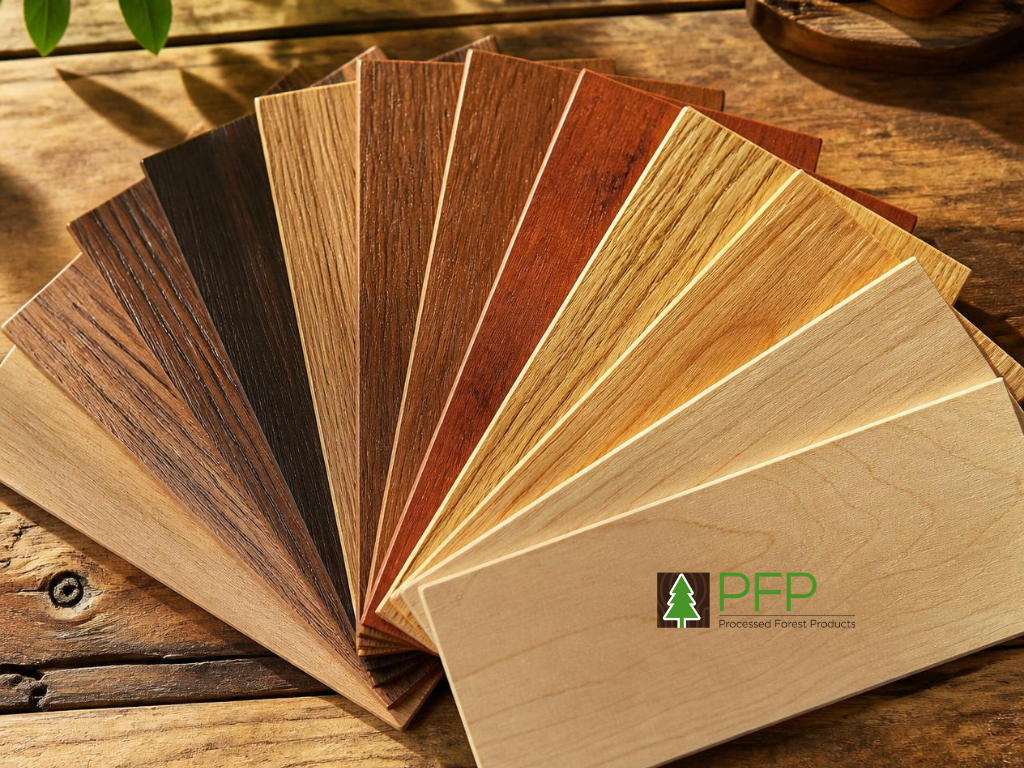
When comparing timber veneer suppliers, buyers should consider more than the species name. The cut, grain figure, colour variation and intended finish can all affect the final appearance.
Why Timber Species and Veneer Cuts Matter
Different timber species have distinctive characteristics.
Oak, walnut, ash and Australian hardwood veneers can offer different colours, grain patterns and decorative effects.
However, individual sheets may still vary within the same species.
The method used to cut the veneer also influences its appearance.
Crown-cut veneer commonly displays flowing or cathedral-like grain patterns.
Quarter-cut veneer generally produces straighter grain characteristics, although the exact appearance depends on the species.
Rift-cut veneer is often selected for a relatively straight and consistent grain appearance.
Rotary-cut veneer is produced by peeling veneer from a rotating log and can create broader or more varied patterns.
None of these cuts is automatically the best choice for every project.
A furniture maker may prefer a distinctive natural figure, while a joinery project with repeated cabinet doors may require a more consistent visual arrangement.
For larger installations, it is helpful to assess how the grain will appear across adjoining panels rather than viewing each sheet individually.
Small samples can demonstrate general colour and texture, but they may not represent the full variation of a larger quantity.
Buyers should discuss the expected appearance and available material with the supplier before finalising the selection.
Natural and Reconstituted Wood Veneers: What to Confirm
Natural veneer is produced from timber and retains characteristics associated with the original tree or log.
These characteristics can include colour variation, figure, knots and grain movement, depending on the species and material selection.
Reconstituted veneer is manufactured using processed wood veneer to create a particular decorative appearance or pattern.
It can provide greater visual repeatability for some applications, although the actual consistency depends on the product.
Natural veneer may appeal to buyers who want distinctive timber characteristics.
Reconstituted veneer may suit projects where a more predictable appearance is important across several components.
However, neither type should be chosen on appearance alone.
The intended application, processing requirements, substrate, finish and available product specifications also matter.
Buyers should confirm whether a sample represents the exact product being supplied.
They should also establish whether colour or pattern variation is expected between batches.
For projects requiring closely coordinated surfaces, it may be necessary to review larger samples or the selected material before manufacturing.
Wood veneers should be assessed according to their actual properties rather than assuming that natural or reconstituted products are automatically better for every application.
Confirming Grain Direction and Matching Requirements
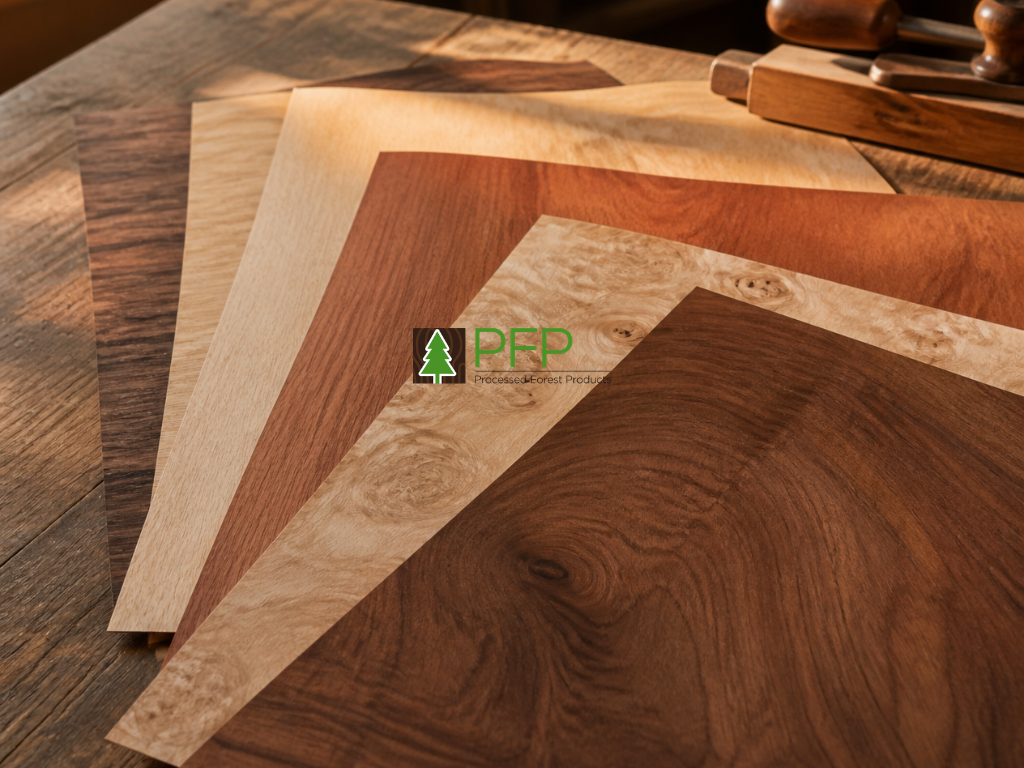
Grain matching is an important consideration when several veneered components will be visible together.
Timber veneer suppliers may provide different matching options depending on the species, available material and manufacturing process.
Understanding these arrangements can help buyers avoid unwanted changes in grain appearance between panels.
How Timber Veneer Suppliers Handle Grain Matching
Veneer matching describes how individual veneer leaves are arranged to create a decorative surface.
Book matching is a common method.
It involves opening consecutive veneer leaves like the pages of a book, creating a mirrored grain effect across adjoining sections.
This can produce a distinctive symmetrical appearance, although natural colour and light-reflection differences may remain visible.
Slip matching places consecutive veneer leaves alongside each other with the same face orientation.
It can create a repeating grain arrangement without the mirror effect associated with book matching.
Random matching provides a less uniform arrangement, using veneer leaves selected to create a more varied appearance.
The appropriate method depends on the design and the characteristics of the material.
Large wall panels and fitted cabinetry may also require sequence matching.
This involves planning the progression of grain across adjoining panels or components.
For example, a row of cabinet doors may be designed so the grain develops continuously from one door to the next.
Achieving this appearance may require careful selection of consecutive veneer leaves and coordination of panel dimensions.
Sequence matching should be discussed before manufacturing because it may affect material allocation, cutting arrangements and availability.
A supplier should not be expected to provide a particular matching effect unless it has been clearly specified and agreed.
What Happens When Grain Direction Is Specified Incorrectly?
Grain direction determines whether the timber pattern runs along the length or across the width of a panel.
This can significantly influence the finished appearance.
For example, tall cabinet doors may be designed with vertical grain, while a feature panel may require a horizontal arrangement.
In Australian veneer specification, long-band and cross-band terminology is commonly used to describe grain orientation.
The Timber Veneer Association of Australia explains that dimensions are generally specified as length by width by thickness, with the nominated veneer length identifying the grain direction.
For example, a 2400 mm by 1200 mm panel may be described as long-band when the veneer grain runs along the 2400 mm length.
Changing the order to 1200 mm by 2400 mm can indicate a cross-band arrangement under this convention.
Because ordering conventions may vary, the safest approach is to state the required grain direction explicitly on the drawings.
Arrows or written notes can help identify the intended orientation.
For projects involving several components, all relevant drawings should use consistent dimensions and grain direction references.
This is particularly important where doors, drawers and adjoining panels are expected to have a coordinated appearance.
Confirming these details before ordering can prevent a visual mismatch that may be difficult to resolve after the panels have been manufactured.
Checking Sheet Dimensions, Substrates and Finishes
Dimensions and product construction are just as important as selecting the desired veneer appearance.
When contacting timber veneer suppliers, buyers should establish whether they require loose veneer, prepared veneer sheets or finished panels bonded to a substrate.
They should also confirm the sizes, thicknesses and finishing requirements needed for the intended application.
How to Order Correct Sheet Sizes From Wood Veneer Suppliers
Veneer leaves and finished veneered boards are measured differently.
A veneer leaf is an individual thin section of timber.
Several leaves may need to be joined to produce a decorative sheet suitable for pressing onto a larger panel.
The available leaf dimensions depend on the timber species, log and cutting method.
Finished veneered boards have their own panel dimensions, which must be confirmed separately.
Buyers should not assume that the selected veneer can be supplied in every standard board size.
For example, a tall cabinet door or large wall panel may require particular veneer lengths or a carefully planned joining arrangement.
Before ordering, the buyer should provide accurate finished component dimensions.
These measurements should account for the intended grain direction and the arrangement of adjoining pieces.
Trimming and machining requirements may also influence the quantity of material needed.
A panel intended for final cutting may need different manufacturing allowances from a component supplied at its finished dimensions.
It is also important to confirm thickness.
The specification should distinguish the overall panel thickness from the veneer thickness where relevant.
Accurate measurements help wood veneer suppliers determine whether the selected material and manufacturing arrangement can meet the project requirements.
Choosing the Right Substrate, Edging and Finish
Decorative timber veneer is commonly bonded to a substrate.
MDF, particleboard and plywood are among the materials used for veneered panels.
Each substrate has different characteristics that may influence its suitability.
The correct choice depends on the application, panel size, machining requirements and expected conditions of use.
For example, a furniture component may have different performance requirements from a large interior wall panel.
Buyers should not assume that all veneered boards have identical strength, stability or moisture resistance.
The substrate type and overall thickness should be confirmed as part of the order.
Panel construction can also be important.
Veneered panels generally require suitable balancing and manufacturing methods to manage the risk of distortion.
Where different face and backing materials are proposed, the arrangement should be discussed with the manufacturer.
Visible edges are another consideration.
Cabinet doors, shelves and furniture components may require matching or complementary edge treatments.
The edging material, appearance and thickness should be included in the specification where required.
Finishing decisions also affect the result.
Stains, clear coatings, polish systems and gloss levels can influence the visible colour and grain.
A raw veneer sample may not look identical after finishing.
For projects where appearance is particularly important, a representative finished sample can help establish expectations before manufacturing begins.
Avoiding Quantity and Batch Consistency Problems
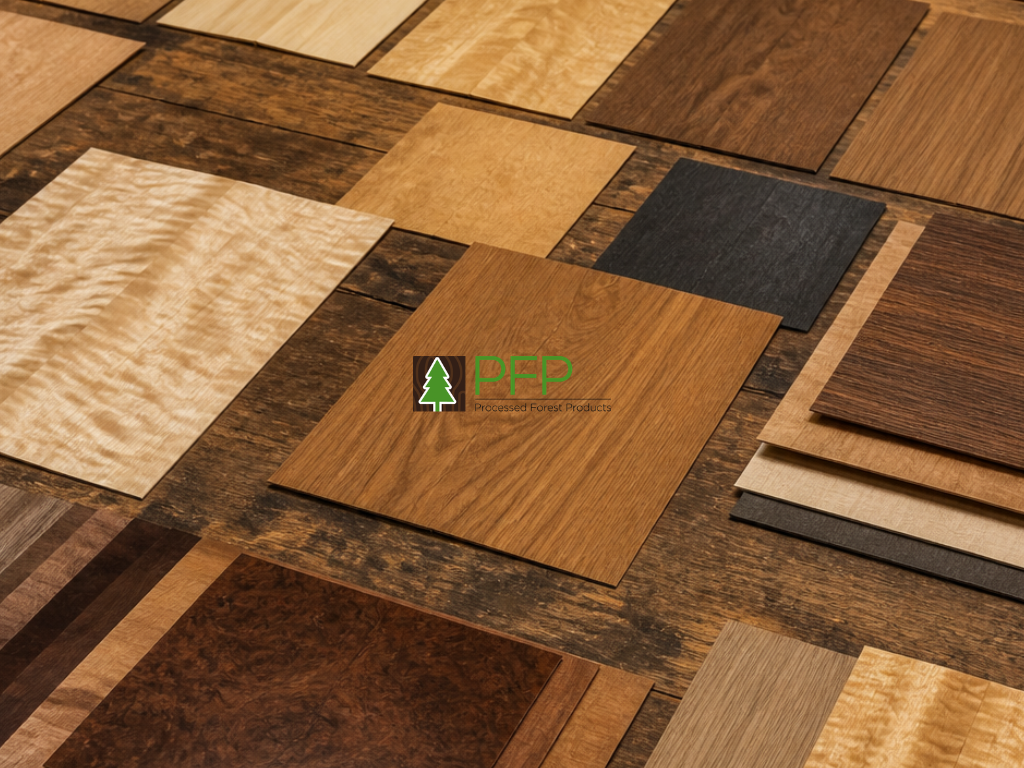
Material consistency matters when veneer is used across several panels or manufactured components.
Timber veneer suppliers may offer natural veneer from different logs or batches, and these materials can have noticeable visual differences.
Planning quantities and matching requirements early can help buyers achieve a more coordinated result.
Why Ordering From Different Veneer Batches Can Affect Appearance
Natural timber is not visually uniform.
Different logs from the same species may have variations in colour, figure and grain pattern.
Even veneer taken from the same log can display changes across consecutive leaves.
These characteristics contribute to the appearance of natural wood, but they require consideration when several panels must match.
For example, replacing one cabinet door with material from another batch may create a visible difference beside the original doors.
The same issue can occur when additional wall panels are ordered after the initial installation.
Where a project requires consistent appearance, it may be useful to select sufficient material from an agreed log or batch before manufacturing begins.
The Timber Veneer Association of Australia recommends identifying the log or batch number when specifying natural veneer.
For projects requiring sequence matching, the arrangement should also be documented.
This does not mean every panel will appear identical.
Natural variation remains part of the material.
Instead, the purpose is to select and arrange veneer in a controlled way that supports the intended visual result.
Buyers should discuss any proposed future additions before the initial order is finalised.
The availability of matching material at a later date should not be assumed.
How Much Extra Timber Veneer Should You Allow?
Calculating veneer quantities involves more than measuring the visible surface area.
Additional material may be needed for trimming, joining, matching and manufacturing.
The amount depends on the selected veneer, available leaf dimensions and the final panel arrangement.
For example, a sequence-matched installation may require particular veneer leaves to be allocated to specific panels.
Some material may remain unused because it does not fit the required grain progression or component dimensions.
An order involving several small cabinet doors may have different material requirements from a large wall panel installation.
Manufacturing methods can also influence material yield.
For this reason, there is no universal allowance that suits every veneer project.
Rather than applying an arbitrary percentage, buyers should discuss the cutting plan and expected material consumption with the supplier or manufacturer.
It may also be appropriate to consider spare components or additional material where future repairs are reasonably foreseeable.
However, any extra quantity should be based on the project’s actual needs.
The aim is to order enough material to complete the work without creating unnecessary cost or waste.
Comparing Suppliers, Quotations and Delivery Requirements
Comparing timber veneer suppliers involves more than reviewing prices.
The products, services and specifications included in each quotation need to be understood before a meaningful comparison can be made.
A lower quoted amount may not represent the same material or manufacturing scope as another offer.
What to Ask Timber Veneer Suppliers Before Requesting a Quote
A useful quotation begins with clear project information.
The buyer should explain the intended use of the veneer and identify the preferred species or decorative appearance.
The enquiry should also describe the required veneer cut, matching method, grain direction and quantity.
Where finished panels are needed, substrate type, thickness, edging and finish should be included.
Drawings can be particularly helpful for complicated cabinetry, furniture or architectural joinery.
For example, a supplier may need to understand how several adjoining doors should be matched before confirming the available material.
It is important to establish exactly what is being quoted.
One supplier may be pricing loose veneer leaves.
Another may be supplying prepared veneer sheets or fully manufactured veneered boards.
The products should not be compared as though they are identical.
Buyers should also confirm what processing is included.
Veneer joining, pressing, cutting, edging and finishing may be separate activities depending on the supplier’s capabilities and the agreed scope.
Where a timber veneer manufacturer is involved, manufacturing requirements should be documented before production begins.
Availability and lead times also need attention.
Some products may be readily available, while others may require sourcing or preparation.
A meaningful comparison considers the specification, included services, delivery requirements and total cost rather than relying only on an advertised material price.
What Sydney and NSW Buyers Should Check About Delivery
Businesses searching for timber veneer Sydney suppliers often need to coordinate material delivery with joinery production or site installation.
Supplier location can be relevant, but it does not automatically establish product availability or delivery timing.
A Sydney-based supplier may still need to source a particular veneer species or complete manufacturing before the order is ready.
Buyers searching for timber veneer NSW options should therefore confirm current availability for the exact selected product.
The delivery arrangements should also be clear.
For example, the supplier may offer collection, freight delivery or another agreed transport method.
The available options and associated charges should be confirmed rather than assumed.
Packaging can be important because veneer leaves and finished panels may be vulnerable to damage during handling and transportation.
The suitability of the packaging and transport arrangement will depend on the material being supplied.
Buyers should also establish the agreed process for inspecting deliveries and reporting discrepancies or apparent damage.
Checking products promptly against the order documentation can help identify issues before manufacturing begins.
Delivery dates should be coordinated with workshop schedules and installation plans.
Where the order contains materials selected for matching, the identification of panels or batches should remain clear throughout handling.
Good communication about delivery and acceptance conditions supports a more organised purchasing process.
Finalising Your Timber Veneer Order With Confidence
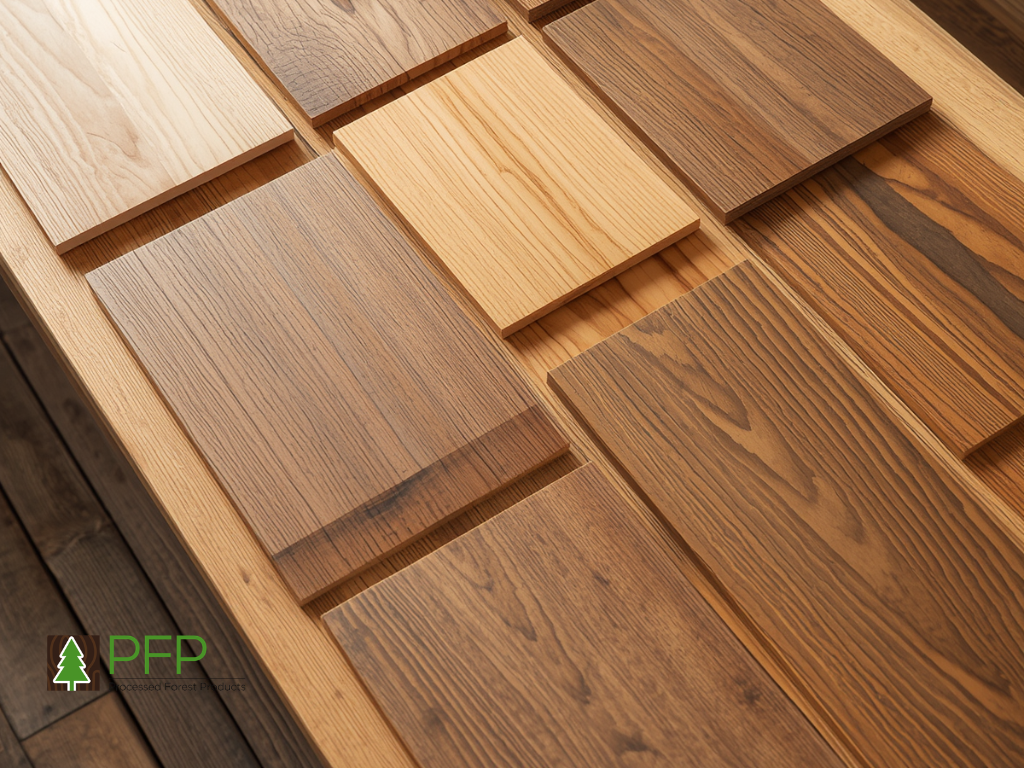
Before confirming an order, it is worth reviewing the complete specification with the selected timber veneer suppliers.
The purpose is to make sure the material, dimensions, appearance and manufacturing requirements have been understood consistently.
A few clarifications before production can be more practical than attempting to resolve a disagreement after the material has been processed.
Final Checks Before Confirming With Timber Veneer Suppliers
The final review should begin with the timber species and product type.
Confirm whether the order is for natural veneer, reconstituted veneer, loose leaves or finished veneered panels.
The selected cut and matching method should be recorded accurately.
Where grain direction matters, it should be clearly identified on the relevant drawings.
Panel dimensions and thicknesses should correspond with the intended manufacturing requirements.
For veneered boards, confirm the substrate, edging and finish.
Where appearance matching is important, check whether the material has been selected from an agreed batch or sequence.
Any representative samples should reflect the intended material and finishing requirements as closely as practical.
The quantity should also be reviewed.
Manufacturing allowances and matching requirements may affect how much material is needed.
Finally, confirm product availability, included services, agreed delivery conditions and the applicable quotation terms.
These details help establish a shared understanding of what will be supplied.
The goal is not to make the ordering process unnecessarily complicated.
It is to provide the information needed for the supplier to recommend and supply materials that are appropriate for the project.
Discussing Timber Veneer Requirements With Forest Products
For buyers sourcing decorative timber veneer in Sydney, Forest Products offers natural and reconstituted veneer products through its Milperra, NSW operation.
Its published timber veneer range includes species such as American Cherry, American Walnut, European Oak, White Ash and Australian Blackbutt.
The catalogue also provides information about veneer cuts, matching options, leaf sizes, finished panel sizes and appearance characteristics.
These details can help buyers narrow down suitable products before making an enquiry.
The business also lists board products, including MDF, particleboard and plywood, alongside manufacturing capabilities relevant to timber-based panel applications.
However, the availability of a particular species, panel configuration or manufacturing service should be confirmed for the actual order.
Cabinetmakers, joiners, furniture manufacturers and designers can prepare their enquiries by identifying the intended application, required dimensions, veneer appearance and estimated quantities.
Where relevant, drawings and sample references can help explain the required grain direction, panel arrangement and finishing expectations.
Buyers can also ask about current material availability, suitable substrates and the preparation needed for their intended manufacturing process.
For projects involving several matching panels, discussing batch selection and material quantities before ordering can be particularly useful.
Customers can contact Forest Products to clarify product options and discuss their timber veneer requirements.
Ordering timber veneer successfully begins with understanding the finished result.
Species selection matters, but so do the veneer cut, grain direction, matching method, substrate and quantity.
By confirming these details before production, buyers can make more informed material decisions and communicate their requirements more clearly.
The most useful order is not simply one that contains the preferred timber species. Ordering timber veneer? Learn what to check with timber veneer suppliers, from grain matching and sheet size to substrates, batches and delivery throughout NSW.It is one that accurately reflects how the veneer will be manufactured, finished and used.