Perspex is a well-known brand of acrylic, a transparent plastic material also available in different colours and finishes. It is widely used because it can be cut, shaped, polished and fabricated into products for residential, commercial and industrial applications.
However, not every Perspex sheet is suitable for every project. A thin acrylic sheet may work well for a small decorative display, while a larger panel or freestanding screen may require additional thickness or support.
Understanding how thickness affects performance can help you avoid unsuitable materials, unnecessary expenses and installation difficulties.
Why Perspex Cutting Sydney Projects Need the Right Thickness
The thickness of an acrylic sheet influences how much it bends, how it handles physical pressure and how easily it can be installed.
A sheet that is too thin for its intended application may flex excessively or require additional support. Choosing a thicker sheet can improve rigidity, but it may also increase weight, material costs and installation requirements.
For example, a small acrylic sign mounted against a solid surface has different requirements from a large freestanding reception screen. Even when both products use clear Perspex, their dimensions and support arrangements can influence the appropriate thickness.
When requesting custom cutting, it is helpful to explain how the finished product will be used. This allows the fabricator to consider the sheet’s dimensions, mounting points and expected conditions rather than recommending thickness based on appearance alone.
Understanding Standard Perspex Sheet Thicknesses
Perspex Sydney and other acrylic sheets are manufactured in different nominal thicknesses to suit a variety of applications.
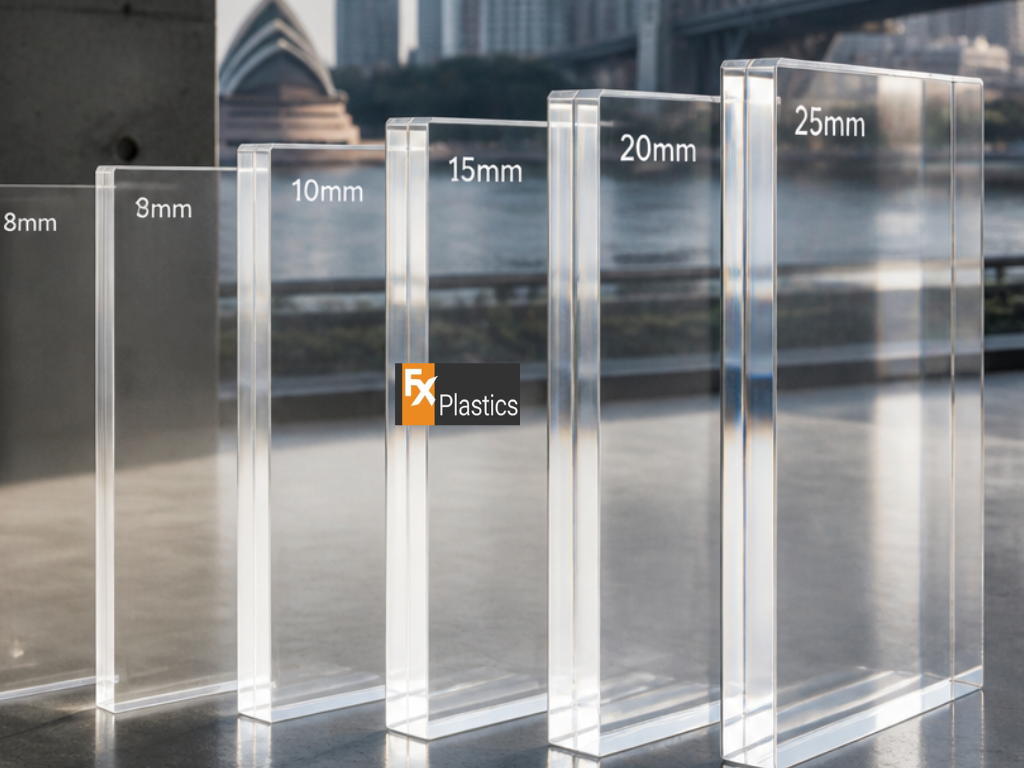
Common options include 2 mm, 3 mm, 4.5 mm, 6 mm, 8 mm and 10 mm, although availability depends on the supplier, material grade and manufacturing process. Thicker sheets are also available for specialised applications.
Thinner sheets are often considered for lightweight displays, inserts and smaller decorative projects. Medium-thickness sheets may be suitable for certain signage and screen applications, depending on their dimensions and support.
Thicker acrylic can provide greater rigidity for larger components, but the correct choice depends on more than sheet thickness alone.
Customers should also understand that nominal thicknesses may have manufacturing tolerances. Where a project requires a close-fitting component, the actual material dimensions should be confirmed before fabrication.
How Perspex Thickness Affects Performance
When comparing acrylic sheets, it is useful to consider their mechanical properties alongside appearance and price.
Perspex Cutting Sydney projects often involve balancing rigidity, material weight and fabrication requirements. Selecting the thickest available sheet is not always necessary or practical, particularly when the component is small or adequately supported.
Understanding the relationship between thickness and performance makes it easier to select materials that suit the finished product.
The Relationship Between Thickness, Strength and Flexibility
Increasing acrylic sheet thickness generally improves rigidity and reduces bending when other conditions remain the same.
However, the overall size of the panel also matters. A large sheet may bend more noticeably than a smaller panel of the same thickness, especially if it is supported only along certain edges.
Mounting arrangements influence performance as well. A panel secured inside a suitable frame may behave differently from one supported by a small base.
The direction and amount of force applied to the sheet should also be considered. Acrylic can crack under excessive stress or impact, even when a relatively thick sheet is used.
For this reason, thickness should be assessed together with panel dimensions, fixing methods and intended use. Where a component must resist significant loads or provide safety protection, professional design assessment may be necessary.
How Thickness Influences Weight, Appearance and Cost
Thicker acrylic sheets generally weigh more because they contain more material. This can affect transport, handling and the type of supports needed during installation.
For smaller projects, the weight difference may be manageable. Larger panels, however, may require stronger mounting hardware or additional assistance during installation.
Thickness can also influence the finished appearance. A thicker polished acrylic edge may create a more substantial visual effect, while thinner sheets can provide a lighter appearance for decorative applications.
Material cost is another consideration. Thicker sheets usually require more material and may cost more to purchase and process.
When comparing Perspex Cutting Sydney quotations, customers should consider whether the proposed thickness is necessary for the intended application rather than selecting the cheapest or thickest option automatically.
Choosing Perspex Thickness for Different Applications
Different Perspex products have different functional requirements. A display panel, reception screen and equipment cover may all use acrylic, but the way they are installed and handled can vary considerably.
Perspex Cutting Sydney services can support customised projects by producing acrylic sheets in the dimensions and shapes required for particular applications.
Before selecting thickness, consider the finished panel’s size, mounting arrangement, expected contact and surrounding environment.
Perspex Screens Sydney: Thickness and Installation Needs
Perspex sheet sydney are commonly used as physical barriers in reception areas, workplaces, retail environments and service counters.
Customers searching for perspex screens sydney may need clear panels that fit an existing counter, desk or designated workspace.
The appropriate thickness depends partly on the screen’s height and width. Larger panels may require greater rigidity or additional support to reduce movement.
Installation is equally important. A screen fixed into a suitable frame may have different requirements from a freestanding panel using separate supports.
The position of openings, mounting holes and cut-outs should also be considered. Poorly positioned holes or insufficient clearance around fittings may create stress points that affect durability.
Where screens are intended to provide a specific safety function, their design and material must be assessed against that purpose. Acrylic should not automatically be assumed suitable for every protective application.
Perspex Counter Screens Sydney: Stability and Support
Counter screens are often designed to create separation between staff and customers while maintaining visibility.
Businesses looking for perspex counter screens sydney should consider more than the overall sheet thickness. The base design, mounting method, counter dimensions and intended use can be just as important.
A tall screen with a narrow base may be less stable than a smaller panel with appropriate supports, even if both use the same material thickness.
Screens with openings for passing documents or products also require careful planning. These cut-outs can influence the remaining panel’s strength and may require adjustments to the design.
For counters with limited space, the position of brackets or supports should be discussed before fabrication.
An experienced fabricator can help translate the required dimensions into a workable design, although any specialised safety requirements should be assessed separately.
Comparing Thin and Thick Perspex Sheets
Both thin and thick acrylic sheets have useful applications. The best option depends on the size, intended function and installation requirements of the finished product.
For Perspex Cutting Sydney customers, understanding these differences can make the ordering process easier and help prevent unnecessary spending.
Instead of assuming that greater thickness always means better quality, consider whether the selected material provides the required rigidity and performance for the project.
When Thinner Acrylic Sheets May Be Suitable
Thinner acrylic sheets can be practical for smaller products that do not need to support significant loads.
Examples include decorative inserts, lightweight signs, display covers, picture framing components and small retail display panels.
They may also be suitable for products that are fully supported by frames or other structures.
One advantage of thinner sheets is their lower material weight, which can simplify handling and installation. Depending on the design, they may also be more economical.
However, thin acrylic can flex noticeably when used across larger unsupported areas. This makes accurate measurements and an appropriate mounting arrangement important.
Customers should assess the complete product design before deciding that a thinner sheet will be sufficient.
When Thicker Perspex Is Worth Considering
Thicker acrylic sheets may be appropriate for larger display panels, substantial decorative components and applications where additional rigidity is desirable.
For example, a large freestanding display may benefit from thicker material or a more supportive structure to limit movement.
Thicker acrylic can also create distinctive polished edges for certain architectural and retail applications.
However, thickness alone does not determine safety or impact resistance.
Acrylic is relatively rigid but can fracture under certain types of impact. For applications involving moving machinery, high impact or significant loads, another material may be more appropriate.
The decision should take account of the complete assembly, including the supports, fixing points and operating conditions.
What to Consider Before Ordering Cut-to-Size Perspex

Ordering accurately cut Perspex can reduce preparation work and help ensure the material fits the intended installation.
Whether the project involves a single replacement panel or several customised acrylic components, good measurements and clear fabrication instructions are essential.
Perspex Cutting Sydney services can help produce sheets according to supplied specifications, but the quality of the information provided can influence the final result.
Perspex Cut to Size Sydney: Measurements and Tolerances
When arranging perspex cut to size sydney services, begin by measuring the intended installation carefully.
Record the required length, width and thickness, using consistent units such as millimetres. For panels fitting into frames, confirm whether the measurements should represent the finished sheet size or the available opening.
Acrylic can expand and contract with temperature changes, so suitable fitting allowances may be needed, especially for larger panels or outdoor installations.
If the sheet requires mounting holes, specify their diameter and exact positions. The distance between holes and sheet edges should also be reviewed to reduce the risk of cracking.
For irregular shapes, a drawing or template can be useful. More complex projects may require digital files that identify the cutting profile and other features.
When ordering perspex cut to size, customers should confirm the expected dimensional tolerances with the supplier, particularly where the finished component must fit closely with existing equipment or structures.
Cutting, Drilling and Finishing Requirements
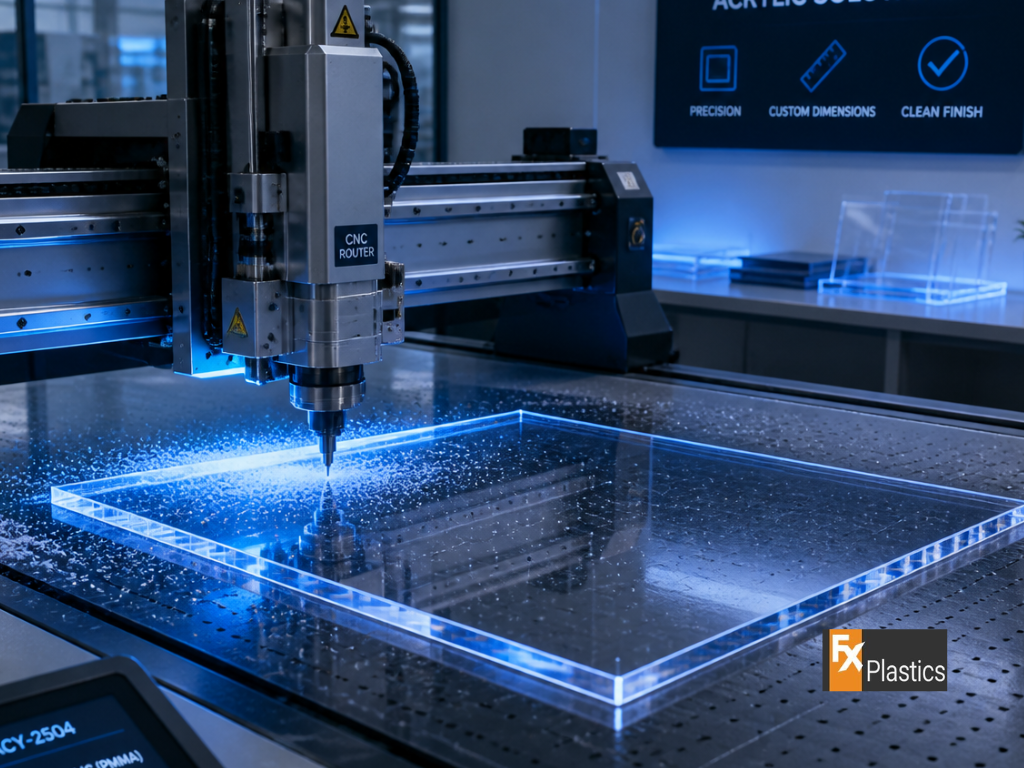
Acrylic can be processed using several fabrication methods, including saw cutting, CNC routing and laser cutting.
The most suitable method depends on the material grade, sheet thickness, design and required finish.
Straight cuts may be produced efficiently using suitable saw-cutting equipment, while CNC routing can create complex profiles and accurately positioned openings.
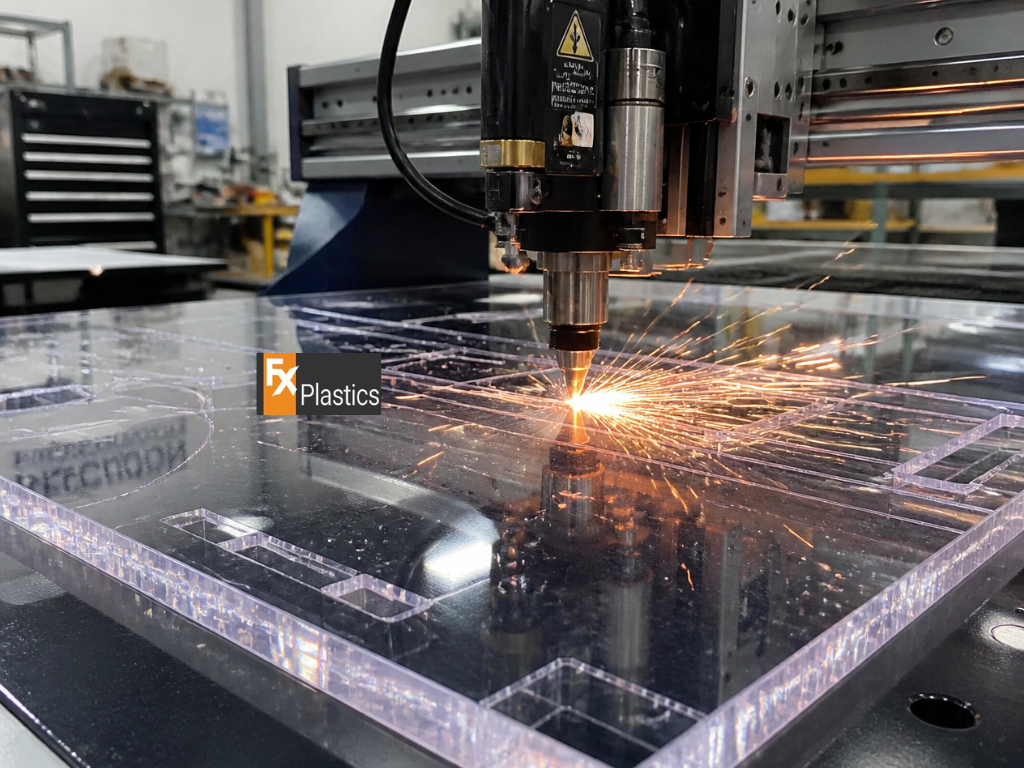
Laser cutting is useful for many detailed acrylic shapes and can produce smooth, polished-looking edges when suitable materials and settings are used.
Additional finishing may be required when exposed edges need a particular appearance. Diamond polishing and other finishing methods can improve the clarity and presentation of cut surfaces.
Drilling, bending and assembly should also be planned before production. Adding these features later may increase costs or introduce unnecessary stress into the material.
When requesting Perspex Cutting Sydney services, providing complete fabrication details helps suppliers recommend an appropriate production method and prepare a clearer quotation.
Material Selection for Commercial and Industrial Projects
Commercial and industrial applications may require more detailed material assessment than simple decorative projects.
Perspex Cutting Sydney services can produce customised acrylic components, but the suitability of the finished product depends on its intended function and operating environment.
Factors such as impact exposure, temperature, chemicals, cleaning procedures and mechanical loads should be considered before selecting a material.
Perspex Guard Manufacturing Sydney: Safety Considerations
Industrial guards and equipment covers may need to prevent access to hazardous machinery or contain material released during operation.
Customers researching perspex guard manufacturing sydney should understand that not every transparent plastic is suitable for machinery guarding.
Although acrylic provides good optical clarity and rigidity, it can fracture under impact. Polycarbonate is often considered for applications requiring higher impact resistance, but the correct material and thickness still depend on the hazards involved.
Machine guards must be assessed according to the equipment, potential impact forces, fixing arrangements and relevant workplace safety requirements.
SafeWork NSW guidance emphasises that machinery guards must be appropriately constructed and securely mounted, including the ability to resist foreseeable impact or shock from operation.
Simply using thicker acrylic does not establish that a guard is safe.
Where machinery protection is involved, the design should be reviewed by a suitably qualified person. The fabrication supplier should be provided with the approved material specifications and drawings before production.
Cast vs Extruded Perspex for Custom Fabrication
Acrylic sheets are commonly manufactured using either casting or extrusion.
Cast acrylic is produced by forming the material in moulds, while extruded acrylic is manufactured through a continuous extrusion process.
Both types can be used in fabrication, but their processing characteristics may differ.
Cast acrylic is commonly selected for projects involving certain machining, engraving and laser-cutting applications. Extruded acrylic can offer consistent sheet thickness and may be appropriate for applications requiring forming or economical production.
However, exact performance varies by manufacturer and grade. The required cutting method, appearance, tolerances and operating conditions should guide the selection.
For Perspex Cutting Sydney projects involving close-fitting parts or specialised finishing, customers should confirm whether cast or extruded acrylic is more suitable.
Choosing the correct grade before production can help avoid processing difficulties and achieve a more predictable finish.
How to Choose a Sydney Perspex Cutting Supplier
Finding a suitable supplier involves more than comparing acrylic sheet prices.
A provider should be able to explain available materials, fabrication methods, dimensional requirements and finishing options relevant to the project.
When comparing Perspex Cutting Sydney services, it is worth looking for a supplier that can discuss the intended application rather than simply processing a list of measurements.
What to Ask Perspex Cutting Sydney Providers Before Ordering
Before placing an order, confirm that the supplier offers the required acrylic thickness, colour and material grade.
It is also useful to ask about available sheet sizes and whether the required dimensions can be produced from the selected material.
Discuss the proposed cutting method and any finishing work needed. If the finished product requires visible polished edges, accurately positioned holes or shaped corners, these requirements should be included in the quotation.
Customers should also ask about dimensional tolerances, material availability, production timeframes and collection or delivery arrangements.
For projects requiring design assistance, confirm whether the supplier can help develop drawings or provide fabrication guidance.
A detailed quotation should make clear what is included, particularly where cutting, polishing, drilling, bending or assembly is required.
Getting the Right Perspex Sheet for Your Project
Selecting the correct Perspex thickness is easier when the fabricator understands the complete project.
The most useful information includes the required dimensions, intended application, installation method, preferred appearance and any environmental conditions that may affect the material.
For customers seeking Perspex Cutting Sydney services, FX Plastics offers Perspex cutting, CNC machining, laser cutting, polishing and design and fabrication services.
Based in Penrith, Western Sydney, FX Plastics also provides cut-to-size acrylic materials and assistance with project design requirements. Its published product information identifies acrylic sheet thickness options ranging from 1.5 mm to 50 mm, subject to the material and availability.