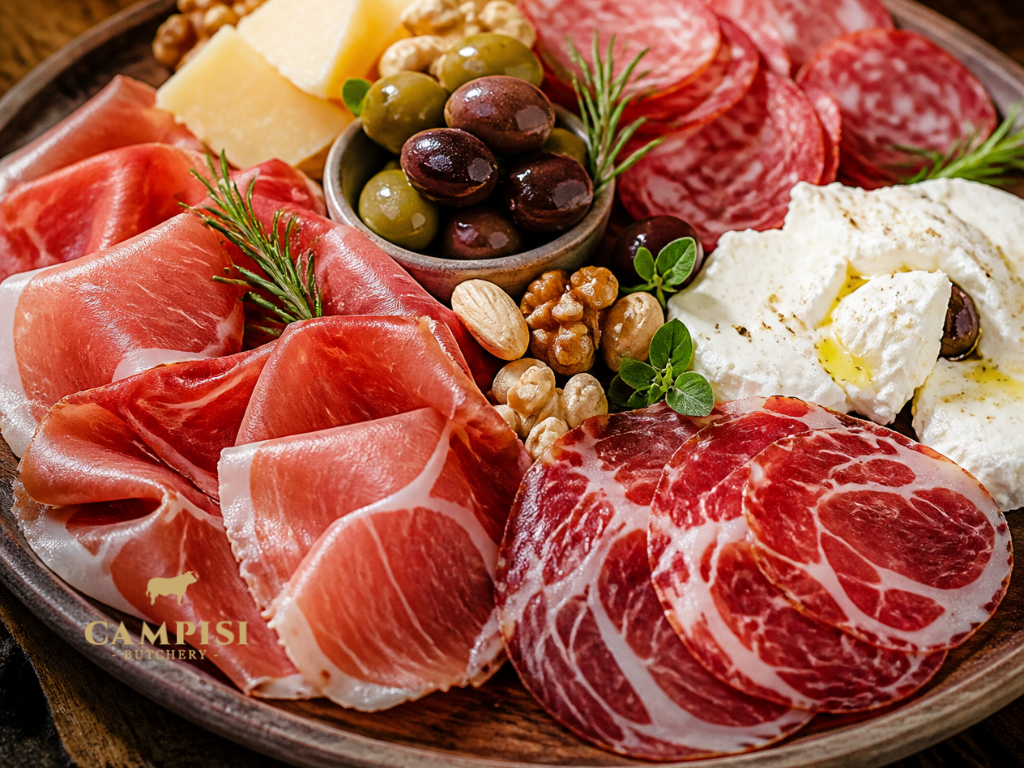
Salumi and cheese are a popular combination in Italian-inspired meals, antipasto platters and casual entertaining. From delicate prosciutto with fresh mozzarella to richly seasoned salami with aged cheese, the right pairing can bring out the flavour and texture of each ingredient.
However, not every cured meat works equally well with every cheese. Some combinations can become too salty, too rich or too strongly flavored, making it difficult to appreciate the individual ingredients.
The secret to creating a balanced selection is understanding how flavours work together. Saltiness, richness, creaminess, acidity and texture all influence the eating experience.
Whether you are preparing a small antipasto plate at home or selecting cured meats for a family gathering, a few simple pairing principles can make choosing ingredients easier.
Rather than following strict rules, the aim is to find combinations that allow both the salumi and cheese to be enjoyed.
Why Salumi and Cheese Work Well Together
Italian cured meats and cheeses offer a wide variety of flavours and textures that can complement one another.
Many cured meats have savory, salty or rich characteristics. Cheese can add creaminess, mildness, sharpness or a contrasting texture.
For example, thinly sliced prosciutto may work well with fresh mozzarella because the cheese provides a gentle, creamy contrast to the meat’s savory flavour.
A firmer cheese such as provolone may complement a richer cured meat like coppa, particularly when served with plain bread.
Pairings can also work through similarity rather than contrast.
A moderately flavored salami and a semi-firm cheese may create a balanced combination when neither ingredient overwhelms the other.
However, combining a heavily salted cured meat with an intensely salty aged cheese may produce a strong flavour that some people find overpowering.
The best approach is to consider how the ingredients taste together rather than deciding based on their appearance.
Small tasting portions can help when experimenting with unfamiliar combinations.
Understanding the Flavours Found in Italian Salumi
Salumi is an Italian term used for a broad range of prepared meat products, particularly cured and preserved meats.
Salami is one type of salumi, but the category also includes products such as prosciutto, coppa, pancetta and bresaola.
Different Italian salumi products have distinctive characteristics because of their ingredients, preparation methods and seasoning.
Prosciutto is commonly associated with a delicate, savory flavour and soft texture when sliced thinly.
Coppa is made from pork neck or shoulder muscles and often has visible marbling that contributes to its richness.
Salami is made from seasoned meat that is prepared and cured according to the particular variety. Its flavour can range from relatively mild to noticeably spicy.
Bresaola is traditionally made from beef and is generally leaner than many pork-based cured meats.
Pancetta is prepared from pork belly and has a rich flavour. Some varieties are suitable for serving as ready-to-eat cured meat, while others require cooking, so product instructions should always be checked.
These differences matter when selecting cheese.
A delicate cured meat may be easier to appreciate alongside a mild cheese, while a strongly seasoned product may benefit from a cheese with a more noticeable character.
Understanding the individual ingredients provides a better starting point than treating all cured meats as interchangeable.
Choosing Cheeses That Complement Different Cured Meats
Choosing cheese for salumi involves balancing flavour strength, texture and richness.
Some cheeses are mild and creamy, while others develop stronger flavours as they mature.
Neither type is automatically better for cured meats. The most suitable choice depends on the particular products being served and the overall combination.
Pairing Mild Salumi With Soft and Creamy Cheeses
Mild cured meats can pair well with fresh cheeses that provide creaminess without overpowering their flavour.
Prosciutto and mozzarella are a familiar example.
The savory character of the meat contrasts with the mild, moist texture of the cheese.
Burrata may also work well with suitable prosciutto varieties. Its soft, creamy centre provides a different texture from the thinly sliced meat.
Ricotta is another option when preparing simple appetizers or bread-based combinations.
For example, ricotta spread over toasted bread can provide a mild base for a small amount of thinly sliced cured meat.
The important consideration is proportion.
Using a large amount of cheese may hide the flavour of a delicate salumi, while too much meat can dominate the combination.
Serving smaller amounts of each ingredient makes it easier to appreciate their individual characteristics.
Fresh herbs or a suitable accompaniment can add another layer of flavour without making the pairing unnecessarily complicated.
Matching Rich or Strongly Seasoned Salumi With Cheese
More intensely flavored cured meats can be paired with cheeses that have enough character to remain noticeable.
Coppa, for example, may complement provolone or another semi-firm cheese.
The cheese provides a slightly different texture and flavour while allowing the richness of the meat to remain central.
Peppered or spicy salami may work with aged cheddar, depending on the strength of the seasoning.
A mild provolone can also offer a gentler contrast to a strongly flavored salami.
Hard cheeses such as pecorino or Parmigiano Reggiano provide another option, particularly when served in small pieces or thin shavings.
However, these cheeses can be salty and strongly flavored.
Combining them with heavily seasoned cured meats may create an intense pairing.
Plain bread, fresh vegetables or fruit can help provide contrast.
When selecting richer salumi and cheese combinations, start with modest portions and adjust according to personal preference.
This approach allows the ingredients to complement rather than compete with one another.
Exploring Popular Types of Salumi and Their Pairings
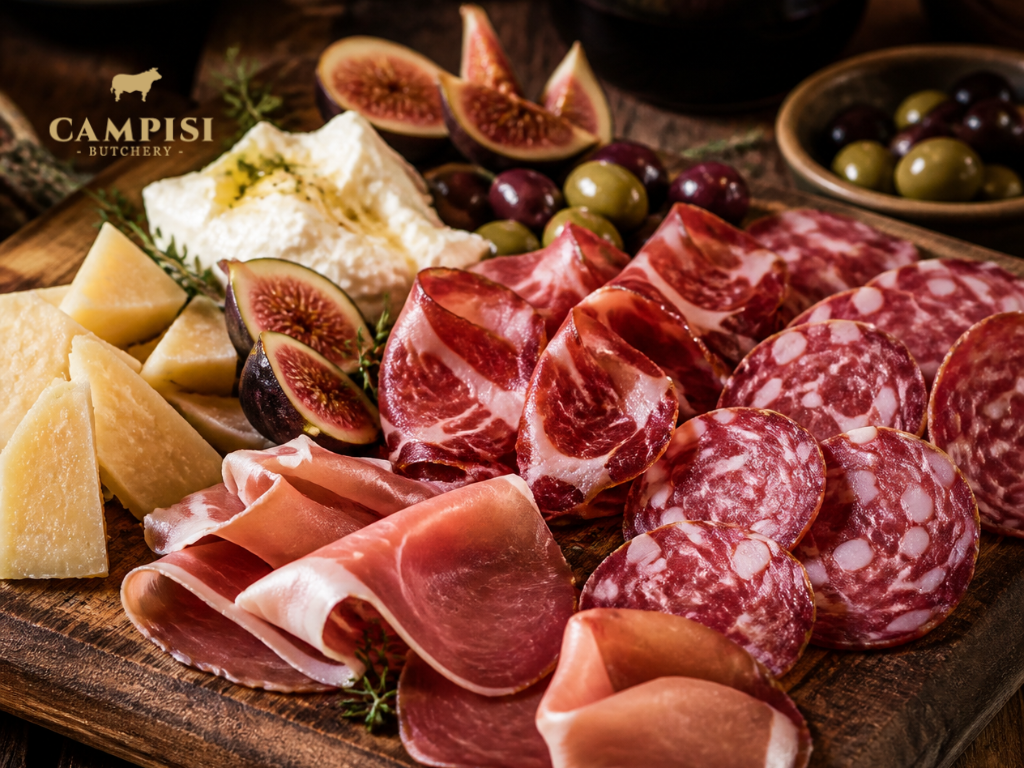
Understanding the different types of salumi can make choosing cheese considerably easier.
Each variety has its own combination of flavour, fat content, seasoning and texture.
Rather than looking for one universally suitable cheese, consider what makes each cured meat distinctive.
Which Types of Salumi Pair With Common Cheeses?
Prosciutto is a useful starting point for people who enjoy delicately flavored cured meats.
Its savory taste can complement fresh mozzarella, burrata or other mild cheeses.
The combination works particularly well when served with suitable bread or fresh fruit.
Coppa has a richer texture and may contain more visible marbling.
Provolone or another semi-firm cheese can provide a satisfying pairing without necessarily overwhelming the meat.
Salami offers more variety because seasoning differs between products.
A mild salami may complement cheddar, provolone or another accessible semi-firm cheese.
A spicy salami might be better balanced with a milder cheese that softens the overall flavour experience.
Bresaola offers another combination worth exploring.
Its relatively lean texture can work with thin shavings of Parmigiano Reggiano, particularly when accompanied by rocket and a little olive oil.
Some people also enjoy bresaola with milder cheeses when they want a less intense combination.
Other salumi products, including suitable ready-to-eat pancetta varieties, may provide additional options.
However, customers should confirm whether a particular product is intended to be eaten without cooking.
These pairing suggestions are starting points rather than fixed rules.
The exact flavour depends on how the meat and cheese have been produced, seasoned and matured.
How to Choose the Best Salumi for Your Cheese Selection
The best salumi for a particular occasion depends on the cheeses you intend to serve.
If you have already selected a strong aged cheese, you may prefer a more delicately flavored cured meat.
If your cheese selection includes mozzarella, ricotta or another mild variety, a richer cured meat can provide contrast.
Texture is also important.
Thinly sliced coppa can feel different from a firm salami, while bresaola has a leaner character than many pork-based products.
A varied selection does not need to include every available cured meat.
Choosing two or three varieties with noticeably different characteristics can provide enough contrast for a small gathering.
For example, a mild prosciutto, a richly flavored coppa and a moderately seasoned salami could offer different tasting experiences.
The selection can then be matched with a fresh cheese, a semi-firm cheese and a suitable aged cheese.
This creates variety without requiring an unnecessarily large range of products.
When buying from an Italian butcher or delicatessen, ask how the available products differ in flavour, seasoning and texture.
This information can help you choose combinations based on what you actually enjoy eating.
Balancing Saltiness, Richness and Texture
A successful salumi and cheese selection is not necessarily the one with the strongest flavours.
Often, the most enjoyable combinations allow the palate to move between rich, savory, mild and fresh ingredients.
Understanding how to manage these contrasts can make a simple selection feel more balanced.
How to Prevent Salumi and Cheese From Tasting Too Salty
Salt is an important flavour component in many cured meats and cheeses.
Some products contain more noticeable saltiness than others, depending on their preparation and maturation.
When several salty ingredients are served together, the overall flavour can become overwhelming.
A useful approach is to combine strongly flavored meats with milder cheeses.
For instance, a salty prosciutto may feel more balanced with fresh mozzarella than with an intensely flavored hard cheese.
Fresh vegetables, plain crackers and suitable bread can also help provide contrast.
Cucumber, tomato and other lightly flavored accompaniments introduce freshness without adding another strong seasoning.
Fruit can provide a different kind of balance.
Pear, melon or grapes may offer sweetness and moisture alongside savory cured meats.
However, adding fresh ingredients does not reduce the sodium already present in the salumi or cheese.
The purpose is to improve flavour balance rather than change the nutritional characteristics of the products.
People monitoring their sodium intake should check product labels and consider appropriate portions.
Using Different Textures to Improve Salumi Pairings
Texture is just as important as flavour when selecting cured meats and cheeses.
Thinly sliced prosciutto has a different eating experience from firmer salami.
Likewise, soft mozzarella feels different from aged cheddar or Parmigiano Reggiano.
Combining contrasting textures can make each mouthful more interesting.
For example, creamy cheese may complement thinly sliced cured meat, while crisp bread can add structure to softer ingredients.
A firm cheese served with tender coppa may provide a pleasant contrast.
Slicing thickness also affects texture.
Some whole-muscle cured meats are often enjoyed in thin slices, while certain salami varieties may be suited to slightly thicker cuts.
The appropriate thickness depends on the particular product and the intended serving style.
Different cheese shapes can also change the experience.
Aged cheese can be served in small pieces or shavings, while fresh cheese may be spooned or sliced.
There is no need to use complicated presentation techniques.
The priority is preparing the ingredients so they are easy to serve and enjoyable to eat together.
Choosing Accompaniments That Bring the Flavours Together
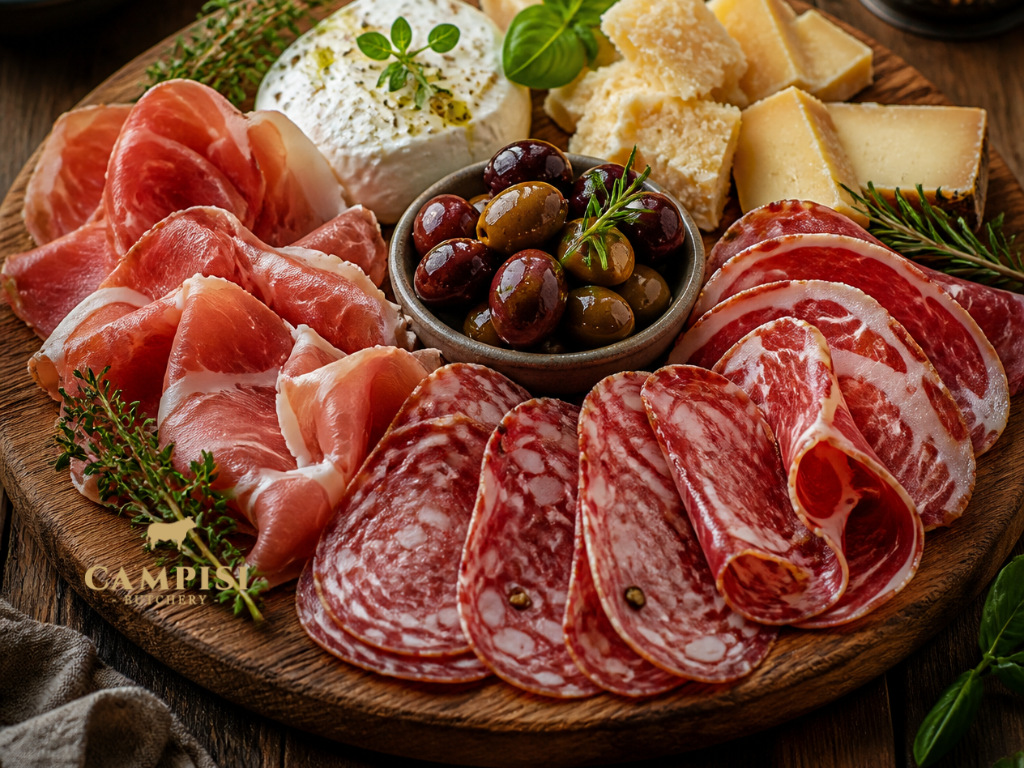
Salumi and cheese provide the central flavours of a selection, but accompaniments can make the combination more interesting.
Bread, fruit, vegetables and condiments introduce different textures and flavour contrasts.
The aim is to support the cured meats and cheeses rather than overwhelm them.
Which Fruits, Bread and Condiments Pair With Salumi?
Fresh fruit can complement the savory character of cured meats.
Melon is a familiar accompaniment to prosciutto, offering sweetness and moisture alongside the meat’s salty flavour.
Pears, figs and grapes may also suit different cured meats and cheeses, depending on the season and personal preference.
These ingredients are generally easy to find in Australian supermarkets and fresh produce shops.
Bread is another useful accompaniment.
Focaccia, crusty bread and plain crackers can provide a base for combining meats and cheeses.
Bread with a relatively mild flavour often works well when the cured meat and cheese already have strong seasoning.
Olives and pickled vegetables can introduce acidity and sharper flavours.
However, strongly salted olives or heavily seasoned pickles may compete with already salty ingredients.
Condiments such as fig paste, chutney or mustard can be enjoyable in small amounts.
A mild fig paste may complement aged cheese, while a suitable mustard may work with certain salami varieties.
The best accompaniment depends on what is already being served.
Choosing a few ingredients that provide freshness, sweetness or acidity is often more useful than adding numerous condiments with similar flavours.
Creating Contrast Without Overloading the Plate
A balanced selection does not require a large number of ingredients.
Too many strongly flavored foods can make it difficult to appreciate the salumi and cheese.
A practical approach is to begin with the cured meats and cheeses, then consider what is missing.
If the selection is particularly rich, fresh vegetables or fruit may provide a useful contrast.
If the ingredients are mild, a small amount of mustard, pickled vegetables or a more strongly flavored cheese may add interest.
Texture should also be considered.
Soft cheeses and delicate meats can benefit from crisp bread or crackers.
Firm cheeses may pair comfortably with softer bread and thinly sliced meats.
For a small gathering, choosing a manageable selection can reduce unnecessary preparation and food waste.
It also allows guests to experiment with different combinations without feeling overwhelmed by the number of options.
Whether serving an antipasto plate as a starter or as part of a casual meal, the goal is to make the ingredients easy to combine and enjoy.
Serving and Storing Salumi and Cheese Safely
Presentation can improve the experience of eating salumis and cheese, but food safety should remain a priority.
Different cured meats and cheeses have different storage requirements, particularly once packaging has been opened or products have been sliced.
Australian temperatures can also affect how long perishable foods can be safely served without refrigeration.
How to Slice and Arrange Salumi for Better Serving
The appropriate way to slice salumi depends on the type of meat.
Prosciutto, coppa and bresaola are often served in thin slices that make their textures easier to appreciate.
Salami may be served in thin rounds or other suitable portions, depending on the product.
When purchasing cured meat from a butcher, customers can ask whether the product is available sliced or whether a particular thickness is recommended.
Cheese can be prepared in a way that makes individual combinations easy to assemble.
Soft cheeses may be served in suitable dishes, while firmer varieties can be sliced or portioned.
It is useful to leave enough space between different foods so guests can identify and serve them comfortably.
Strongly flavored products may also be kept separate from more delicate ingredients.
Clean serving utensils should be used, with particular care to avoid cross-contamination and unintended contact between products containing different allergens.
If the selection includes ingredients that require cooking, they should be prepared according to the product instructions before being served.
Presentation should never take priority over appropriate handling and temperature control.
Keeping Salumi and Cheese Fresh in Australian Conditions
Not all salumi italian products have identical storage requirements.
Some unopened cured products are shelf-stable under specified conditions, while other salumi varieties, sliced meats and opened products require refrigeration.
Cheese storage requirements also vary according to the product.
The most reliable starting point is the manufacturer’s packaging information, including storage instructions and use-by dates.
Food Standards Australia New Zealand recommends keeping potentially hazardous foods at 5°C or colder unless another appropriate temperature-control arrangement applies.
This is particularly important for refrigerated ready-to-eat meats and cheeses.
During warm Australian weather, avoid preparing large quantities of refrigerated foods long before they will be eaten.
A practical approach is to arrange smaller serving portions and keep the remaining food refrigerated until needed.
Potentially hazardous food should not remain out of refrigeration longer than is safe.
Australian food safety guidance uses a two-hour/four-hour approach for relevant ready-to-eat foods held between 5°C and 60°C.
Under this guidance, food held for less than two hours may generally be used or refrigerated again. Between two and four hours, it should be used without returning it to refrigeration for later use. Once the total reaches four hours, it should be discarded.
These times are cumulative and include relevant preparation, transport and display periods.
The guidance does not replace product-specific storage requirements.
When in doubt about the safety of a product, it is better not to serve it.
Clean utensils, appropriate refrigeration and prompt handling of leftovers can help maintain food safety while entertaining.
Choosing Salumi and Cheese for Your Next Gathering
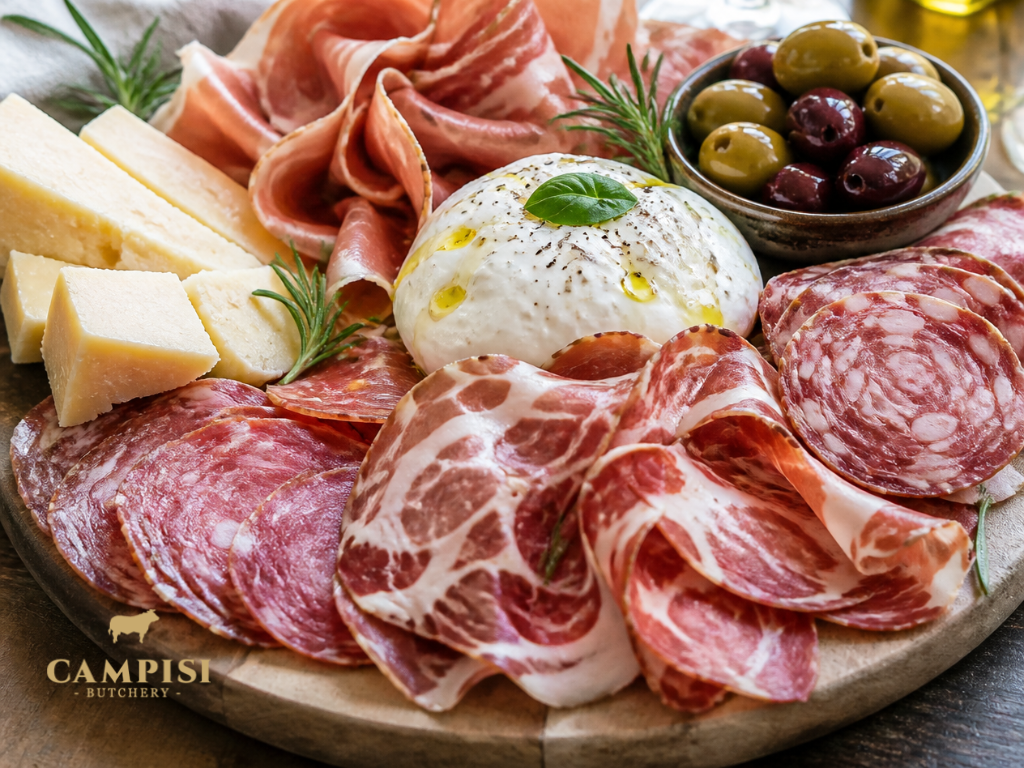
Choosing salumi and cheese becomes easier once you understand the flavour and texture characteristics of the products.
You do not need to know every Italian cured meat variety to create combinations that work well together.
A few suitable choices, supported by fresh accompaniments and careful serving, can provide a satisfying selection for family meals or entertaining.
What to Ask When Buying Salumi From an Italian Butcher
When purchasing salumi, it helps to explain how you intend to serve it.
A selection for sandwiches may differ from cured meats chosen for a cheese tasting or antipasto starter.
You can ask about flavour strength, seasoning, texture and recommended accompaniments.
If you prefer milder cured meats, this can help narrow the available options.
If you enjoy peppered, spicy or richer varieties, a butcher may be able to explain which products match those preferences.
It is also worth asking about ingredients and dietary considerations.
Salumi products may contain different meats, seasonings and other ingredients depending on the variety.
If you have already chosen the cheese, mention it when asking for suggestions.
The butcher may be able to recommend a suitable flavour contrast or explain how different cured meats compare.
Customers sometimes ask about salumi versus charcuterie.
Salumi generally refers to Italian prepared and preserved meat products, while charcuterie is a French term associated with a broader tradition of prepared meat products.
In Australian food shopping, the terms may appear in overlapping contexts, particularly when describing grazing boards.
However, understanding the difference can help when looking for specific Italian cured meats.
Rather than relying on broad labels, ask about the actual products available and how they are best served.
Exploring Italian Salumi Options With Campisi Butchery
For customers interested in Italian cured meats, Campisi Butchery offers a range of fresh meats and traditional smallgoods.
Its published smallgoods range includes products such as salami, coppa, prosciutto, pancetta and other Italian-style prepared meats.
These varieties offer different flavour and texture possibilities for pairing with cheese.
Customers looking for a delicate combination may consider asking about prosciutto and suitable mild cheeses.
Those who prefer richer cured meats can explore coppa or different salami varieties alongside semi-firm or aged cheeses.
The most suitable selection depends on personal taste and the products available at the time.
Customers can also ask about slicing options, ingredients and recommended serving methods.
Campisi Butchery is located in West Hoxton, making it relevant to customers in Western Sydney looking for an Italian-style butcher.
Before visiting, customers can review the published product information or contact Campisi Butchery to enquire about current availability.
A balanced salumi meat and cheese selection does not need to be complicated.
Understanding the differences between cured meats, choosing cheeses that complement their flavours and adding a few suitable accompaniments can make the experience more enjoyable.
From mild prosciutto and fresh mozzarella to richer coppa and semi-firm cheese, there are many combinations worth exploring.
The best pairing is ultimately one that suits your preferences, allows the individual ingredients to shine and makes sharing good food a pleasure.