Vehicle scanning can provide useful information when the check engine light appears, but a scan result should be treated as the beginning of the diagnostic process rather than an instant answer to what needs repairing.
Modern vehicles monitor engine operation through sensors, electronic control modules and onboard diagnostic systems. When the vehicle detects a condition outside the expected range, it may store a diagnostic trouble code and switch on a warning light.
A scan tool can retrieve those codes and, depending on the equipment and vehicle, provide information such as live engine data and freeze-frame information. The next step is interpreting that information alongside the vehicle’s symptoms and further testing. Diagnostic scanners sold in Australia commonly support trouble-code retrieval, real-time data and freeze-frame information on compatible vehicles.
How Vehicle Scanning Helps Interpret a Check Engine Warning
The check engine light is designed to tell the driver that the vehicle’s monitoring system has detected something that needs attention. It does not identify a particular failed component by itself.
Vehicle scanning helps by communicating with the vehicle’s onboard diagnostic system and retrieving the fault information that has been recorded.
Depending on the vehicle and the problem, the cause could relate to engine management, fuel delivery, ignition, emissions equipment, sensors or another electronically monitored system.
This is where modern car tech is useful. Instead of relying only on visible symptoms, a technician can use the stored diagnostic information as another clue when investigating the problem.
However, the light should not be ignored simply because the vehicle still appears to drive normally. RACQ advises drivers that if a dashboard warning light appears while driving or does not switch off when the engine is running, they should stop when safe, investigate and seek assistance.
What Vehicle Scanning Can Reveal When the Light Appears
Vehicle scanning can retrieve diagnostic trouble codes associated with the warning light.
A scan tool may also show data recorded when the fault was detected, along with live information from supported systems while the engine is running.
For example, compatible diagnostic tools may display information such as engine speed, coolant temperature, oxygen sensor readings and fuel trim.
That data can help a technician understand whether the fault is currently active, occurred under particular conditions or needs further investigation.
Some drivers refer to diagnostic tools as auto current scanners or an auto current scanner. Regardless of the terminology, the important point is what information the equipment can access and whether the technician can correctly interpret the results.
A code provides direction. It does not automatically tell you which part should be replaced.
Learn How Fault Codes Are Stored
How Vehicle Scanning Reads Stored and Pending Trouble Codes
Vehicle scanning works by accessing diagnostic information recorded by the vehicle’s electronic control systems.
A stored diagnostic trouble code generally means the system has detected a fault that met the conditions required to record a code. Depending on the vehicle, pending codes may also appear when an issue has been detected but has not yet met all the conditions necessary to become a confirmed fault.
This can be useful when a problem is intermittent.
A driver might notice occasional rough running, reduced performance or a warning light that comes and goes. Even if the symptom is not present when the car reaches the workshop, the diagnostic system may still contain information that helps guide further testing.
Scan tools can also retrieve freeze-frame information on compatible vehicles. This provides a snapshot of certain operating conditions when a fault was recorded.
This makes vehicle scanning useful for understanding what the car’s computer has detected rather than relying entirely on how the vehicle behaves during a short workshop visit.
Why Vehicle Scanning Can Show Faults Before Symptoms Get Worse
Vehicle scanning can sometimes reveal pending or stored diagnostic information before a driver notices a major change in how the car performs.
That does not mean every stored code represents an urgent mechanical failure. Some codes may relate to intermittent conditions, electrical problems or faults that require additional testing before their significance becomes clear.
This is why context matters.
The technician may need to consider whether the code returns, what the live data shows and whether other symptoms are present.
Modern car tech provides more information than older purely mechanical systems, but electronic information still needs to be combined with practical diagnosis.
A fault code should therefore help narrow the investigation rather than encourage parts to be replaced purely because their name appears in a code description.
Know What an OBD2 Scan Can and Cannot Tell You

What Vehicle Scanning Can Identify Through Live Vehicle Data
Vehicle scanning can provide more than a list of codes.
Compatible OBD2 diagnostic equipment may allow a technician to view live information while the engine is operating. This can help show how monitored systems respond as conditions change.
For example, live data may help with assessing sensor readings, engine speed, coolant temperature or fuel-related information.
This becomes particularly useful when a code could have more than one possible cause.
A code relating to a monitored system may be triggered because a sensor itself has failed, but it could also be responding to another problem elsewhere in the system.
Looking at live information can help determine what needs to be checked next.
The amount of information available depends on the vehicle, scan tool and level of diagnostic access. A basic consumer reader may provide fewer functions than workshop diagnostic equipment capable of communicating with manufacturer-specific systems.
Why Vehicle Scanning Is Only the First Step in Diagnosis
Vehicle scanning does not replace mechanical and electrical testing.
A scan may identify the system where a fault has been detected, but the cause can still require inspection, measurements or component testing.
For example, an unusual sensor reading does not automatically prove that the sensor is faulty. Wiring, connectors, air leaks, voltage problems or another system condition could influence the reading.
A technician may therefore use the scan result to decide what to test rather than treating the code as instructions to install a particular part.
This distinction can help prevent unnecessary repairs.
Good diagnosis combines information from the vehicle’s computer with the symptoms, service history, physical inspection and appropriate tests.
That is why vehicle scanning is most useful when it answers the question “Where should we investigate?” rather than simply “Which part should we replace?”
Connect Fault Codes With Common Vehicle Problems
How Vehicle Scanning Can Point to Engine and Sensor Issues
Vehicle scanning can help investigate many faults associated with engine management and electronically monitored components.
The diagnostic information may relate to ignition, fuel delivery, emissions controls, sensors or communication between different modules.
A technician can compare the code with live data and the way the car is behaving.
For example, if a vehicle is running roughly, struggling to start or using more fuel than expected, scan information may help narrow down which systems require further testing.
It is important to avoid assuming that every check engine light represents a major engine problem.
Equally, drivers should not assume that a car is fine simply because it still feels normal.
The purpose of vehicle scanning is to provide information that helps determine what is actually happening.
When Vehicle Scanning May Lead to Battery or Cooling Checks
Not every warning or unusual electronic fault starts with the engine itself.
Low voltage can sometimes contribute to warning lights or unusual electrical behaviour. RACQ notes that a weakening battery can be associated with slow starting and warning lights caused by low voltage.
If scanning information or other symptoms suggest a voltage issue, battery and charging-system testing may be appropriate. Someone searching for car battery repair near me because the vehicle is difficult to start should therefore explain any warning lights or recent electrical symptoms to the workshop.
Cooling problems also require proper investigation.
Some diagnostic scanners can display coolant-temperature data, but a cooling-system fault may also produce separate temperature warnings or physical symptoms such as overheating or coolant loss. RACQ advises motorists to stop safely if an engine overheats because continuing to drive can increase engine damage.
Cooling system services may therefore involve much more than reading a code. The technician may need to inspect coolant level, leaks, hoses, the radiator, thermostat, fans or other components depending on the symptoms.
Decide When a Professional Diagnosis Is Needed
When Vehicle Scanning Should Be Followed by Further Testing
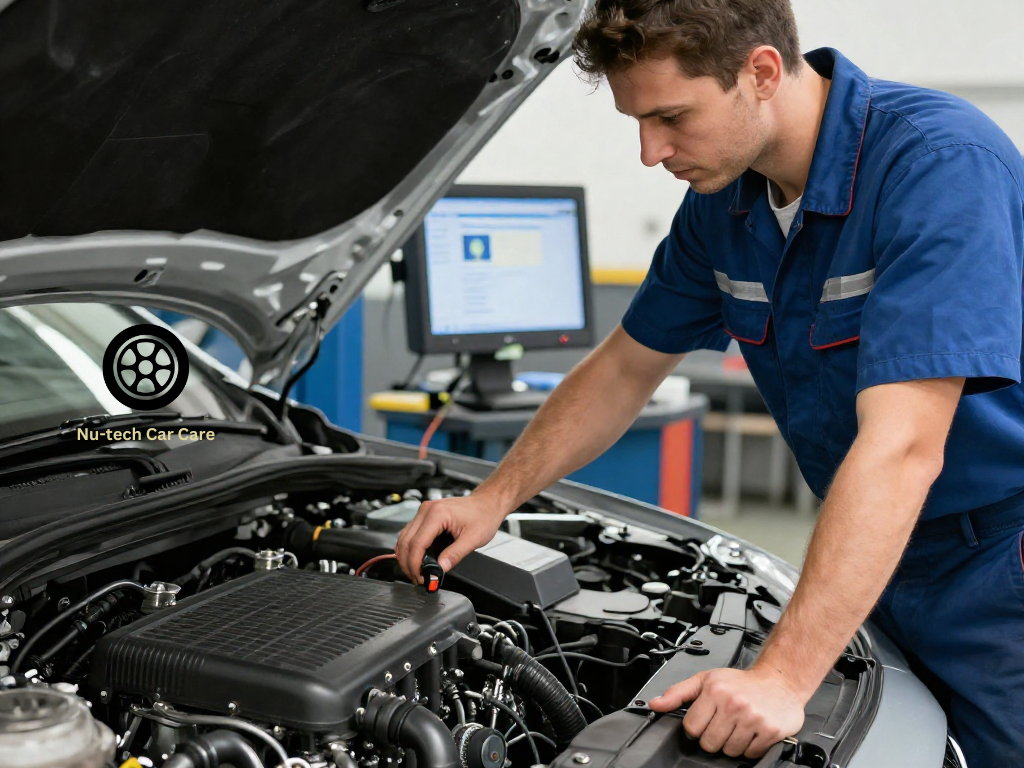
A basic vehicle scanning result may be enough to show that further investigation is needed, but it will not always identify the root cause.
This becomes especially important when the fault involves intermittent electrical problems, several related codes or symptoms that could have multiple causes.
A workshop may need to inspect wiring, measure voltage, test components or compare live data with expected values.
The correct diagnostic approach depends on the car and the fault.
If the check engine light appears alongside significant changes in the way the vehicle runs, unusual noises, smoke, overheating or other serious symptoms, it is safer to have the vehicle assessed rather than continuing to drive and hoping the warning disappears.
The vehicle owner’s manual should also be consulted because manufacturers can use warning lights and messages differently.
Why Vehicle Scanning Results Need Technician Interpretation
Vehicle scanning equipment has become widely available, which means drivers can purchase simple code readers for home use.
These tools can be helpful for understanding which code has been stored. They can also provide useful information to discuss with a mechanic.
The challenge is interpreting the result.
A code can describe the condition detected by the computer without identifying why that condition occurred.
Technicians use their understanding of vehicle systems to connect that information with other evidence.
This is particularly important as cars contain more electronic systems. Car tech now extends well beyond basic engine controls, and professional diagnostic equipment may access systems that a simple OBD2 reader cannot.
Vehicle scanning should therefore support a diagnosis rather than replace the diagnostic process.
Avoid Clearing Codes Before Finding the Cause
Why Vehicle Scanning Should Come Before Resetting Warning Lights
When the check engine light appears, it can be tempting to clear the code immediately.
Vehicle scanning should ideally be used to record and understand the diagnostic information before anything is reset.
Clearing a code removes useful information from the system and may turn the warning light off temporarily without fixing the underlying problem.
Some scanners can clear diagnostic trouble codes and reset the check engine light after repairs.
That function should not be confused with repairing the fault.
If the problem is still present, the system may detect it again and the warning light may return.
Keeping a record of the original code, symptoms and available freeze-frame information gives a technician more information to work with during diagnosis.
How Vehicle Scanning Helps Confirm Whether a Fault Returns
Vehicle scanning can also be useful after repairs.
Once the cause has been identified and appropriate work completed, the diagnostic system can be checked again to determine whether the fault remains or returns.
Depending on the repair and vehicle, further driving or specific operating conditions may be required before some onboard monitoring functions complete their checks.
This is another reason simply erasing a code before diagnosis can create confusion.
The useful sequence is to understand the fault, investigate the cause, carry out the appropriate repair and then confirm that the issue has been resolved.
That approach makes vehicle scanning part of a complete diagnostic process rather than simply a way to switch off a dashboard light.
Use Scan Results to Plan the Next Repair Step
How Vehicle Scanning Can Guide Further Inspection and Repairs
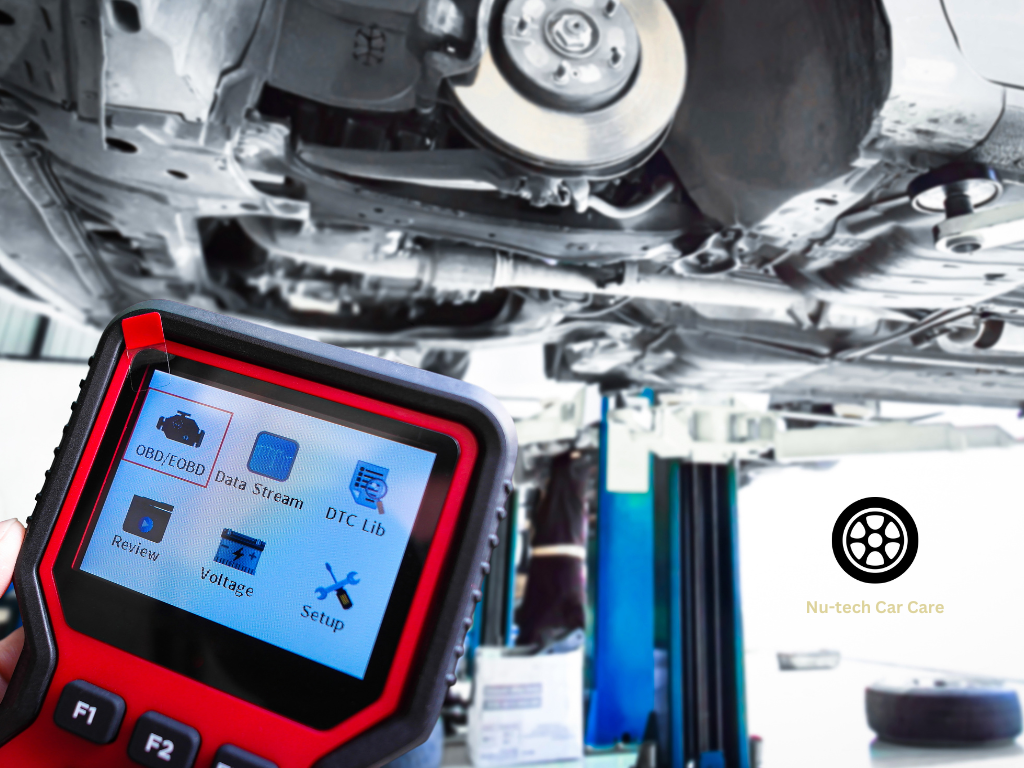
The most useful outcome from vehicle scanning is a clearer next step.
A code and supporting data may point the technician towards a particular sensor circuit, electrical system, engine-management issue or another area that requires testing.
The next step could involve checking electrical connections, measuring voltage, inspecting mechanical components or testing how a system performs under particular conditions.
This approach reduces reliance on guesswork.
It also gives the vehicle owner a clearer explanation of why further testing or repair has been recommended.
For drivers looking for diagnostic support, Nu-Tech Car Care can be considered when vehicle scanning needs to be followed by inspection or other car-care services. Providing the workshop with details about when the warning appeared, how the vehicle was behaving and whether the light has appeared before can also help with diagnosis.
The goal should be to identify the cause of the warning, not simply make the light disappear.
When Vehicle Scanning Should Be Combined With Other Workshop Checks
Vehicle scanning is one part of maintaining and diagnosing a modern vehicle.
Depending on the symptoms, it may need to be combined with battery testing, cooling system services, mechanical inspection or other diagnostic work.
Other vehicle checks also serve different purposes.
For example, a NSW rego check provides registration status, expiry, CTP information, restrictions and available odometer information. It does not tell you what caused a check engine light.
Likewise, tyre tech such as tyre-pressure monitoring diagnostics addresses different systems from a typical engine fault-code scan.
This distinction is particularly useful when inspecting a used car. Vehicle scanning may provide information about electronically recorded faults, while a rego check and broader mechanical inspection provide different information about the vehicle.
No single check gives the complete picture.
When the check engine light appears, vehicle scanning provides a useful starting point because it allows the vehicle’s stored diagnostic information to guide the next investigation. The best result comes from combining that information with proper testing, inspection and an understanding of how the vehicle is actually behaving.