Choosing residential aged care can involve many decisions at once. Families may need to compare rooms, care services, daily living arrangements, staffing, quality information and costs, often while also dealing with changing health needs or a hospital discharge.
For someone researching aged care Rooty Hill, My Aged Care is one of the most useful places to begin because its Find a Provider tool brings together information that can otherwise be difficult to compare across different aged care nursing homes.
However, the information is only useful if you know what to look for.
A provider profile can show room types and prices, care information, food and nutrition details, Star Ratings, staffing and compliance information. My Aged Care also allows families to compare room costs and use an aged care home fee estimator before contacting a provider.
The aim should not be to find the home with the largest room, lowest advertised price or highest-looking number on one part of the profile. A better comparison asks whether the accommodation, care, lifestyle, location and costs suit the individual person.
Understand what a provider profile can tell you
My Aged Care’s Find a Provider tool gives families a structured starting point for comparing residential aged care homes.
A profile can include room and accommodation information, care and services, food and nutrition, Star Ratings, compliance, staffing and organizational information. Some profiles also show current room availability or allow people to enquirer directly.
This makes it more useful than comparing providers only through their own promotional websites.
For example, the current My Aged Care profile for Residential Gardens in Rooty Hill includes separate sections for rooms and costs, care and services, food and nutrition, compliance, staffing and organizational information. It also identifies the facility as a Spanish-speaking specific aged care facility.
When comparing aged care Rooty Hill options, start by opening each shortlisted provider in separate tabs and looking at the same information for each home.
Do not begin with photographs alone. First establish whether the location, room arrangements, care services and general cost range could suit the person.
Once those basic requirements match, you can examine the more personal differences.
Use online information to create a shortlist, not make the whole decision
A provider profile cannot show you exactly what daily life will feel like.
It cannot fully demonstrate how staff communicate with residents, whether a particular person will enjoy the activities, how noisy a room feels during the day or whether the environment feels comfortable to the family.
My Aged Care itself recommends looking at factors such as location, room type, price, availability and quality when shortlisting homes, followed by direct contact with providers.
A useful approach is therefore to use official information to remove unsuitable options first.
If the location makes family visits difficult, the required room type is unavailable or the home cannot meet an important care need, you can investigate other providers before arranging multiple visits.
Then use a visit to confirm the things that are difficult to judge online.
This combination of independent information and personal observation is much more useful than relying entirely on either one.
Compare Room Types and Accommodation Carefully
A room becomes someone’s living space, so the comparison should go beyond its name.
My Aged Care explains that accommodation prices can vary according to factors including whether the room is single or shared, whether the bathroom is shared or private, room size and the home’s location. Providers are required to publish maximum accommodation prices for their rooms.
When comparing rooms, consider how the person actually moves through their day.
Someone using a walker or wheelchair may need enough space to move comfortably between the bed, bathroom and doorway. A person who spends more time in their room may place greater importance on natural light, outlook and room size.
Storage is another practical issue.
Ask whether there is enough space for clothing and personal belongings and what furniture or familiar items can be brought from home.
Even modern nursing homes can vary considerably in room design, so photographs should not replace an inspection.
At Residential Gardens, for example, the current My Aged Care listing shows both shared bedroom accommodation with a shared ensuite and single rooms with ensuites. The profile also displays the room size and maximum accommodation payment information for each listed room type.
That information is useful for comparison, but families should still confirm current availability directly because available rooms can change.
Understand what the published room price means
The room figure shown on My Aged Care is not necessarily the same thing as the resident’s total aged care cost.
Everyone entering residential aged care agrees on a room price with the provider. My Aged Care states that providers must publish their maximum accommodation cost, and a resident can negotiate a lower amount but cannot be charged more than the published maximum for that room.
Whether the person ultimately pays all, some or none of their accommodation cost can depend on their means assessment.
There are also different ways of paying accommodation costs, including refundable lump-sum and daily payment arrangements where applicable. My Aged Care recommends understanding these options and seeking independent financial advice when deciding which payment approach is appropriate.
This means two families looking at the same room may have different actual payment responsibilities.
Treat the online room price as important information, but not as the complete financial picture.
Understand What Care and Services Are Available

Compare support with everyday and clinical needs
A residential aged care home is more than accommodation.
The person may require help with dressing, showering, mobility, medication, continence, meals or other daily activities. They may also need nursing support or access to other health professionals.
My Aged Care explains that staffing information includes care provided by registered nurses, enrolled nurses, personal care workers and assistants in nursing. Staffing is also one of the four components used in the national Star Ratings system.
When comparing aged care nursing homes, start with the person’s current needs.
If medication management is becoming difficult, ask how it is handled.
If the person has reduced mobility, ask what help is available for transfers and movement.
If health needs are complex, ask how changes are identified and who is contacted when clinical review is necessary.
Do not assume a service is available simply because another residential home provides it.
The individual care needs should be discussed directly with each shortlisted provider.
Residential Gardens currently describes its residential services as including personal care, medication supervision and administration, respite, GP consultation arrangements, podiatry, dietitian services, pharmacy support and physiotherapy assessment.
For a prospective resident, the useful next question is how those services would apply to their particular needs.
Check what happens when care needs change
The person’s needs at admission may not remain the same.
Mobility can decline. Medication can change. Someone who initially needs limited assistance may later require more support with personal care or nursing.
This is why provider comparison should consider likely future requirements as well as current ones.
Ask how care plans are reviewed and what happens when staff notice a change in health, behavior, mobility or independence.
Families should also understand how they are involved in discussions.
This can be particularly important when choosing between several homes that appear similar on paper.
A provider may meet today’s needs, but the family also needs confidence that changing needs can be identified and discussed appropriately.
The language used matters as well.
Some people still search online for information about “nursing home patients“, but people living permanently in an aged care home are generally better described as residents. Residential aged care is their home as well as a place where they receive care.
That distinction is worth keeping in mind when comparing services. The decision should support the person as a resident with routines, preferences and relationships, not only as someone receiving clinical assistance.
Look at Lifestyle, Meals and Everyday Living
A long list of activities does not automatically mean a person will enjoy living in a particular home.
Lifestyle in aged care is more personal than that.
One resident may enjoy group activities, celebrations and outings. Another may prefer gardening, reading, religious activities, music or quieter time with family.
When comparing homes, ask how much choice residents have.
Find out whether activities suit people with different interests and abilities and whether participation is optional.
Also look at the physical environment.
Outdoor areas, shared lounges and quieter spaces can affect how residents spend their day.
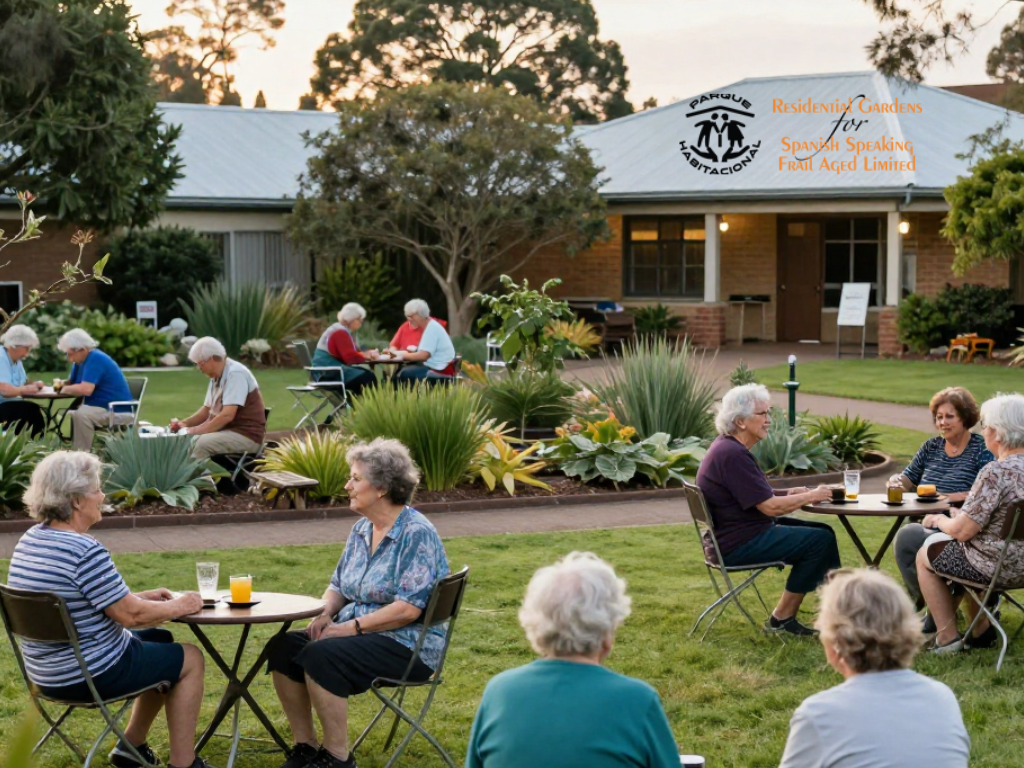
Residential Gardens currently describes an activities program that takes residents’ preferences, cultural backgrounds and personal interests into account. Its published residential information also lists activities, art programs, cultural celebrations, outings, pastoral care, religious services and entertainment.
That provides useful background for a family comparing aged care Rooty Hill options, but the next step should be to ask what the current activity program looks like and whether it matches the prospective resident’s interests.
Consider food, language and cultural preferences
Meals are part of everyday life, not a minor extra.
Families should ask how menus are planned, whether alternatives are offered and how allergies, medical diets, swallowing needs and cultural food preferences are managed.
Residential Gardens states that its residential facility provides prepared meals through its kitchen and food-service team. Its history and service information also reflects its connection with the Spanish-speaking community in Rooty Hill.
Language can matter for much more than conversation.
An older person needs to be able to express discomfort, preferences, questions and concerns. Cultural traditions and familiar routines can also contribute to feeling comfortable in a new environment.
Families comparing aged care south west of Sydney or throughout culturally diverse Western Sydney should therefore consider whether a home understands the person’s language, food, religious practices and family traditions.
These factors may not be captured by a room price or a Star Rating, but they can strongly influence everyday experience.
Use Star Ratings, Staffing and Compliance Information Wisely

Understand what the Star Rating actually measures
My Aged Care gives residential aged care homes an Overall Star Rating between one and five stars.
The Overall rating combines four areas: Residents’ Experience, Compliance, Staffing and Quality Measures. As of the current methodology, Residents’ Experience contributes 33%, Compliance 30%, Staffing 22% and Quality Measures 15% to the overall calculation.
That means the Overall Star Rating is useful, but it should not be treated as a simple review score.
Each component tells you something different.
Residents’ Experience reflects the results of an independent resident survey.
Compliance relates to regulatory performance.
Staffing uses reported care-minute information.
Quality Measures use specified indicators relating to care quality.
The current Residential Gardens My Aged Care profile, for example, displays its Overall Star Rating as “Acceptable”, with separate ratings for Compliance, Quality Measures, Residents’ Experience and Staffing. Those ratings were listed as updated on 2 August 2026 when checked for this guide.
Because these ratings can change, families should check the live My Aged Care profile rather than relying on an older article or screenshot.
Read the separate ratings instead of stopping at the overall result
The subcategories help provide context.
A home’s Staffing rating is based on reported nursing and personal-care minutes against its targets. The methodology changed for care delivered from 1 October 2025, with homes needing to meet both relevant care-minute targets to achieve three stars or higher under the revised matrix.
Compliance works differently.
My Aged Care explains that the Compliance rating reflects current regulatory performance and can be updated when new regulatory decisions are received or identified non-compliance is resolved.
Residents’ Experience adds another perspective because it is based on what residents report about living in the home.
This is why one number cannot answer every question.
Use the ratings to identify issues you want to understand better. Then ask the provider about anything that concerns you.
When visiting, observe how staff communicate with residents, whether residents appear comfortable asking for help and whether the environment seems organized.
Official information and personal observation work best together.
Compare Costs and Choose the Right Overall Option
Residential aged care fees changed from 1 November 2025, so families should use current information rather than relying on older online guides.
For people entering permanent residential care under the newer arrangements, possible costs can include the basic daily fee, a hotelling contribution, a non-clinical care contribution, accommodation costs and optional higher everyday living fees, depending on individual circumstances. Some people remain under the earlier fee arrangements because of when they entered care or the “no worse off” protections.
The basic daily fee helps cover everyday living services such as meals, cleaning, utilities and laundry. Other contributions can depend on income and assets.
Accommodation is considered separately.
My Aged Care provides a residential aged care fee estimator that can help families understand possible costs before comparing homes, although actual contributions require a means assessment and relevant fee advice.
Because personal financial circumstances vary, this article should not be used as individual financial advice.
Use My Aged Care and Services Australia information for current calculations, and consider obtaining independent financial advice if accommodation payment choices or means-tested contributions are difficult to understand.
Choose for overall suitability rather than price alone
Price matters, but the cheapest room is not necessarily the best-value care option for an individual.
Consider how often family members will visit.
A home located closer to relatives may make regular involvement easier.
Think about whether the room is suitable for mobility needs, whether the person’s preferred language can be supported, what clinical services may be required and whether the daily environment suits their personality.
For families researching aged care Rooty Hill, location can be particularly important when relatives live throughout Western Sydney.
This is where Residential Gardens can naturally become part of the comparison rather than being presented as the automatic choice. It is located at 420 Woodstock Avenue in Rooty Hill, and its current My Aged Care profile provides room, quality and resident-experience information that families can compare against other shortlisted providers.
The most useful decision is the one that balances care, accommodation, lifestyle, family access and affordability.
No single field in an online profile can make that decision for you.
Confirm the Details Directly Before Making a Decision

Turn what you found online into better questions
Once you have compared several profiles, make a note of anything you still need to understand.
Perhaps one home appears suitable but the preferred room type is not currently available.
Maybe the Star Rating raised questions about staffing or another quality area.
You may need to understand how a particular health need would be managed or whether dietary and cultural preferences can be accommodated.
My Aged Care advises families to connect directly with shortlisted homes and consider room availability, quality, location and costs before making a final choice.
A visit is especially valuable because you can see the physical environment rather than relying on photographs.
Look at the bedroom and bathroom.
Walk through the shared areas.
Notice whether outdoor spaces are easy to reach.
Consider whether the person would feel comfortable spending an ordinary day there.
If possible, involve the older person directly in the decision.
The home should suit the person who will actually live there.
Contact the home when individual care or room suitability is unclear
There is a point where online research reaches its limit.
If your family needs to know whether a specific health condition can be supported, whether a particular room is available or what the current admission process involves, contact the provider directly.
For families considering Residential Gardens as part of an aged care Rooty Hill shortlist, its current My Aged Care profile provides direct enquiry details as well as room and quality information.
Before calling, have the person’s main care requirements in mind.
Explain mobility needs, personal-care requirements, medical considerations, preferred language, dietary needs and any other factors that could affect suitability.
You can then compare the provider’s answers with the information already available on My Aged Care.
That is a more reliable way to choose than relying on a brochure, a single rating or an advertised room price.
My Aged Care gives families a valuable independent starting point. Use it to compare rooms, services, costs, staffing, compliance and residents’ experience. Then use direct conversations and visits to understand the things a website cannot fully show.
For someone choosing residential care in Rooty Hill or elsewhere in Western Sydney, the goal is not simply to find an available room.
It is to find a home where the person’s care needs, daily preferences, cultural needs, family connections and financial circumstances can all be considered together.