Acrylic can be processed successfully by both laser cutting and CNC routing, but there is no single sheet thickness where one process automatically becomes wrong and the other becomes right.
That is important for anyone comparing laser cutting Sydney services because thickness is only one part of the decision. The acrylic grade, required edge appearance, shape of the part, tolerances, machining features and what happens after cutting can all influence which production method makes more sense.
Machine capability also varies considerably. Trotec, for example, specifies that some of its CO₂ laser systems can cut acrylic sheet up to 30 mm thick, while commercial CNC router manufacturers advertise equipment capable of processing much thicker acrylic. Those figures describe particular machines rather than a universal industry limit.
This means a 10 mm or 20 mm acrylic sheet should not automatically be assigned to one process simply because of its thickness.
A decorative sign may benefit from laser cutting because of its detailed shape and polished-looking edge. A thick functional component made from similar material might be better suited to CNC routing if it needs pockets, grooves or controlled depths.
See how thickness changes the cutting process
As acrylic gets thicker, both laser cutting and CNC routing become more demanding.
With a CO₂ laser, greater thickness can require more laser power, slower processing and different focusing arrangements. Trotec notes that lens selection, focus position, power and cutting speed all influence edge quality when processing thicker acrylic. Its guidance also explains that cutting too slowly can create other problems, so simply slowing the machine down is not always an effective solution.
This is one reason there should not be a universal statement such as “anything above 12 mm must be routed”.
One laser may be configured differently from another. The acrylic itself can also behave differently depending on whether it is cast or extruded.
CNC routing has its own considerations. The router uses a physical cutting tool rather than a laser beam, so tool selection, spindle speed, feed rate, material holding and chip removal all influence the result.
Commercial CNC routers can process substantial acrylic thicknesses when configured correctly. AXYZ, for example, describes CNC equipment used for very thick acrylic applications, demonstrating that mechanical routing can remain practical far beyond common signage sheet thicknesses.
However, the ability to cut a particular thickness does not automatically make that process the best option.
The desired result still matters.
Consider the finished part, not just the sheet
Imagine two jobs made from the same acrylic thickness.
The first is a clear display panel with a decorative outline and lettering. Appearance is the main priority, and there are no complicated machined features.
The second is an equipment component that needs several recessed areas, accurately positioned holes and a slot that must accept another component.
Even if the material thickness is identical, the production requirements are very different.
The first project may favor laser cutting because a suitable CO₂ laser can create detailed profiles and a clean, glossy-looking cut edge.
The second may favor CNC routing because the cutting tool can move through different depths and create features that do not pass completely through the sheet.
This is why buyers looking for acrylic laser cutting Sydney should explain the complete end use when asking for a quote.
If the supplier understands only the thickness, they know the material they need to process.
If they understand the finished product, they can make a much more useful process recommendation.
Know When Laser Cutting Works Well for Acrylic
Laser cutting can be particularly useful for acrylic signs, letters, display panels, decorative components and other flat parts with detailed profiles.
A CO₂ laser does not physically contact the acrylic during cutting. Instead, the focused laser energy moves along the programmed path.
One of the major advantages is edge appearance.
Trotec explains that CO₂ laser cutting can create a glossy, flame-polished-looking acrylic edge under suitable processing conditions, potentially reducing the need for separate sanding, buffing or flame-polishing steps.
That can be valuable for retail displays, signage and decorative components where the exposed edge is part of the visual result.
Laser cutting is also well suited to intricate two-dimensional shapes because there is no rotating tool that needs to physically travel around the profile.
However, designers should still consider kerf, feature size and how pieces will fit together.
If several acrylic components need to slot into each other, even a relatively small difference between the drawing and finished cut can affect assembly.
The supplier therefore needs to know when dimensions are purely decorative and when they are functionally important.
Understand how acrylic type and thickness affect the edge
Not every acrylic sheet reacts to laser cutting in exactly the same way.
Cast and extruded acrylic have different manufacturing characteristics, and Trotec notes that they can produce different results during laser processing. Its current guidance says extruded acrylic can produce a flame-polished cutting edge, while cast acrylic can produce clean, burr-free results and is particularly suitable for engraving.
Thickness introduces another variable.
As the laser travels through a deeper sheet, focus, beam characteristics and cutting parameters become increasingly important.
This means an attractive edge on a thin sample does not guarantee the identical appearance on a much thicker component.
For customers, the practical lesson is simple.
Do not specify “laser cut” merely because you have seen another acrylic product with a polished edge.
Tell the supplier what edge appearance you need.
If the edge will be hidden inside an assembly, appearance may matter very little.
If the part forms the front of an illuminated display, edge quality could be one of the most important specifications in the job.
That distinction helps the fabricator decide whether laser cutting, routing or additional finishing should be considered.
Recognize When CNC Routing Offers More Flexibility
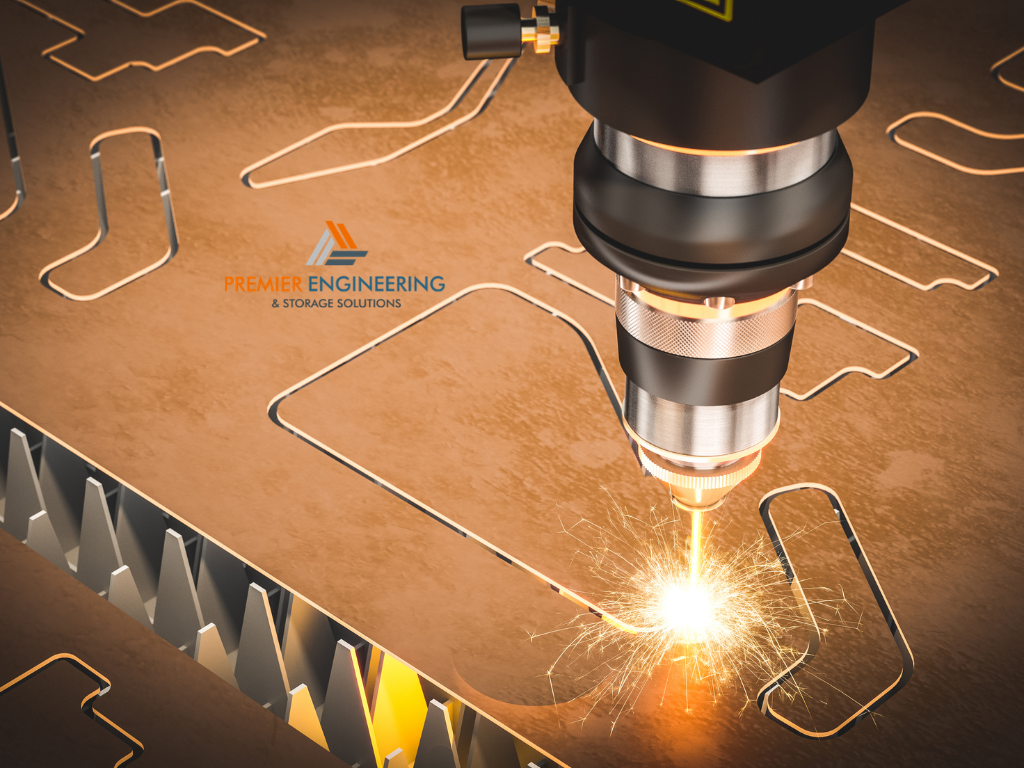
Choose routing when the design needs more than a through-cut
A laser excels at following a two-dimensional cut path through suitable sheet material, but some components need more than a simple profile.
A CNC cutting machine fitted for routing can use different tools and programmed depths to create additional geometry.
Depending on the machine and tooling, this can include pockets, recesses, channels, engravings and other machined areas that stop partway through the material.
That gives CNC routing an advantage when the acrylic component needs three-dimensional machining rather than only a perimeter cut.
For example, a thick equipment panel might need a recessed section for hardware.
Another component may require grooves for joining to adjoining parts.
These requirements can push the decision towards CNC machining even when the sheet could technically be cut by a laser.
AXYZ describes acrylic CNC workflows that combine engraving and profile cutting within the same programmed process, illustrating the versatility available when the router needs to perform more than a through-cut.
This is why designers should identify all features before choosing the production process.
A flat drawing showing only the outside shape may leave out information that changes which machine is appropriate.
Consider routing for thicker or more demanding components
CNC routing becomes especially relevant when thicker acrylic needs mechanical features, controlled machining depths or repeatable fitting surfaces.
Commercial router platforms can be configured for substantial material thickness. MultiCam, for example, states that one of its CNC router platforms can perform three-axis routing through materials up to approximately three inches thick, while AXYZ documents specialized acrylic applications involving similarly heavy sheet. These are examples of specific equipment capabilities, not standard thickness limits for every router.
The important difference is that the router is physically machining the material.
Tooling, cooling, chip evacuation and material holding therefore become important.
Acrylic can soften if machining conditions create excessive heat. Chips also need to be removed effectively so they do not interfere with the cutting process.
With the correct machine, tool and setup, routing can produce accurate and clean acrylic components, but it should not be described as automatically superior whenever the sheet becomes thick.
A relatively thick decorative panel may still suit a capable CO₂ laser.
A thinner functional component requiring pockets and recesses may suit routing.
The geometry can matter more than the number printed on the material specification.
Compare Edge Finish, Detail and Accuracy Before Choosing
Edge finish is one of the clearest practical differences between the two processes.
CO₂ laser processing can create a glossy, polished-looking acrylic edge directly from the cutting operation when the material and machine settings are appropriate.
A routed edge is produced mechanically.
Its final appearance depends on the cutting tool, feed rate, spindle speed, cooling and whether a finishing pass or separate polishing process is used.
Modern CNC routing should not automatically be associated with a rough edge. Manufacturers such as AXYZ and MultiCam specifically design router systems and tooling strategies to achieve high-quality acrylic edges.
However, the appearance is produced differently from a laser-cut edge.
For that reason, the correct question is not simply which process gives the “best” finish.
Ask what finish the actual product requires.
A machine guard may not need the same optical edge quality as a premium retail display.
A hidden mounting component may need dimensional consistency more than visual polishing.
A clear presentation piece may put appearance first.
Making that requirement clear before production prevents unnecessary finishing or disappointment later.
Allow for tolerances, kerf and component fit
Dimensional requirements become more important when pieces interact with one another.
A decorative acrylic letter only needs to match the approved visual design closely enough for the intended installation.
A component that fits into another component has a different requirement.
The designer may need to account for the amount of material removed by the cutting process, actual sheet thickness and the tolerance needed for assembly.
This becomes particularly important with slots, tabs, small holes and mating components.
Material itself can introduce variation. Cast acrylic, for example, can have greater sheet-thickness variation than extruded acrylic, which can matter when designing interlocking components. Trotec’s material guidance notes this difference when discussing applications such as plug connections.
That means a drawing specifying “10 mm acrylic” does not necessarily tell the fabricator everything needed to achieve a tight mechanical fit.
If two parts must assemble precisely, say so.
Provide the required fit or allowable tolerance if it is known.
The fabricator can then assess the drawing, actual material and chosen cutting process together.
Match the Cutting Method to the Final Application
Choose the process around how the acrylic will be used
The end application should influence almost every manufacturing decision.
Signs and display components commonly favor detailed profiles and attractive exposed edges.
Machine components may priorities tolerances, hole positioning and repeatability.
Protective panels may need accurate mounting holes.
Fabricated enclosures can involve several pieces that must align before bonding or assembly.
Acrylic used in equipment may need slots or recesses that make routing more attractive.
This is why customers searching for laser cutting western Sydney should avoid treating the cutting machine as the product they are buying.
They are buying a finished component.
The process is simply the method used to make it.
A good supplier should therefore be interested in what the part does, which surfaces will remain visible, how it attaches to other components and whether additional fabrication follows.
This is also where material choice can change the answer.
A project may initially be described as acrylic even though another plastic or a metal component may ultimately better suit the mechanical requirements.
Process selection should follow the application rather than being decided in isolation.
Think ahead to bending, bonding, drilling and assembly
Cutting is often only the first stage.
An acrylic component may later be bent, bonded, drilled, polished, printed or assembled with other parts.
Those later operations can influence how the first cut should be produced.
For example, a visible edge that will later be bonded may have different requirements from an exposed decorative edge.
A hole that receives a mechanical fastener has different dimensional priorities from a decorative opening.
An enclosure assembled from several panels requires the parts to work together as a system, not simply look correct individually.
Planning these later stages before cutting can reduce unnecessary rework.
This principle applies equally to CNC cutting services and laser production.
A supplier receiving a complete assembly drawing has more useful information than one receiving several unrelated profile files.
The more the fabricator understands about what happens after cutting, the easier it is to recommend the process that supports the final product.
Choose the Right Cutting Service for Your Project
When comparing laser cutting Sydney with CNC cutting services, start with six practical questions: what material is being used, how thick is it, what geometry is required, how should the edges look, how accurate must mating features be and what happens to the part after cutting?
Those questions are more useful than starting with a preferred machine.
For acrylic specifically, a CO₂ laser is commonly used because the wavelength and processing method are suitable for acrylic cutting. A fiber laser designed for metal is a different technology and should not automatically be assumed to process acrylic in the same way. Trotec’s acrylic guidance centres on CO₂ processing, while AMADA identifies the ENSIS-AJ family as fiber-laser equipment developed for sheet-metal applications.
This distinction is particularly important when comparing suppliers.
An industrial steel cutting machine may be highly capable on mild steel or stainless steel while being completely different from the equipment used for acrylic fabrication.
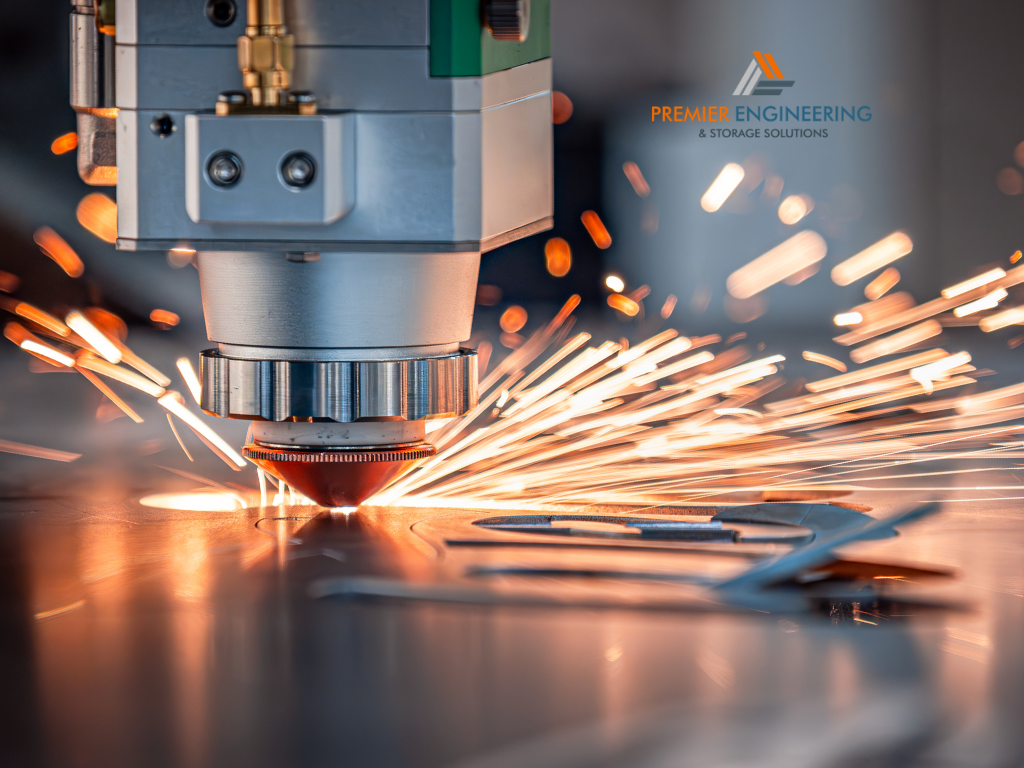
Premier Engineering illustrates this distinction. Its publicly listed laser is an AMADA ENSIS-AJ 3 kW fiber system, and the company’s current service information centres on sheet-metal manufacturing. Premier states that the system can process mild steel up to 25 mm under its listed capability.
Therefore, customers should confirm material capability with any provider rather than assuming that a business advertising laser cutting also processes acrylic.
Avoid choosing a supplier from the machine name alone
Machine specifications are useful, but a successful project also depends on drawing preparation, setup, material knowledge, finishing and the processes that follow the cut.
For a sheet-metal project, Premier Engineering currently lists design, prototyping, laser cutting, CNC punching, brake press, welding, fastener insertion, powder coating and related manufacturing capabilities at its Ingleburn operation in South-West Sydney.
That type of integrated capability can matter when the laser-cut component later needs bending, welding or finishing.
For an acrylic project, however, the same principle should be applied to a plastics fabricator.
Someone searching for acrylic laser cutting Sydney or CNC cutting services western Sydney should confirm that the supplier has appropriate equipment for the actual material and the required secondary operations.
Do not assume that “CNC” means one specific process either.
CNC simply refers to computer numerical control. A CNC router, CNC punch, CNC brake press and CNC machining center perform very different jobs.
The correct supplier is the one whose equipment and fabrication processes suit the finished component.
Provide the Right Project Details Before Production Begins
Send enough information for the job to be assessed properly
A useful quotation begins with useful project information.
Provide the material name if you know it, rather than simply saying “plastic”.
Include the thickness, finished dimensions and quantity.
If color, transparency or surface appearance matters, explain that too.
A CAD or vector file can help the supplier assess the actual geometry, but the file should be accompanied by information about tolerances and the finished use.
For example, if two pieces must slide together, say so.
If a particular edge will remain visible, identify it.
If the part will later be bent or bonded, tell the supplier before production.
This becomes increasingly important as material thickness and part complexity increase.
The supplier may decide that laser cutting is appropriate, that a cnc cutting machine provides advantages, or that the project needs more than one manufacturing process.
Giving the fabricator the complete requirement allows that decision to be based on the finished part rather than a guess from the material thickness.
Contact the fabricator when the best process is unclear
Customers should not feel that they need to become manufacturing specialists before asking for a quote.
If you know what the finished part needs to do but are unsure how it should be produced, provide the specification and ask the supplier to recommend the process.
For an acrylic project, confirm that the supplier offers appropriate acrylic laser cutting or CNC routing before relying on general “laser cutting” or “CNC” wording.
For sheet-metal work, Premier Engineering can be contacted when a project requires its verified capabilities such as laser cutting, design, prototyping, CNC punching, brake press work, welding or associated metal manufacturing services. The company is based in Ingleburn and describes its operation as serving Sydney and surrounding areas.
The main lesson applies regardless of material.
There is no universal acrylic thickness at which laser cutting suddenly becomes unsuitable and CNC routing automatically takes over.
Some CO₂ laser systems can process substantial acrylic thicknesses. Some CNC routers can machine much thicker acrylic. What matters is whether the available machine can achieve the required geometry, edge finish, tolerance and production outcome.
Start with the finished part.
Then consider material and thickness.
After that, compare edge requirements, machining features, fit and subsequent fabrication.
That approach gives a supplier enough information to choose the process for a reason rather than choosing it simply because the sheet crossed an arbitrary thickness number.