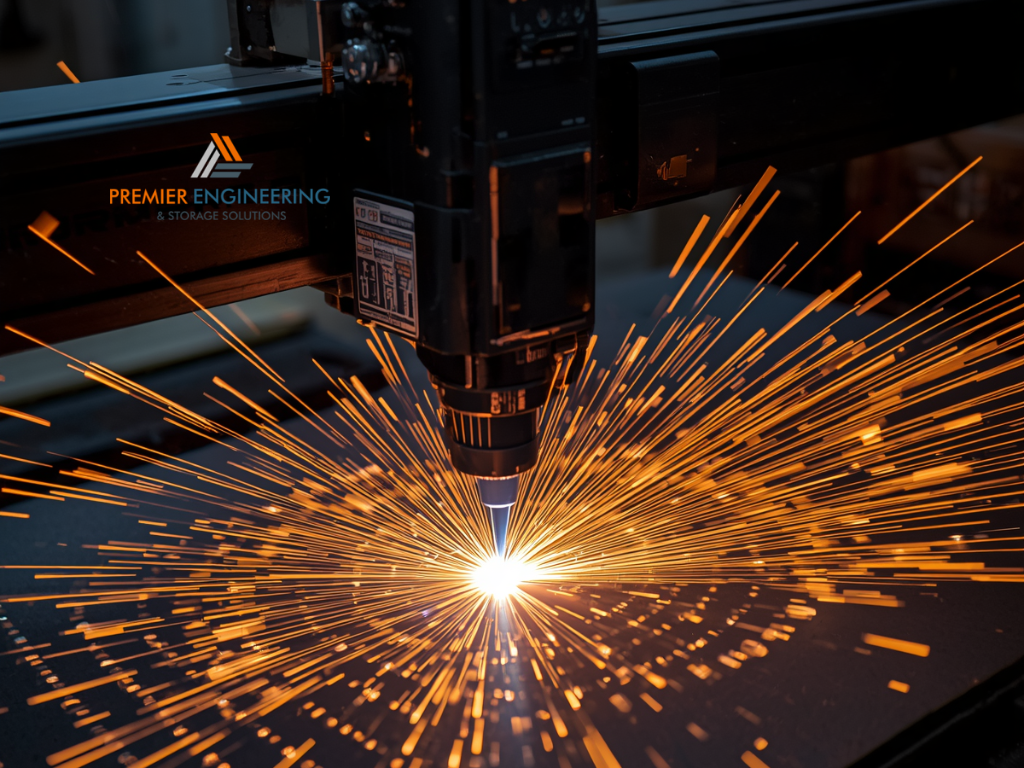
Laser cutting can turn a flat sheet into accurate components for machinery, cabinets, enclosures, brackets, commercial products and fabricated assemblies. However, a reliable result depends on more than sending a shape to a cnc cutting machine.
The material, thickness, geometry, tolerance, quantity and later fabrication processes all need to be considered together. A drawing that looks complete on screen may still leave important manufacturing questions unanswered.
Businesses searching for laser cutting Sydney services may require anything from a single prototype to a repeated production run of high-precision sheet metal parts. Preparing the project properly helps the supplier understand the intended result, identify possible manufacturing issues and quote the complete scope rather than guessing what is required.
A useful laser cutting project begins with the finished component, not the cutting machine. The fabricator needs to understand what the part will do, where it will be used and how it connects with the rest of the product.
A simple-looking plate may contain mounting holes that must align with an existing frame. A cabinet panel may require bends, ventilation openings and fixing points. A bracket may need to support a load or fit against another manufactured component.
Explaining the application helps the supplier assess whether the drawing, material and cutting method are suitable.
Explain What the Component Must Do
Describe the purpose of the part when requesting a quotation. State whether it is a cover, bracket, panel, enclosure, machine component, display element or part of a larger assembly.
The supplier should know whether the component will be used indoors or outdoors and whether it will be exposed to moisture, heat, chemicals, impact or regular handling. These conditions may influence the material grade, thickness and finishing requirements.
Also explain whether the component is primarily decorative or functional. A visible panel may require close attention to surface protection and edge appearance, while an internal structural part may place more importance on strength, hole position and repeatable fit.
Providing this context does not replace an engineering drawing, but it helps the fabricator interpret the production requirements more accurately.
Identify the Dimensions That Control Fit
Not every measurement requires the same level of precision. A decorative outside edge may allow more variation than a hole pattern that must align with an existing machine.
Identify which dimensions control fit, movement, alignment or assembly. These may include hole centres, slots, folded edges, mounting faces and distances between connected parts.
Where several pieces form one assembly, provide an overall drawing as well as individual part drawings. The overall view helps the supplier understand how the pieces interact after cutting, bending and assembly.
Photographs can help explain the application, particularly when the new part must replace or connect with an existing component. However, a photograph should not be used as the only manufacturing instruction because it cannot reliably communicate dimensions, tolerances or material details.
Select a Material and Cutting Process
The cutting method should be selected according to the finished part rather than the machine that happens to be available.
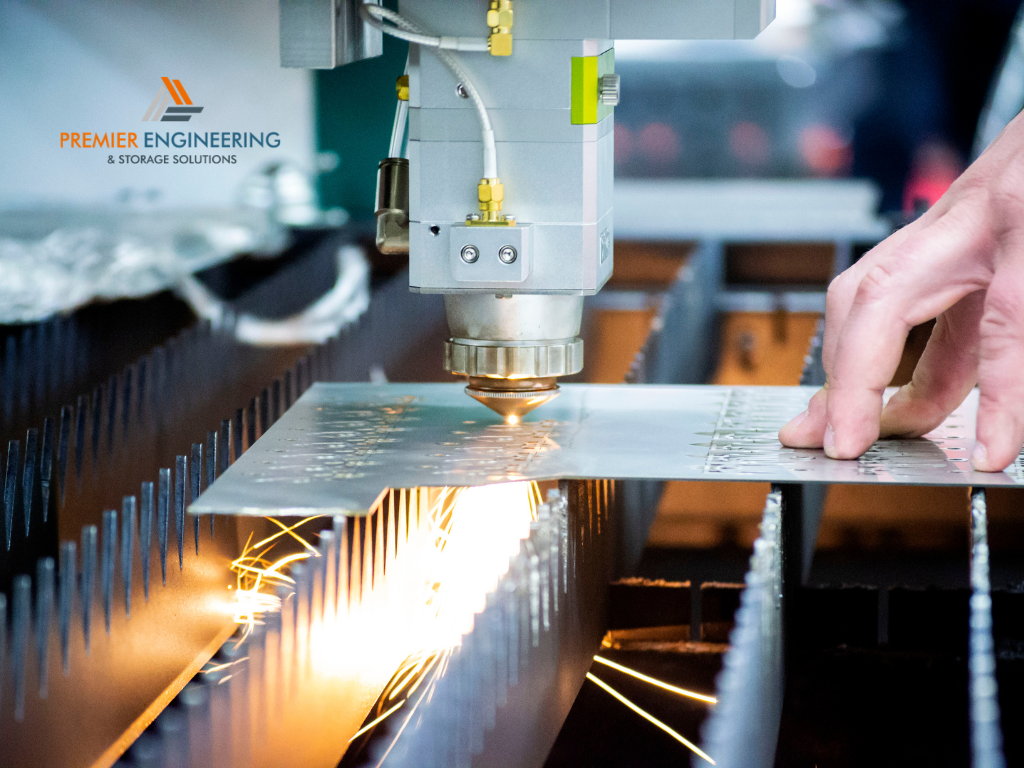
Laser cutting is commonly used because it can produce detailed profiles without the need for dedicated hard tooling. Premier Engineering describes laser cutting as a fast method for producing sheet metal parts and currently lists it alongside welding and CNC brake-press fabrication within its manufacturing capabilities.
However, no cutting process is ideal for every material, thickness or component design.
Match Material Grade and Thickness to the Application
Specify the complete material description where possible. Requesting only steel, stainless steel or aluminium may not provide enough information because each material family contains different grades and properties.
The material choice may depend on strength, corrosion resistance, weight, weldability, appearance and the environment in which the part will be used.
Thickness also affects strength, weight, cutting behaviour and later bending. Choosing a thicker sheet does not automatically improve the part because it may increase weight, cost and forming difficulty. A sheet that is too thin may flex or fail to support the intended load.
Premier Engineering states that its Amada ENSIS-AJ 3kW laser can process mild steel and identifies a maximum capability of up to 25 millimetres for that material. The suitability of a specific grade, thickness and edge requirement should still be confirmed for the individual project.
When requesting high-precision sheet metal parts, provide the exact material grade and thickness rather than expecting the supplier to select them without application details.
Compare Laser Cutting With Other CNC Processes
Laser cutting uses a focused beam to follow programmed geometry through suitable sheet material. It can be effective for outside profiles, holes, slots and detailed shapes.
CNC punching uses shaped tools to create holes and forms in sheet metal. It may be practical for repeated patterns or production work where suitable tooling is available. Saw cutting is generally more appropriate for straight cuts, sections or simple preparation work.
A cnc cutting machine may also refer to routing, plasma cutting, waterjet cutting or another computer-controlled process. These methods have different material, thickness and edge characteristics.
The best process depends on the material, component geometry, quantities, required finish and later fabrication. A knowledgeable supplier should be able to explain why a particular process suits the part.
Customers comparing cnc cutting services Western Sydney should therefore ask about the proposed process rather than assuming that every computer-controlled cutting method will produce the same result.
Prepare Accurate Drawings and Digital Files
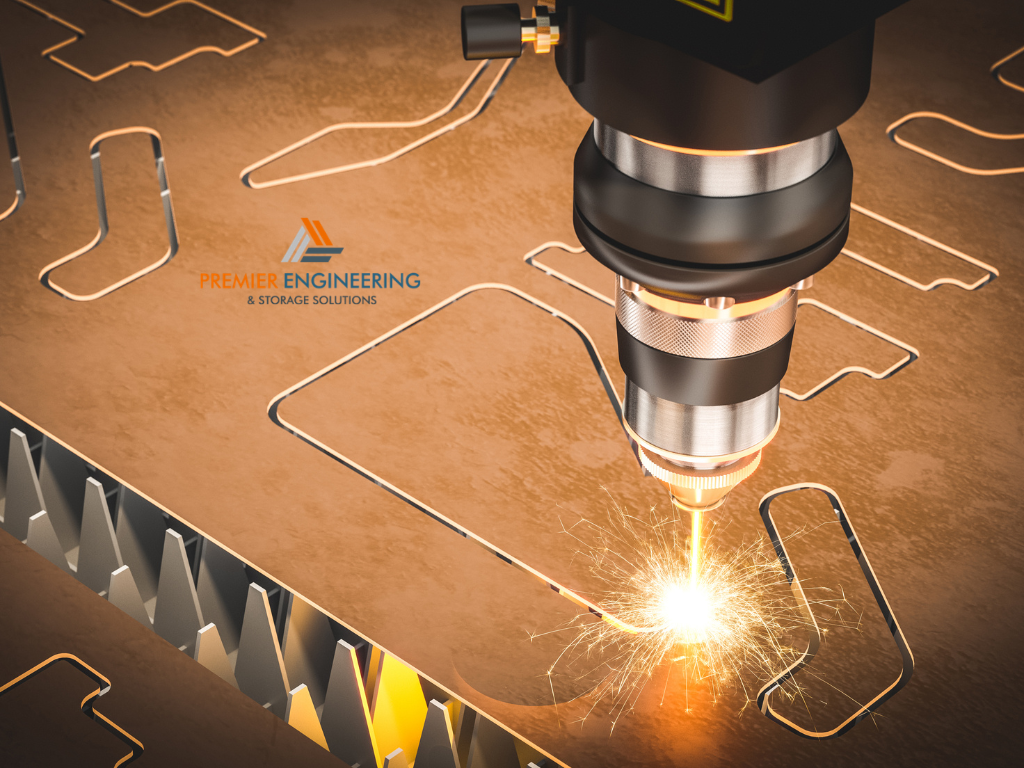
A clear drawing is one of the most important parts of a laser cutting project. It communicates the size, shape and production requirements that cannot be safely assumed from a sketch or photograph.
The drawing and digital cutting file should agree with each other. Conflicting information can delay quoting and create uncertainty about which dimensions should control production.
Include Geometry, Tolerances and Production Details
Begin with the overall width, length and material thickness. Then show holes, slots, curves, cut-outs, internal features and corner radiuses.
Use millimetres consistently unless another unit has been formally agreed. Avoid mixing millimetres and inches within the same project.
Hole positions should be clearly located from reliable reference points. Repeated patterns should show their spacing and quantity. Where bends will be added later, include bend lines, directions and relevant dimensions on the fabrication drawing.
State tolerances only where they are genuinely needed. A tolerance defines the acceptable variation in a finished measurement. It should reflect the functional requirement of the part rather than simply requesting the highest possible accuracy.
Unnecessarily close tolerances can add programming, setup, inspection and production requirements. Tolerances that are too loose may create problems when parts need to align or fit together.
The practical tolerance should be discussed with the fabricator because material type, sheet thickness, part size, heat input and later forming can all influence the finished result.
Control File Revisions Before Production
Every drawing and machine file should have a clear part number, revision number and date.
Avoid file names such as “final”, “final new” or “final latest” because they do not clearly show which version has been approved. A simple revision system makes production changes easier to track.
When a drawing changes, explain what was revised. The supplier should not need to compare two complex files to discover that a hole moved by several millimetres.
Keep the approved PDF drawing with the corresponding CAD or vector file. The PDF provides a human-readable reference, while the production file contains the geometry used by the machine.
Check that exported files remain at the correct scale. Text, construction lines, duplicated profiles and hidden geometry should be removed unless they are required for production.
Before cutting begins, both parties should be able to identify one approved drawing and one matching production file.
Design the Part for Efficient Manufacturing
A part can be technically drawable but unnecessarily difficult or expensive to manufacture.
Design for manufacture means considering how the shape will be cut, removed from the sheet, formed and assembled. Small changes can sometimes simplify production without affecting the function of the component.
Review Small Features and Difficult Geometry
Very small holes, narrow sections and closely spaced cut-outs should be reviewed before production.
The relationship between feature size and material thickness can affect whether the part cuts cleanly and remains stable. Narrow sections may distort, while small details may be influenced by heat or the cutting kerf.
Features positioned close to a bend line also require attention. A hole or slot may change shape when the part is formed, depending on its location and the bend method.
Sharp internal corners may be possible in the flat cutting stage, but they can also create stress concentrations or fabrication difficulties in the finished component. A practical radius may improve strength or manufacturability.
The customer should identify which details are essential and which can be adjusted. Early design review gives the supplier an opportunity to suggest changes before material is cut.
Plan Quantities, Nesting and Sheet Use
Quantity affects the way a project is programmed and arranged on the sheet.
Nesting places multiple parts onto a standard sheet to use the available material efficiently. The result depends on part shape, quantities, cutting separation, material direction and whether the sheet has a protected or visible surface.
Irregular shapes may create more unused space than rectangular components. Sometimes a small design adjustment can improve nesting, although material efficiency should never compromise the part’s function or strength.
Where several components use the same material and thickness, they may be planned together. Repeat orders can also benefit from maintaining one approved drawing and production revision.
Western Sydney’s wider manufacturing strategy is increasingly focused on automation, process control, advanced machinery and digital manufacturing capability. This makes accurate production data and repeatable digital files increasingly relevant for local manufacturers.
Plan the Work Required After Cutting
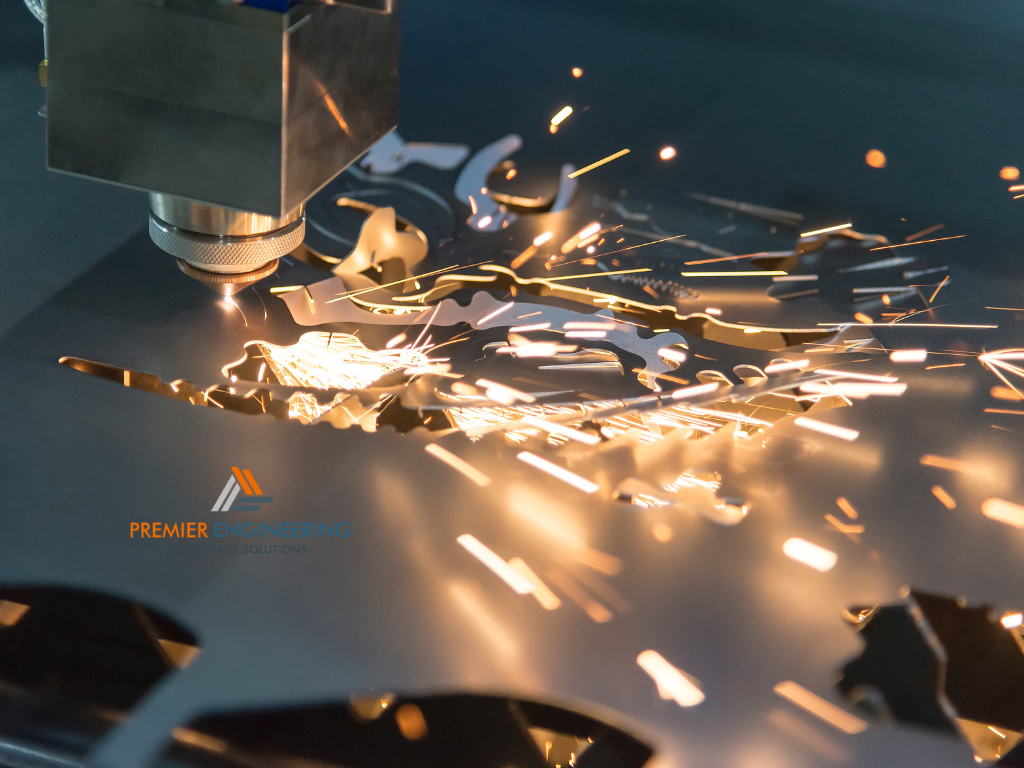
Laser cutting may be only the first production step. Many components also require bending, welding, drilling, tapping, finishing or assembly.
These later processes should be considered before the flat profile is approved. A part that is easy to cut may still be difficult to bend or assemble if important fabrication details were overlooked.
Include Bending, Welding and Finishing
If the component requires bending, show the bend locations, directions, angles and final dimensions.
The fabricator may need to account for the material, thickness, bend radius and forming method when developing the flat pattern. The customer should not assume that the final folded dimensions can be produced from an unreviewed flat shape.
Welding requirements should also be identified. State which parts are joined, whether the weld remains visible and whether the assembly requires grinding or surface preparation.
Finishes such as powder coating, painting, plating or other treatments may affect hole sizes, clearances and visible surfaces. These requirements should be known before production so the part can be prepared appropriately.
Premier Engineering offers laser cutting alongside brake-press and welding services, which may be useful where the project needs more than flat cut components. The precise fabrication scope should be confirmed in the quotation.
Confirm Inspection, Assembly and Packaging Needs
Identify the measurements that require inspection. These may include overall dimensions, hole positions, folded angles or assembly clearances.
Where several parts form one product, label each component clearly. Part numbers can be marked on drawings, packaging or production records so the customer can identify each item.
Visible surfaces may need protective handling or separation during transport. Finished components can be scratched when they are stacked without appropriate protection.
Ask whether the quotation includes inspection, assembly, packaging and delivery. A low cutting price may not represent the complete project when several production stages are required afterward.
The agreed scope should clearly state whether the supplier is providing cut blanks, finished individual parts or a complete fabricated assembly.
Know When to Contact the Fabricator
Early communication is useful when the material, tolerance or manufacturing method is uncertain.
Waiting until the design is treated as final can make changes more expensive. A discussion before production may identify unclear drawings, unsuitable details or additional fabrication requirements.
Request Advice Before Finalising a Complex Design
Contact a fabricator when the design contains narrow sections, detailed profiles, many small holes or features located close to bend lines.
Advice is also useful when the project uses an unfamiliar material or requires several processes after cutting.
Acrylic laser cutting Sydney is a related but distinct service area. Acrylic responds differently from sheet metal, and not every metal fabrication laser or extraction system is intended for plastic processing. Premier Engineering’s published laser capability focuses on sheet metal, so acrylic material compatibility should be confirmed directly rather than assumed.
Certain plastics and materials with unknown coatings may be unsafe or unsuitable for laser cutting because they can produce hazardous fumes or react poorly to heat. The exact material must be identified before a supplier accepts it.
Send Complete Information for the Quotation
A useful quotation request should include the approved drawing, production file, material grade, thickness and quantity.
State which measurements are critical and include realistic tolerance requirements. Explain whether the parts need bending, welding, tapping, coating, assembly or delivery.
Provide the intended completion date, but allow the supplier to confirm a practical production schedule. Lead times can depend on material availability, machine scheduling, quantities and the amount of fabrication required.
Also explain the application. A fabricator may identify a material, geometry or production issue that is not obvious from the flat drawing alone.
Premier Engineering can be contacted about laser cutting Sydney and related sheet metal fabrication requirements. Providing complete project information from the beginning gives the company a clearer basis for reviewing manufacturability and preparing a quotation.
Compare Suppliers and Approve the Production Scope
The most suitable supplier is not necessarily the business offering the lowest cutting rate.
A complete comparison should consider material capability, equipment, fabrication support, communication, inspection and the clarity of the quotation.
Look Beyond the Cutting Price
Compare suppliers using the same drawing, material, quantity and finishing requirements.
Check whether each quotation includes material supply, programming, cutting, deburring, bending, welding, finishing, inspection, packaging and delivery. Quotes with different inclusions cannot be compared accurately by their total price alone.
Ask whether the supplier can support both prototypes and repeat production. Where future orders are expected, confirm how approved files and revisions will be controlled.
Location may also matter. A provider offering laser cutting Western Sydney can be convenient for businesses that need local communication, material collection or coordination with nearby manufacturing and construction operations.
Premier Engineering is based in Ingleburn in south-western Sydney and publishes laser cutting, CNC cutting, brake-press and welding capabilities. Current machinery, material limits and production availability should be confirmed for the specific project.
Confirm the Final Drawing and Quotation
Before approving production, check that the quotation refers to the correct drawing revision.
Confirm the material grade, thickness, quantity and required completion scope. Ensure that all bends, welds, holes, finishes and packaging requirements are included.
Clarify who is responsible for the design, engineering approval, material selection and final fit. Unless design responsibility has been formally included, the customer is generally responsible for supplying accurate production requirements.
Request written confirmation of any agreed changes rather than relying on an informal conversation.
The final approval should leave no uncertainty about what is being manufactured. When the drawing, production file and quotation all describe the same result, the supplier has a stronger basis for producing accurate and repeatable components.
For a project discussion, send Premier Engineering the drawings, material details, quantities, critical dimensions and required fabrication processes. This allows the team to assess the actual scope and discuss an appropriate production approach.