
Artificial Intelligence Auditing Australia is becoming more important as businesses start using AI in everyday work. AI can help with customer service, marketing, reporting, admin tasks, document drafting, data analysis, and workflow automation. However, it also brings risks that need to be checked before tools are used widely.
An AI audit helps a business understand how AI is being used, what risks exist, what controls are missing, and what steps should come next. It can also help leaders make better decisions before investing in new AI tools or custom systems.
The goal is not to slow innovation. The goal is to make AI use clearer, safer, and easier to manage.
Many businesses start using AI in a simple way. A staff member may use a public AI tool to draft an email. A marketing team may use AI to prepare content ideas. A manager may use AI to summarise documents or reports.
These small uses can grow quickly. Before long, AI may be used across customer service, sales, operations, HR, finance, and management. If this happens without rules, the business may not know what data is being entered, which tools are approved, who checks outputs, or who is responsible for mistakes.
An audit helps bring structure to this activity. It reviews how AI is used now and what needs to change before the business scales AI further.
Trust in AI depends on evidence. A business should be able to show which tools are being used, what data is involved, how outputs are checked, and who is accountable.
This is especially important when AI supports customer decisions, staff decisions, financial information, legal content, safety-related work, or compliance-sensitive tasks.
A useful audit should create a clearer view of risk, process, and responsibility. It should also help the business build records that support better governance over time.
What Does an AI Audit Usually Review?
An AI audit should look at more than software. It should review the full picture, including people, data, processes, tools, policies, and business goals.
This matters because AI does not work in isolation. It sits inside real workflows, with real staff, real customers, and real business risks.
Data, systems, and workflows
A good audit should review the data and systems that AI may use. This includes customer records, documents, reports, spreadsheets, knowledge bases, internal files, website content, and software platforms.
The audit may ask:
- Where is business data stored?
- Who can access it?
- Is the data accurate and current?
- Is sensitive information protected?
- Which workflows could benefit from AI?
- Which workflows are too risky to automate?
- Which tools are already being used?
- Are outputs checked before they are used?
This helps the business decide whether it is ready for AI or whether data and systems need to be improved first.
People, policies, and approvals
AI auditing should also review how staff use AI. A business may need rules for approved tools, safe prompts, data handling, output review, and escalation.
Staff training is important too. People need to know what they can use AI for, what information they should not enter, and when a human must review the result.
Clear approval steps help reduce confusion. For example, AI may be allowed to draft a customer email, but a person should review the message before it is sent. AI may help summarise a contract, but it should not replace legal advice.
How Does AI Auditing Support Risk Management?

AI auditing supports risk management by identifying problems before they become larger issues. It can help businesses avoid poor tool choices, privacy mistakes, inaccurate outputs, unclear accountability, and weak governance.
This is useful for small businesses, larger organisations, government suppliers, professional services, and any business using AI in customer-facing or internal workflows.
Privacy, security, and sensitive information
Privacy and security should be central to any AI audit. Businesses need to know what information is being entered into AI tools and whether that information is safe to use.
Sensitive information may include customer names, contact details, financial records, employee records, contracts, medical information, passwords, business plans, or confidential documents.
If an AI tool stores, shares, or trains on entered information, the business should understand the risk.
An audit should also check access controls. Not every staff member needs access to every AI tool, dataset, or output.
Accuracy, bias, and human review
AI outputs can be wrong, incomplete, outdated, or biased. This means human review is still important.
A business should decide which AI outputs can be used directly, which need approval, and which should never be used without expert review. This is especially important for legal, financial, health, safety, HR, or compliance-related content.
AI auditing can help set these review rules. It can also help the business record how outputs are checked and how errors are handled.
Why State-Based AI Auditing Needs Local Context
AI auditing should be useful for the business and the region it serves. A company in a major city may have different needs from a regional operator, remote service provider, tourism business, trades business, healthcare provider, or public sector supplier.
That is why state-based AI auditing should consider local context, not only generic checklists.
Different regions have different business needs
Artificial Intelligence Auditing Northern Territory may need to consider remote operations, limited local technical support, regional service delivery, and custom workflows. Custom AI Development Northern Territory may also need stronger planning around connectivity, data access, staff training, and maintenance.
Artificial Intelligence Auditing Victoria may be useful for professional services, education, healthcare, retail, manufacturing, and technology-led businesses. Artificial Intelligence Auditing Queensland may support businesses in tourism, construction, mining support, health, retail, and regional operations.
Artificial Intelligence Auditing Tasmania may suit smaller teams, local service providers, tourism businesses, community organisations, and growing digital teams. AI Readiness Audit Western Australia may be useful for businesses connected to mining, energy, logistics, remote operations, professional services, and regional workforces.
Remote, regional, and industry needs matter
AI auditing should consider where the team works, how services are delivered, and what industry risks apply. A remote business may need stronger documentation and simple staff training. A business with customer data may need stronger privacy checks. A business using AI in safety-related work may need more detailed human review and accountability.
State-based audits should also consider local customer expectations. For example, a business that serves communities across Queensland or Western Australia may need AI processes that work across both city and regional locations.
A good audit should help the business make practical decisions, not just tick boxes.
How to Choose the Right AI Auditing Product or Service
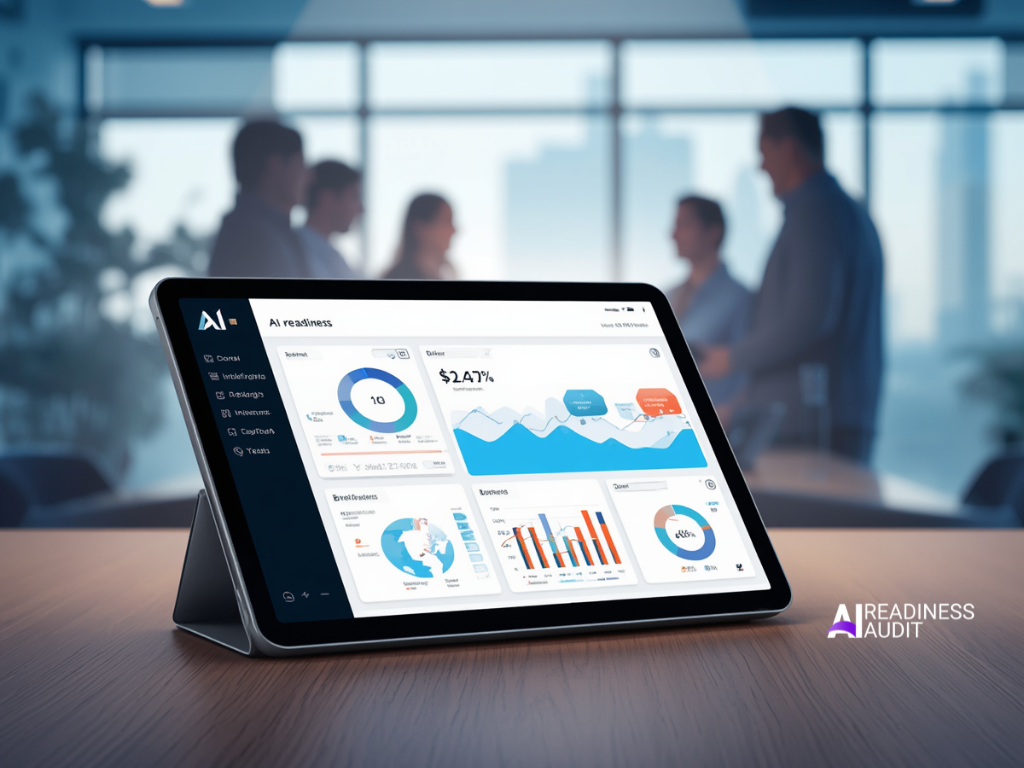
Choosing the right AI auditing product or service means looking at the depth of the review, the clarity of the report, and the support available after the audit.
The best option should help the business understand risk and next steps in plain English.
Compare audit depth, reporting, and support
When comparing AI auditing services, ask what the audit includes. A useful audit should review more than one area.
Important questions include:
- Does the audit review current AI tool use?
- Does it check privacy and data handling?
- Does it assess staff skills?
- Does it review policies and approval steps?
- Does it identify high-risk workflows?
- Does it include clear recommendations?
- Does it provide a report that managers can understand?
- Does it support state-based business needs?
- Does it help with implementation after the audit?
- Does it support custom AI development review?
A strong audit should explain what is ready, what needs work, and which actions should happen first.
When specialist guidance can help
AI Readiness may be useful to consider when a business needs support with Artificial Intelligence Auditing Australia, Artificial Intelligence Auditing Northern Territory, Artificial Intelligence Auditing Victoria, Artificial Intelligence Auditing Queensland, Artificial Intelligence Auditing Tasmania, AI Readiness Audit Queensland, or AI Readiness Audit Western Australia.
This can help when a team is unsure how to review AI risk, compare tools, prepare staff, document processes, or move from audit findings into practical action.
A specialist provider can also help businesses plan safer AI adoption, review custom AI projects, prepare governance steps, and build a clear roadmap.
What Mistakes Should Businesses Avoid?
AI auditing can be very useful, but only if it looks at the right areas. A shallow audit may miss important risks, while a complex report with no clear next steps may be hard to use.
The goal should be practical improvement.
Avoid auditing only the technology
AI auditing should not only check the tool itself. It should also review people, data, workflows, governance, documentation, training, and business outcomes.
For example, a tool may work well, but staff may not know how to use it safely. A workflow may be suitable for AI support, but the data may be messy. A system may produce useful outputs, but no one may be checking them before use.
A useful audit should connect the technology to the real business process.
Avoid one-off checks with no follow-up
AI use changes quickly. New tools are released, staff habits change, business needs grow, and regulations may shift. This means a one-off audit may not be enough for long-term governance.
Businesses should think about regular review. This may include updating policies, checking tool access, reviewing staff training, recording incidents, and re-checking high-risk workflows.
Ongoing review helps the business stay organised as AI use grows.
When Should You Contact the Company?

You should contact an AI auditing provider when your business is using AI or planning to use AI but does not have clear rules, review steps, or governance.
It is better to ask early than to fix problems after tools are already in use.
When AI use is growing but controls are unclear
Contact the company if staff are already using AI tools without clear approval. You should also ask for help if sensitive data may be involved, if AI outputs are being used with customers, or if managers are unsure what risks need to be checked.
You may also need support if your business is planning custom AI development, automation, internal chatbots, AI reporting tools, or customer-facing AI systems.
A simple audit discussion can help identify what should be reviewed first.
When you are ready to move from audit to action
Contact the company when you want to turn audit findings into practical next steps. This may include building an AI policy, training staff, choosing approved tools, reviewing data, testing pilot projects, or planning custom AI development.
To finish, Artificial Intelligence Auditing Australia helps businesses use AI with more confidence. It supports safer adoption by reviewing data, tools, workflows, staff skills, governance, and risk. With the right audit approach, businesses can move from AI interest to practical action with clearer controls and better decision-making.