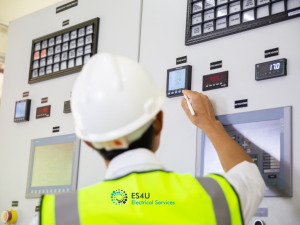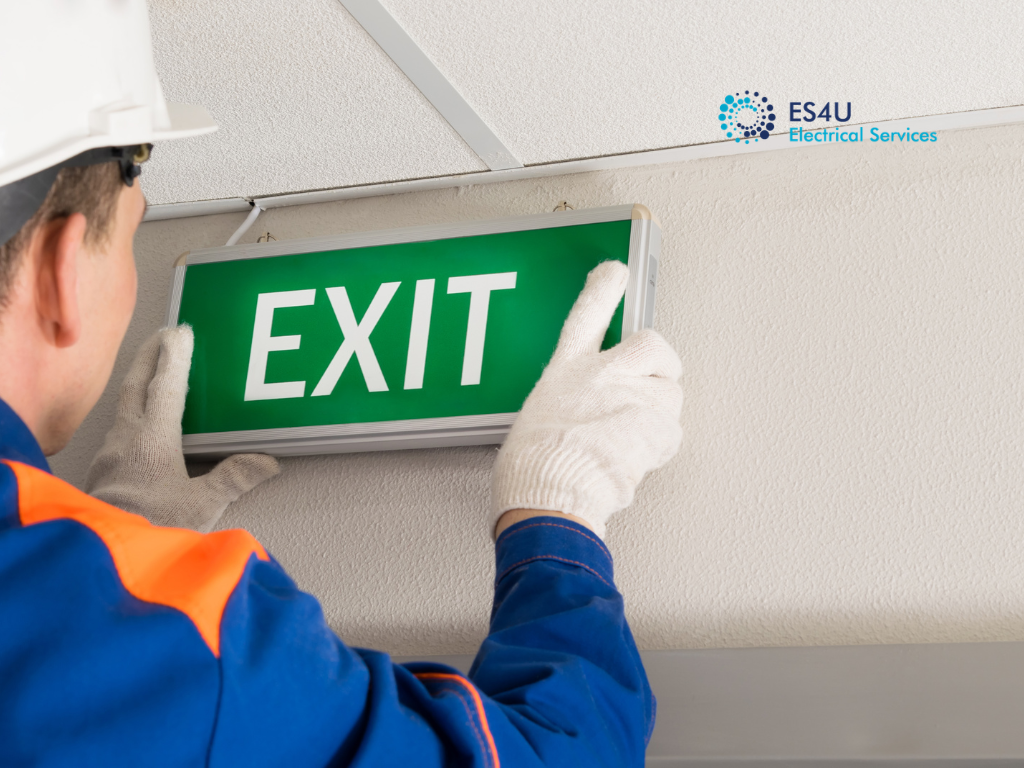
Emergency lighting is an important part of keeping commercial buildings safe when normal lighting fails. For business owners, facility managers and property managers, working with experienced commercial electricians can help ensure emergency lights, illuminated exit signs and associated electrical systems remain suitable for the building and operate when they are needed.
In Australia, emergency lighting requirements can depend on the type and use of a building, its layout, relevant building approvals and applicable standards. In NSW, businesses also need to consider workplace safety requirements, the building’s Fire Safety Schedule where applicable, and the requirements covering electrical work. This makes regular inspection and appropriate maintenance important rather than waiting until a fitting visibly fails.
Emergency lighting has a simple but critical purpose: helping people see how to leave a building safely when the normal lighting system is unavailable. Commercial electricians may be involved in installing, inspecting, repairing or upgrading these systems as part of broader electrical work within offices, retail premises, warehouses, schools and other commercial environments.
SafeWork NSW describes emergency lights as battery-backed devices that operate when a building experiences a power outage. It also notes that emergency exit signs need to remain clearly visible and illuminated so occupants can identify exits and changes of direction along an evacuation path.
How Commercial Electricians Support Emergency Lighting Safety
Commercial electricians can assess the electrical condition of emergency lighting equipment, investigate faults and carry out electrical work needed to keep the installation operating correctly. This may involve checking fittings that do not illuminate, addressing damaged electrical components, replacing faulty equipment or reviewing a system when the building layout changes.
Emergency lighting should also be considered as part of the wider safety environment. The National Construction Code requires appropriate visibility to help occupants identify exits, paths of travel and obstacles during an emergency, with the system operating when normal artificial lighting fails.
That is why a commercial electrician service should look beyond whether an individual light simply switches on. The surrounding exit route, location of fittings and purpose of the space may also need to be considered.
When Commercial Electricians Should Inspect Existing Systems
A review may be appropriate when emergency lights repeatedly fail, exit signage becomes damaged or difficult to see, batteries or fittings are ageing, or a commercial space has been significantly altered.
Commercial electricians may also need to inspect the system following an office refurbishment, tenancy change, new internal walls, altered corridors or changes to entrances and exits. What worked for the previous layout may not necessarily suit the new configuration.
This becomes particularly important where a renovation changes the way occupants move through the building. Emergency lighting and exit signage need to support the actual evacuation route rather than simply remaining where they were before the refurbishment.
Understanding Emergency Lighting Requirements in Australia
Commercial electricians working with emergency lighting need to consider more than ordinary lighting requirements. The applicable obligations can depend on building classification, the approved building design, the National Construction Code, relevant Australian Standards and state or territory requirements.
The NCC includes requirements covering visibility during an emergency and identification of exits. Its performance requirements are intended to ensure occupants can identify exits and paths of travel and that appropriate visibility remains available when the normal lighting system fails.
What Commercial Electricians Check for Compliance
When reviewing an emergency lighting installation, commercial electricians may need to consider whether emergency fittings and exit signs are operating correctly, whether electrical faults are present and whether changes to the premises have affected the existing system.
SafeWork NSW also identifies the AS/NZS 2293 series as the Australian Standards relating to emergency lighting requirements.
The exact compliance requirements for an individual property should be determined from the relevant building documentation and requirements rather than assuming every commercial property needs an identical system.
This is especially important for property owners managing several premises. A retail tenancy, warehouse, educational facility and office building can have different layouts, occupancy characteristics and building requirements.
How Commercial Electricians Work With Building Requirements
Commercial electricians are responsible for the electrical aspects of the work, but emergency lighting can also form part of wider building and fire-safety obligations.
For NSW building owners, it is particularly important to check the building’s Fire Safety Schedule where one applies. NSW Government guidance explains that emergency exit lighting is not covered by the state’s new AS 1851-2012 inspection and testing requirement introduced from 13 February 2026. Measures that are not covered by AS 1851-2012 still need to be maintained according to the standard specified in the Fire Safety Schedule or their original design.
This distinction helps prevent a common misunderstanding. Following a general fire-maintenance program does not automatically answer every question about emergency lighting. The requirements applicable to the individual building still need to be checked.
Emergency Lighting Testing and Routine Maintenance
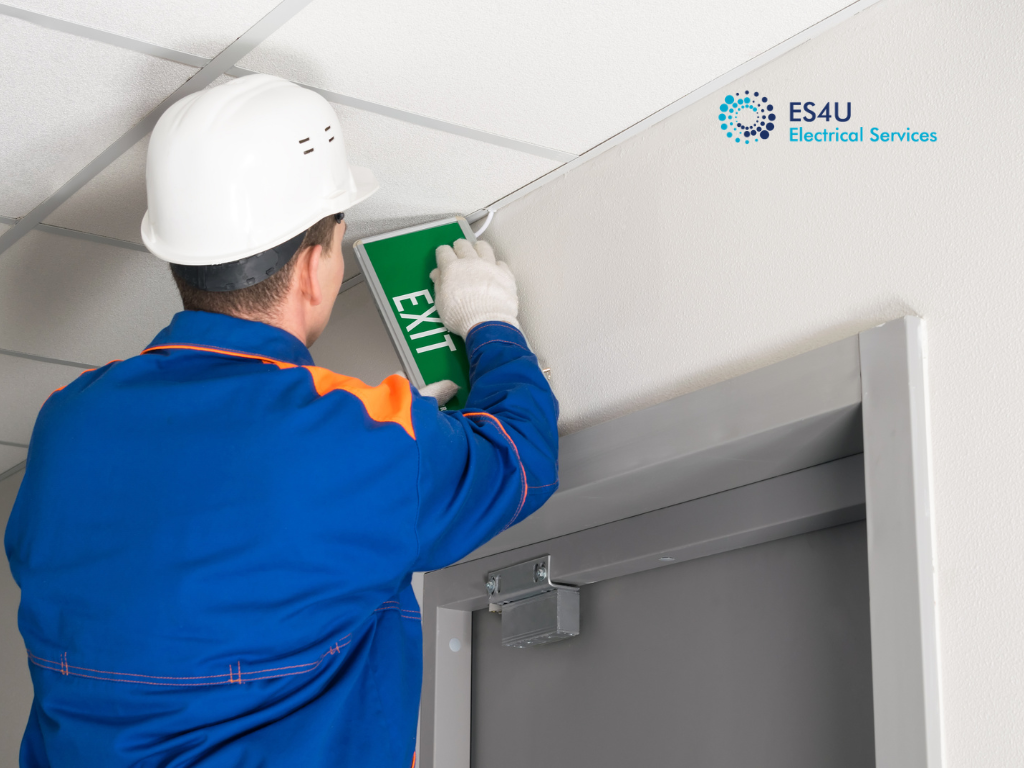
Emergency lighting can remain unnoticed during everyday operations because the normal lighting system is usually working. Commercial electricians can help identify problems that may otherwise only become obvious during a loss of power or a formal inspection.
SafeWork NSW states that regular inspection, testing and maintenance of lighting installations is essential and specifically recommends checking emergency lighting regularly to confirm that it is working properly. It also advises that electrical inspection, testing and maintenance should be completed by a competent person, such as a licensed electrician.
How Commercial Electricians Test Emergency Lighting Systems
Testing is intended to determine whether the system performs as required rather than simply checking its appearance.
Commercial electricians may investigate whether emergency lighting activates appropriately when normal power is unavailable and whether individual fittings or electrical components show signs of failure. The appropriate testing procedure and frequency should be based on the requirements applying to the particular building and system.
Records also matter. Property managers should retain relevant maintenance, inspection and electrical documentation so they have a clearer history of what has been checked, repaired or replaced.
Where electrical wiring work is performed in NSW, electrical compliance requirements may also apply. Building Commission NSW states that electricians must submit a Certificate of Compliance for Electrical Work when electrical wiring work has been undertaken, showing that the work has been tested and complies with applicable legislation and standards.
Why Commercial Electricians Recommend Planned Maintenance
Planned maintenance gives businesses an opportunity to find deterioration or faults before an emergency situation exposes them.
Commercial electricians can examine issues such as failed fittings, damaged electrical connections, deteriorating components or recurring faults. Where repairs are needed, dealing with them as part of scheduled commercial electrical services can be easier to manage than responding after several components have failed.
Routine attention can also be coordinated with other electrical maintenance around a commercial property. This can give facility managers a clearer picture of the condition of lighting, switchboards and other fixed electrical infrastructure rather than treating every fault as an unrelated event.
Common Emergency Lighting Problems Businesses Face
Emergency lighting problems are not always immediately obvious. A fitting may look normal while the building’s regular power is operating, which is one reason commercial electricians need to assess how the system behaves under the conditions it was designed for.
Changes to the building itself can also create problems even when the individual fittings remain operational.
Problems Commercial Electricians Find During Inspections
Commercial electricians may encounter emergency lights that fail to operate correctly, damaged fittings, electrical faults, poorly positioned signage following renovations or components that are no longer performing as intended.
Exit routes can also change. A business might add partitions, relocate work areas, alter a reception area or reconfigure a warehouse. These changes can affect visibility and the path occupants use to reach an exit.
The NCC’s emergency visibility requirements focus not only on the existence of lighting but also on allowing exits, paths of travel and obstacles along those paths to be identified.
For that reason, an inspection should consider how the building is actually being used now rather than relying solely on the original layout.
When to Call Commercial Electricians for Repairs
Businesses should consider arranging a commercial electrician service when emergency fittings fail a test, lights or signs are visibly damaged, electrical faults keep recurring or renovation work has changed the evacuation path.
An electrician should also be consulted before making electrical alterations to emergency lighting. In NSW, electrical wiring work requires an appropriate electrical licence or certificate regardless of whether the work is residential, commercial or industrial.
Facility managers searching for commercial electricians near me should therefore look beyond availability alone. Appropriate licensing, relevant commercial experience and an understanding of the building’s existing electrical installation are important considerations.
Emergency Lighting for New Fit-Outs and Renovations
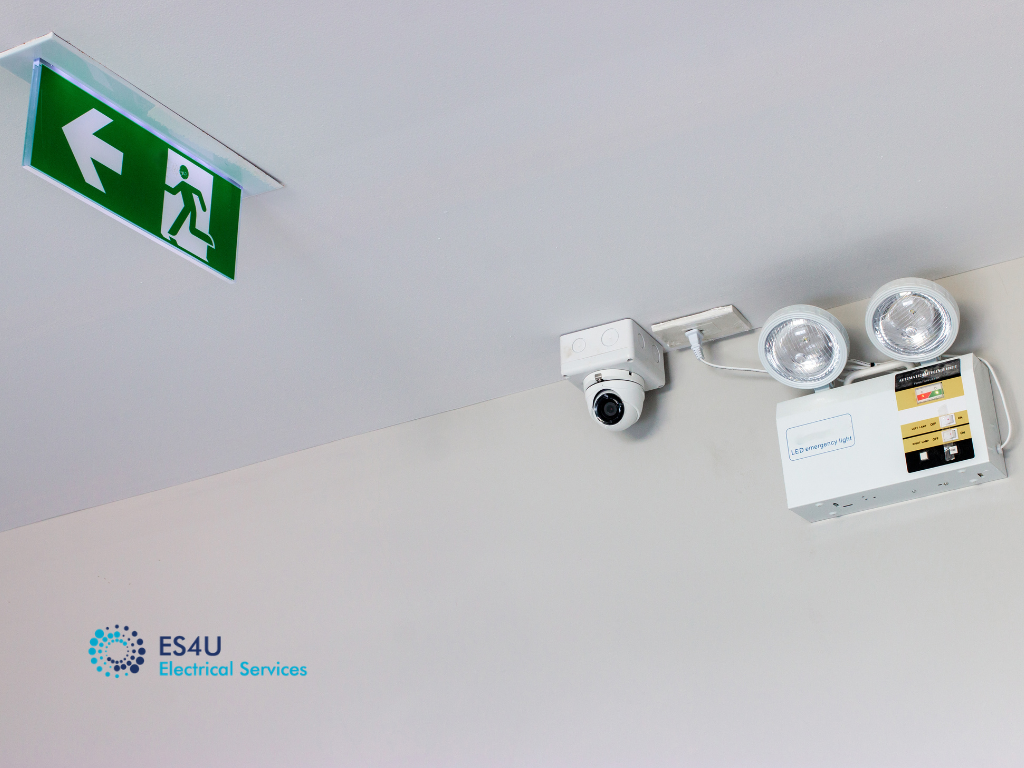
Emergency lighting is easier to coordinate when it is considered early in the project rather than after walls, ceilings and electrical services have already been installed. Commercial electricians can work alongside the wider project team to incorporate electrical requirements into the planned layout.
This is particularly relevant for offices, retail premises, educational facilities, commercial kitchens and other premises undergoing substantial refurbishment.
How Commercial Electricians Plan Lighting for New Fit-Outs
Electrical fit-outs for new commercial buildings or newly configured tenancies may include general lighting, emergency lighting, power outlets, switchboard requirements and other fixed electrical services commercial.
Commercial electricians need to understand where people will work, how they will move through the premises and where the approved exits and travel paths are located. The final emergency lighting design should then align with the applicable building design and compliance requirements.
Planning early can also reduce the likelihood of electrical work needing to be altered later because a doorway, partition, corridor or tenancy layout has changed.
For projects in Sydney and Western Sydney, this coordination can be particularly valuable where existing commercial premises are being refurbished for a different tenant or purpose.
Why Commercial Electricians Should Be Involved Early
Bringing commercial electricians into the planning process gives the project team an opportunity to identify electrical requirements before finishes are completed.
This can help coordinate emergency lighting with general lighting, switchboards and other commercial electrical services. It can also make future inspection and maintenance more practical by considering access to equipment from the beginning.
For larger or more complex premises, a commercial and industrial electrician may also need to consider higher-capacity electrical infrastructure and how new work integrates with existing systems.
Early coordination does not replace building-design or fire-safety responsibilities, but it can make the electrical component of the project clearer and reduce avoidable rework.
Choosing the Right Electrical Service for Your Property
Not every electrical job in a commercial property is the same. Businesses comparing commercial electricians should consider whether the provider has relevant experience with commercial premises and the type of electrical system involved.
Price is naturally part of the decision, but it should not be the only factor when the work relates to emergency systems and fixed electrical infrastructure.
What to Ask Commercial Electricians Before Hiring
A useful starting point is confirming that the electrician or electrical contractor holds the appropriate licence for the work being performed. In NSW, electrical wiring work must be completed by appropriately licensed people, and the licensing requirement applies regardless of the cost or whether the work is residential, commercial or industrial.
Businesses should also ask what is included in the proposed scope. A clear quotation should make it easier to understand whether the commercial electrician services involve inspection, fault finding, repairs, replacement equipment, installation or wider electrical work.
Documentation should also be discussed. Where work requires a Certificate of Compliance for Electrical Work in NSW, the electrician is responsible for completing the relevant compliance process.
These questions make it easier to compare providers on the actual service being offered rather than simply comparing the headline price.
Finding Commercial Electricians Near Me for Ongoing Support
Searching for commercial electricians near me will usually produce many options, particularly across Greater Sydney. The more useful question is whether the electrician’s capability matches the property and the work required.
For businesses looking for ongoing commercial electrical services, continuity can be useful because the electrical contractor becomes familiar with the property’s systems, previous repairs and future maintenance requirements.
ES4U can be considered by businesses requiring commercial electrical work across Greater Sydney, including projects where emergency lighting needs to be coordinated with broader electrical work. When discussing the job, providing information about the building, existing system, known faults and any recent renovations can help define the required scope more accurately.
Keeping Emergency Lighting Ready for an Emergency
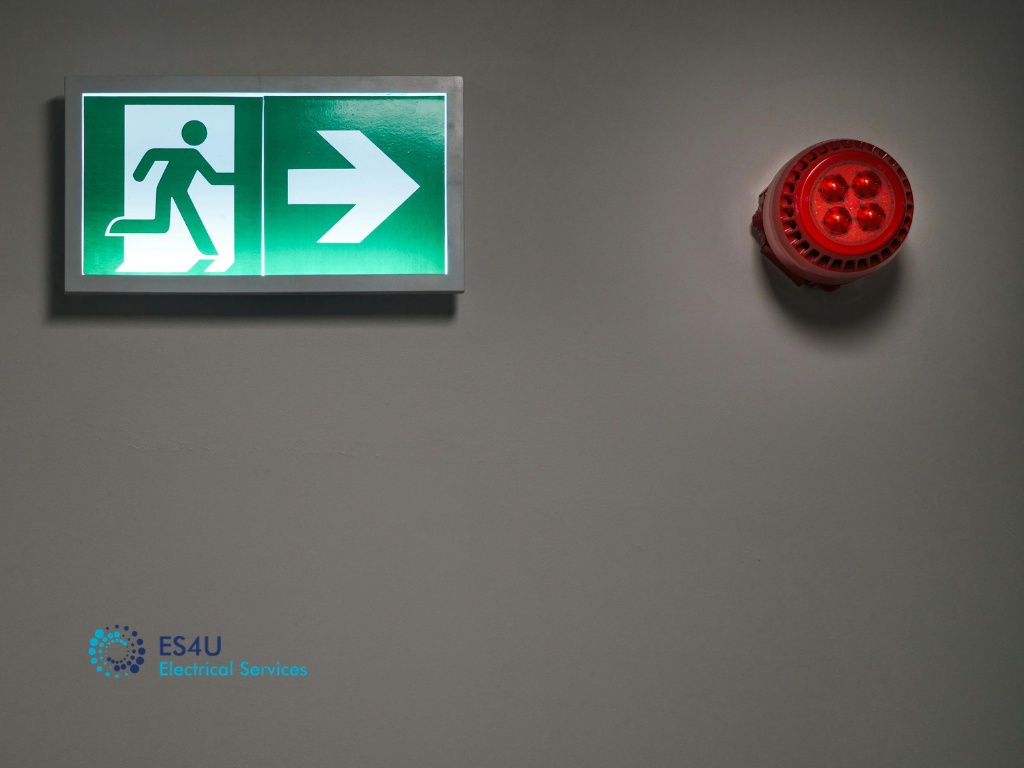
Emergency lighting is not something a business should install and then forget. Commercial electricians can form part of an ongoing approach that keeps the electrical system maintained as the building, tenancy and operational requirements change.
Safe evacuation depends on more than one fitting. Emergency lights, exit identification, travel paths and the overall condition of the electrical installation need to work together.
How Commercial Electricians Support Long-Term Compliance
Commercial electricians can support property managers through inspection, electrical maintenance, fault finding, repairs and upgrades when required.
The appropriate maintenance program should reflect the requirements applying to the specific property. In NSW, building owners should check their Fire Safety Schedule and relevant building documentation rather than assuming that one testing regime applies to every emergency lighting system.
Commercial electrical services may also be coordinated with other planned electrical work. This can make it easier to identify ageing equipment, recurring electrical problems or changes that may affect the building’s electrical infrastructure.
Good record keeping is equally useful. Keeping documentation from inspections, repairs and electrical work creates a clearer maintenance history for building owners and facility managers.
When Commercial Electricians Should Review the Whole System
A broader review is worth considering when a commercial property undergoes a major refurbishment, changes tenancy, alters internal layouts, adds new areas or experiences repeated emergency lighting faults.
Commercial electricians can then assess the electrical installation in the context of the updated premises rather than treating each failed fitting separately.
For businesses planning a refurbishment, new fit-out or ongoing maintenance program, emergency lighting should therefore be discussed alongside the wider electrical scope from the beginning.
ES4U can discuss commercial electrical requirements for businesses in Greater Sydney and help determine the electrical work required for an existing property, renovation or new fit-out. Where emergency lighting is involved, the first step should be understanding the building, the existing installation and the applicable requirements before deciding on repairs, replacement or upgrades.