Private AI for Business is becoming an important consideration for Australian organisations looking to use artificial intelligence while maintaining greater control over their information, systems and everyday operations. As businesses explore AI for customer support, internal knowledge management and workflow automation, questions about privacy, security and data access are becoming increasingly relevant.
Unlike general-purpose AI applications, private AI solutions can be designed around an organisation’s specific technology environment, information requirements and operational processes. Depending on the implementation, these solutions may operate through dedicated infrastructure, private cloud services or locally hosted AI models.
However, private AI does not automatically guarantee complete data protection or regulatory compliance. Its effectiveness depends on the underlying architecture, security controls, provider arrangements and ongoing management.
This guide explains how private AI works, how it compares with public AI services and what Australian businesses should consider before choosing a solution.
Understanding Private AI and How It Works
What Does Private AI for Business Actually Mean?
Private AI refers to an approach where an organisation has defined controls over how artificial intelligence accesses, processes and manages business information.
These controls may involve dedicated computing infrastructure, restricted data access, private network connections or enterprise-specific security arrangements.
Unlike a general chatbot designed for broad public use, a private AI application can be configured around internal business requirements, including approved information sources and employee permissions.
However, businesses do not necessarily need to develop their own AI models to establish a private environment. Existing models can sometimes be deployed or integrated through suitable enterprise infrastructure.
When evaluating Private AI for Business, organisations should investigate what the provider means by private, including where information is processed, who can access it and whether data is retained or used for model training.
How Private AI Processes Business Information
A private AI application generally receives a user request, processes it through an AI model and returns a response.
When connected to company information, the application may retrieve relevant documents or records before generating an answer.
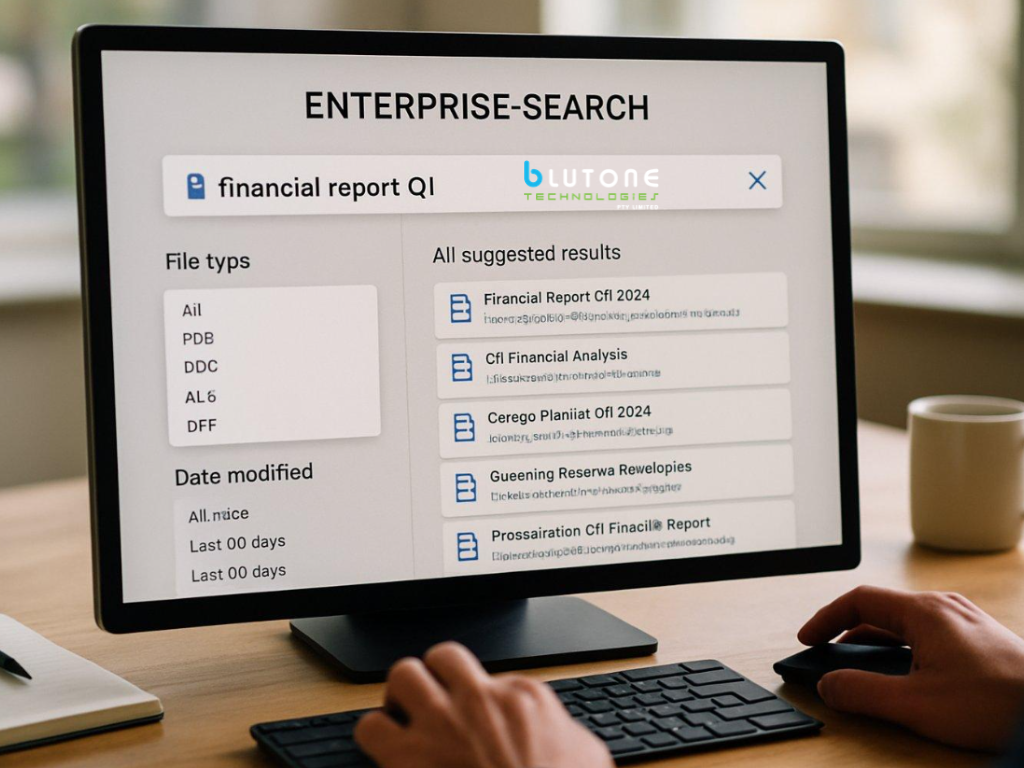
One common method is retrieval-augmented generation, often called RAG. This allows an AI assistant to search approved business information and use relevant content when responding to questions.
For example, an internal assistant could help employees locate company procedures, summarise technical documentation or find information in an approved knowledge repository.
The organisation still needs suitable access controls to prevent employees from retrieving information beyond their permissions.
This distinction matters because connecting AI to business information does not automatically make the information accurate, secure or appropriate for every user.
Private AI Compared With Public AI Tools
How Private AI for Business Differs From Public AI
Public AI tools are commonly accessed through websites or applications operated by external providers. They can support writing, research, analysis and other general tasks without businesses needing to maintain their own AI infrastructure.
Private AI arrangements provide opportunities for more specific control over deployment, information access and integration with internal systems.
However, the comparison is not simply between secure and insecure technology.
Enterprise cloud AI services may offer contractual data protections, administrative controls and private integration options without requiring a business to host the underlying model itself.
For Australian organisations, Private AI for Business should be evaluated according to actual data handling practices, infrastructure arrangements and business requirements.
A suitable enterprise cloud service may meet some organisations’ needs, while others may require dedicated or locally hosted infrastructure.
Understanding Data Privacy, Ownership and Access
Before adopting AI, businesses should establish what happens to information entered into the system.
Important considerations include whether prompts are stored, who can access uploaded documents, how long information is retained and whether submitted data may be used to improve AI models.
Businesses should also distinguish between data ownership and technical control. Retaining ownership of information does not necessarily mean the information remains within infrastructure controlled by the organisation.
Similarly, private AI does not automatically mean that data is stored in Australia.
Organisations should confirm actual processing locations, provider terms and subcontractor arrangements where these matters affect their requirements.
For systems handling customer, employee or commercially sensitive records, privacy and access arrangements should be reviewed before deployment.
Choosing Between Cloud, Self-Hosted and Hybrid AI
How Self-Hosted AI Works for Businesses
Self-Hosted AI involves running an AI model within computing infrastructure operated or controlled by an organisation.
This may include on-premises servers or dedicated infrastructure configured for specific business applications.
Self-hosting can provide greater control over model configuration, network access and certain information processing arrangements.
However, it also introduces operational responsibilities.
Businesses need suitable computing resources, technical expertise, model maintenance, software updates and security monitoring.
Hardware requirements can vary significantly depending on the model and expected workload.
Private AI for Business through self-hosted infrastructure may suit organisations with particular data control or integration needs, but it is not automatically the most economical or practical choice.
When Private Cloud or Hybrid AI Makes Sense
Private cloud arrangements provide another way to operate AI workloads within a controlled environment.
Depending on the service, organisations may use dedicated computing resources, isolated networks or enterprise-managed cloud infrastructure.
Hybrid AI combines elements of internal and externally hosted technology.
For example, a business might maintain confidential records within its existing systems while using an approved external AI service for selected processing tasks.
These arrangements require careful attention to information transfers, access permissions and provider responsibilities.
The choice between cloud, hybrid and self-hosted AI should depend on data sensitivity, performance requirements, integration complexity and available technical resources.
Rather than selecting a deployment model based on terminology alone, businesses should document what information needs protection and where it can appropriately be processed.
Practical Business Applications for Private AI
Using Private AI for Business Knowledge Management
One practical application of private AI is helping employees access approved business information more efficiently.
Organisations may maintain operational procedures, technical documents, policies and internal resources across multiple software platforms.
An AI knowledge assistant can potentially help staff search these resources, retrieve relevant information and prepare summaries.
For example, an employee could ask about an internal process and receive an answer based on approved company documentation.
However, the quality of the response depends on the accuracy and accessibility of the source information.
Businesses should assess whether the assistant provides useful references, respects document permissions and identifies situations where sufficient information is unavailable.
Private AI for Business can support internal knowledge management, but important decisions should still receive appropriate human review.
Connecting AI Workflow Automation With Everyday Operations
AI Workflow Automation can help businesses manage tasks that involve interpreting information, classifying documents or preparing responses.
For example, AI may assist with categorising incoming enquiries, extracting information from documents or preparing a summary for an employee.
Process Automation provides a related but different capability. Traditional automation follows defined instructions, making it useful for predictable activities such as transferring approved records or sending routine notifications.
These approaches can work together.
An AI model might interpret the subject of an enquiry, while an automated workflow routes it to the appropriate department.
However, sensitive actions should not be performed without suitable controls. Financial approvals, changes to important records and external communications may require human authorisation.
The most useful implementation begins with a clearly defined business process rather than introducing AI into every existing workflow.
Managing Security, Privacy and Operational Risks

Cybersecurity for Business When Deploying AI
Introducing artificial intelligence creates additional considerations for existing IT security arrangements.
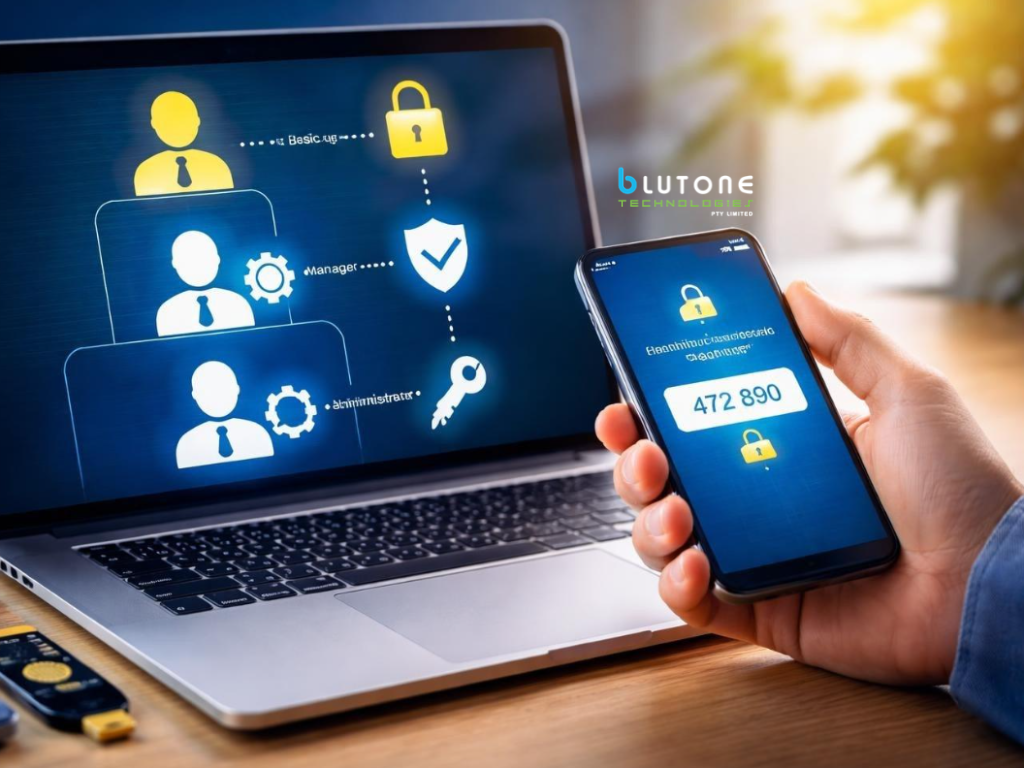
AI applications may connect to internal databases, document repositories and business software. If access permissions are too broad, the system may expose information beyond what an individual employee should see.
Private AI for Business therefore requires appropriate identity management, encryption, monitoring and system maintenance.
Organisations should also consider AI-specific threats such as prompt injection, where malicious instructions attempt to manipulate an application’s behaviour.
Other risks include unreliable responses, inappropriate automated actions and accidental disclosure of confidential information.
Cybersecurity for Business should address these risks alongside existing controls such as multifactor authentication, software updates, secure configurations and access reviews.
A privately hosted AI model can still be vulnerable if its surrounding applications, integrations or infrastructure are poorly secured.
Australian Privacy Requirements and Responsible AI Use
Australian organisations need to consider their applicable legal obligations when AI systems handle personal information.
The Privacy Act 1988 and Australian Privacy Principles establish requirements relevant to organisations covered by that framework.
The Office of the Australian Information Commissioner recommends conducting due diligence before adopting commercial AI products, particularly where personal information may be involved.
Businesses should understand why information is being processed, whether its use is appropriate and who can access the resulting outputs.
A privacy impact assessment may help identify risks before deployment.
Human oversight also remains important, especially when AI-generated information could influence decisions affecting customers or employees.
Organisations should establish internal AI use policies, train employees and regularly review whether their selected systems remain appropriate.
For further guidance, businesses can refer to the Office of the Australian Information Commissioner’s AI privacy guidance.
Choosing the Right Private AI Solution or Provider
What to Look for in a Private AI for Business Solution
Choosing a private AI provider requires more than comparing model capabilities or subscription prices.
Businesses should evaluate deployment options, security arrangements, data processing policies, access controls and compatibility with existing applications.
It is also important to understand how the provider handles maintenance, technical support, system updates and ongoing monitoring.
Ask whether the proposed solution supports the organisation’s intended workflows and how confidential information will be protected.
Blutone Technologies offers ArkOS Private AI, a private AI capability focused on greater business control over information, access and operational workflows.
Its approach is intended to help organisations explore AI within their broader business technology environment.
When evaluating Private AI for Business solutions, request a clear explanation of the proposed architecture and responsibilities rather than relying on general assurances about security or privacy.
When Custom Software Development Is Necessary
An existing enterprise AI application may be sufficient for common tasks such as document summarisation, internal search or general productivity assistance.
However, some organisations need functionality that connects several internal systems or follows specialised business processes.
Custom Software Development may be appropriate when AI must integrate with existing applications, support specific approval procedures or operate within a purpose-built business interface.
For example, a business may require an internal application that retrieves approved information from its CRM and document systems while maintaining employee access permissions.
Blutone Technologies also provides software development and technology solutions, including applications, integrations and automation capabilities.
Before choosing custom development, compare the required functionality with existing software options.
A custom solution should address a genuine operational need, with clear arrangements for development, security testing, maintenance and future updates.
Preparing Your Business for Private AI Implementation

How to Assess Private AI for Business Readiness
Successful AI implementation begins with identifying what the organisation wants to improve.
This could involve accessing internal knowledge, reducing repetitive administration or supporting an existing operational workflow.
Once the intended use is clear, review the systems and information the AI application would need to access.
Businesses should assess data quality, employee permissions, security controls and whether existing technology can support the proposed integration.
A limited pilot can help test answer accuracy, usability and information access before expanding deployment.
Private AI for Business should be evaluated against practical outcomes such as reduced manual work, improved information retrieval or better workflow consistency.
These benefits should be measured through actual testing rather than assumed before implementation.
Planning Deployment, Costs and Ongoing Support
The cost of private AI depends on the selected deployment architecture and the work required to integrate it into business operations.
Potential expenses include infrastructure, model licensing, application development, data preparation, system integration and staff training.
Ongoing costs may involve hosting, technical support, security updates, monitoring and system maintenance.
Self-hosted arrangements can introduce additional hardware and administration requirements, while managed cloud services may involve recurring usage or subscription charges.
Businesses should also establish who is responsible for reviewing AI outputs, maintaining information access and responding when the system produces incorrect results.
For Australian organisations exploring private AI, Blutone Technologies provides ArkOS Private AI alongside broader IT, cybersecurity and software development capabilities.
Businesses can contact Blutone Technologies to discuss their existing technology environment, data requirements and potential AI applications.
Private AI is most useful when its deployment matches a real business need and is supported by appropriate information controls, technical infrastructure and ongoing oversight.
With a clear implementation plan, Australian businesses can explore AI capabilities while making informed decisions about privacy, security and operational responsibility.