Choosing the right lawn mower is easier when you start with the lawn rather than the machine. The size of the grassed area matters, but so do gates, garden beds, slopes, trees, grass thickness and how often you expect to mow. A mower that looks powerful on paper can still be frustrating if it is too wide for a side passage, difficult to turn around landscaping or unnecessarily large for a compact suburban yard.
Australian buyers now have more choice than ever across battery, petrol, self-propelled, ride on and robotic machines. CHOICE notes that modern battery lawn mowers have improved considerably and can be practical for many suburban properties, while petrol machines still have advantages for larger areas. The right choice therefore comes down to matching the machine to the work you actually need it to do.
How Lawn Mower Size Should Match Your Lawn Area
The first step in choosing a lawn mower is estimating how much grass you actually need to cut.
You do not need a surveyor-level measurement, but knowing whether your lawn is roughly 100 square meters, 500 square meters or several thousand square meters immediately narrows the options.
For a compact suburban yard, a lighter push mower can often be easier to manoeuvre and store than a large machine. As the lawn becomes larger, cutting width, propulsion and runtime become more important because every extra mowing pass adds time and effort.
Husqvarna Australia provides a useful general guide when comparing walk-behind lawn mower cutting widths. It suggests decks of up to 46 cm for lawns up to about 500 square meters, 47 to 50 cm for around 500 to 800 square meters, and 51 cm or wider for areas above 800 square meters. These are manufacturer guidelines rather than universal rules, but they illustrate how wider decks become more useful as mowing area increases.
CHOICE similarly notes that wider cutting diameters reduce the number of passes needed on larger lawns. Petrol lawn mowers commonly sit around 45 to 50 cm in cutting width, while many electric and battery models are in the 30 to 40 cm range.
The main lesson is simple: choose enough lawn mower capacity to make the job efficient without buying a machine so large that it becomes awkward around your property.
Why Lawn Mower Choice Also Depends on Yard Layout
Square meters alone cannot tell you which lawn mower will be easiest to use.
Two homes may each have 500 square meters of lawn but require very different machines. One property may have one open rectangular lawn, while the other has narrow side passages, trees, garden beds, retaining walls and separate front and rear areas.
In the more complex yard, manoeuvrability may matter more than maximum cutting width.
Measure the narrowest gate or passage the mower needs to pass through. Consider where the machine will turn and whether there is enough room beside garden beds or fences. You should also think about where the mower will be stored and how easily it can be moved from one lawn area to another.
A smaller push mower may therefore be more practical than a wider model even where the total grass area suggests that a larger mower could cut the lawn faster.
On the other hand, a relatively open yard with few obstacles can make better use of a wider deck because the mower can complete long, uninterrupted passes.
This is why the right lawn mower is determined by both lawn area and lawn shape.
Choose the Right Mower Type for the Job
When a Push Lawn Mower Makes Sense
A push mower remains a practical lawn mower choice for many Australian homes, particularly where lawns are small to medium in size and reasonably level.
Push models are relatively easy to steer around garden beds, trees and corners. Their smaller physical size can also make them easier to store in a shed or garage.
For people with a compact yard, buying a substantially larger mower may not save much time. The wider deck can actually make the machine harder to turn or move through narrow areas.
The amount of physical effort required should also be considered. A lightweight battery push mower may feel very different to a heavier petrol machine when the lawn includes slopes or uneven ground.
CHOICE advises buyers to look closely at manoeuvrability, wheel size, weight and handle design. It notes that large wheels can improve handling on rough ground and that lighter machines are generally easier to push and turn.
If the yard is becoming tiring to mow manually, a self-propelled lawn mower can be a useful middle ground between a standard push mower and a ride on mower.
Husqvarna’s Australian buying guidance recommends considering self-propelled models for medium to large lawns or more complex mowing areas.
The important point is not to assume that bigger automatically means better. For many suburban properties, ease of handling is more valuable than maximum deck width.
When a Ride On Lawn Mower Becomes More Practical
A ride on mower becomes more attractive as the mowing area grows and the property has enough open space to use it efficiently.
Walking behind a mower over a very large block can turn routine lawn maintenance into a significant job. A ride on machine can cover more ground while reducing the physical effort required from the operator.
However, a ride on mower also needs room to turn, manoeuvre and be stored.
Properties with many tight corners, small separated lawn sections or narrow access points may not gain as much benefit from a large machine as an open acreage property would.
Terrain should also influence the decision.
Husqvarna’s Australian ride-on guidance highlights traction and manoeuvrability as important considerations on uneven, slippery or sloping ground. It notes that different ride-on configurations and all-wheel-drive options are designed for different terrain conditions.
Cutting width also becomes important. A wider deck can be highly productive across large open areas, while a narrower ride on mower may be easier to use around trees and landscaping.
This is why homeowners should avoid choosing a ride on mower simply because they own a large block. Measure the actual lawn area rather than the entire property and consider how much of that lawn is genuinely suitable for a ride-on machine.
Match Cutting Width to Your Lawn Size
How Lawn Mower Cutting Width Affects Mowing Time
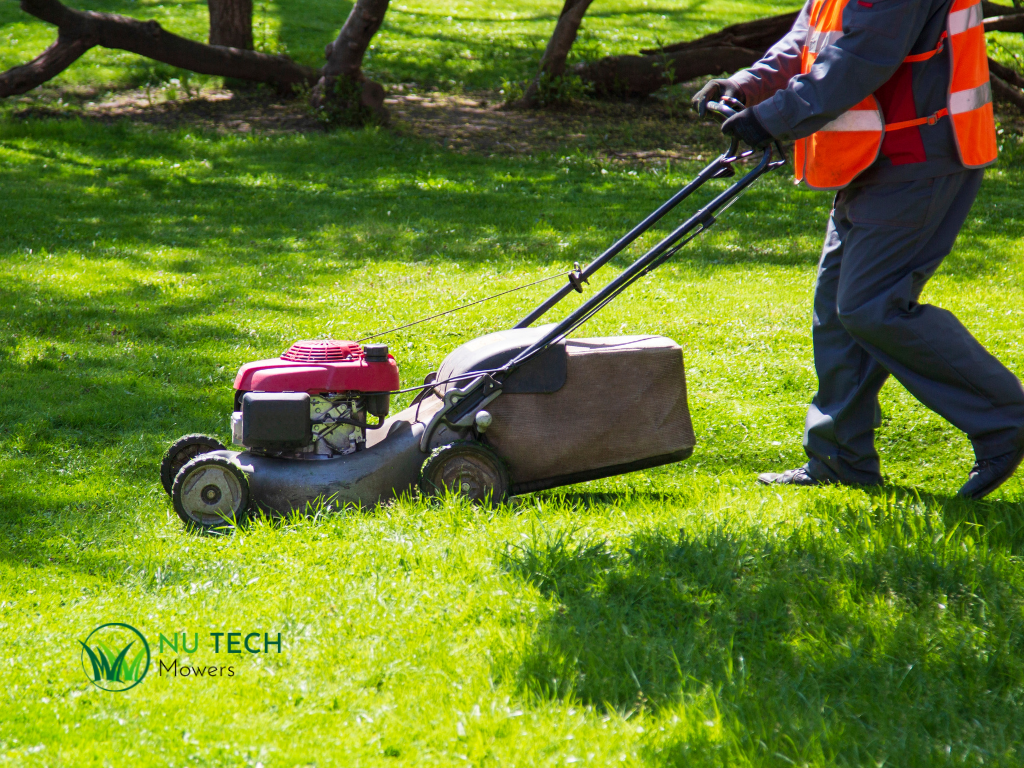
Cutting width is one of the most useful lawn mower specifications to understand because it affects how much grass the machine cuts with each pass.
A wider deck generally means fewer passes across the lawn. On a large rectangular area, that difference can substantially reduce mowing time.
CHOICE notes that a difference of 10 or 20 centimeters in cutting width may not matter much on a small inner-city lawn but becomes far more noticeable on larger properties where a narrow mower may require many additional passes.
This does not mean you should simply buy the widest lawn mower available.
Every increase in width can affect manoeuvrability, storage and access.
For smaller lawns, the time saved by a wider deck may be minor. A compact mower that turns easily around garden beds may complete the overall job more comfortably even if each individual pass is narrower.
For medium and large lawns, wider cutting widths become increasingly valuable, particularly when most of the grass area is open.
Think about the way you actually mow. If the yard involves long straight runs, width is highly useful. If you spend much of the time turning around obstacles, manoeuvrability may matter more.
Choosing a Lawn Mower That Fits Gates and Narrow Areas
Before buying a lawn mower, measure the narrowest point it must pass through.
That simple step can prevent one of the most frustrating buying mistakes: choosing a mower that suits the lawn perfectly but cannot reach part of it.
Side gates are an obvious issue, but also look at the distance between retaining walls, sheds, raised garden beds and other fixed structures.
Do not compare the opening only with the published cutting width. The overall mower body, wheels and handles may be wider than the deck specification.
Storage should be considered in the same way.
Ask whether the lawn mower will comfortably fit through the shed or garage door and whether there is enough space to move around it once it is stored.
If the yard contains several narrow lawn sections, a smaller push mower combined with a trimmer may be more practical than forcing a large machine into every area.
For large properties, some owners also use different equipment for different jobs. A ride on mower may handle open areas while a smaller mower or trimmer looks after places the main machine cannot reach.
The most efficient lawn-care setup is not necessarily the one with the biggest mower. It is the one that suits the complete property.
Consider Power, Grass Thickness and Terrain
How Lawn Mower Power Matters in Thick or Long Grass
Yard size tells you how much ground a lawn mower needs to cover, but grass conditions tell you how hard the machine may need to work.
A regularly maintained lawn presents a different workload from thick, wet or overgrown grass.
Long grass can place greater demand on the motor or engine, while dense varieties may require slower mowing or a higher initial cutting height.
This is one reason two homeowners with similarly sized lawns can have different mower requirements.
A battery lawn mower may be entirely suitable for one 500-square-metre suburban lawn but experience greater battery demand on another property where the grass is thick, long or difficult to cut.
CHOICE notes that battery runtime varies according to more than battery capacity alone. Blade condition and grass length can also affect how long a battery lasts during mowing.
Good mowing habits can therefore reduce the need to buy an oversize machine.
If grass has become very long, avoid trying to remove too much in one pass. Raise the cutting height first and reduce it gradually over later mowing sessions.
A suitable lawn mower should have enough performance for the grass you normally maintain, not simply the easiest conditions it might encounter.
Choosing a Lawn Mower for Slopes and Uneven Ground
Slopes change the lawn mower decision because traction, weight and control become more important.
A heavy push mower can become tiring on an incline, particularly when mowing frequently. A self-propelled model can reduce some of that effort by driving its own wheels.
Uneven ground also makes wheel size and stability important. CHOICE recommends considering larger wheels for rough surfaces and ensuring the mower remains easy to push and manoeuvre in the conditions where it will actually be used.
Ride-on machines require additional care on slopes. Buyers should always follow the manufacturer’s operating limits and safety instructions for the specific model rather than assuming that any ride on mower is suitable for steep ground.
Robotic options also vary significantly in the inclines they can handle.
Husqvarna, for example, offers Automower models with different slope capabilities, including specialized AWD machines for more demanding gradients.
If your property has steep or complicated terrain, explain those conditions when comparing machines. Yard size alone will not reveal whether a particular lawn mower is suitable.
Compare Battery, Petrol and Robotic Options
Which Lawn Mower Power Type Suits Your Yard
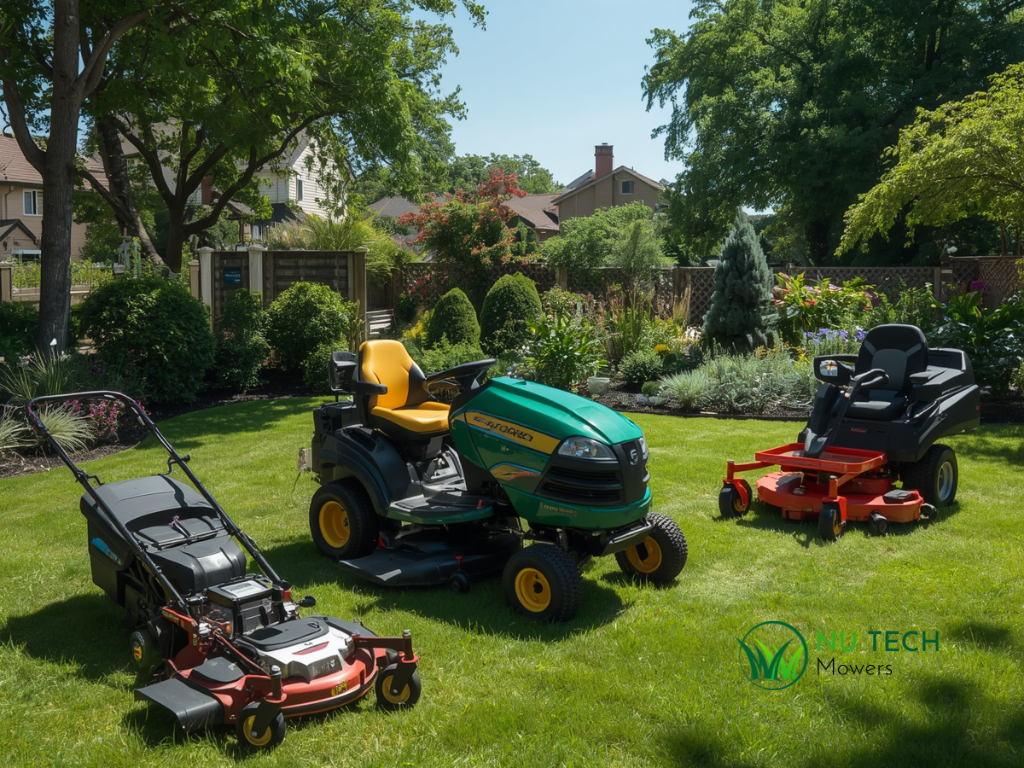
The lawn mower power source should match both the size of the lawn and the way you prefer to maintain it.
Battery machines are increasingly practical for Australian residential lawns. Choices July 2026 buying guide says modern cordless mowers have improved significantly and suggests that a strong battery model can be a good option for many small and medium suburban lawns up to around 500 square meters. Some larger-capacity models can cover considerably more, depending on battery capacity, grass conditions and the availability of spare batteries.
Battery models remove the need to store petrol and are generally quieter and simpler to start.
They can also work well for households already using compatible cordless outdoor equipment. Depending on the brand and battery platform, the same battery family may extend across tools such as a trimmer or leaf blower.
Petrol still makes sense for some buyers.
CHOICE notes that petrol lawn mowers remain strong performers for large grassed areas, particularly where extended runtime is important.
The choice should therefore be based on the whole mowing routine. Consider lawn size, grass density, runtime, charging arrangements, maintenance, noise and whether you already own compatible batteries.
When an Automower Can Replace a Traditional Lawn Mower
A robotic lawn mower can change the way lawn size is considered because it does not need to complete the entire property in one manual mowing session.
Instead, an automower works regularly according to its programmed schedule, maintaining the grass in smaller increments.
This can appeal to homeowners who want to reduce the amount of time spent manually mowing.
The important consideration is choosing a robotic model designed for the size and layout of the property.
Husqvarna’s current Australian range, for example, includes Automower models intended for different lawn areas, ranging from compact residential lawns through to models designed for several thousand square meters. Its Australian product listings currently include examples covering around 400 square meters, 600 square meters and up to 5,000 square meters depending on the model.
Robot suitability also involves more than square meters. Lawn sections, narrow passages, slopes, obstacles and installation requirements all matter.
Husqvarna advises measuring the actual mowing area and considering obstacles and perimeter layout when choosing an Automower.
A robotic mower can therefore replace much of the routine mowing on a suitable property, but it should be chosen according to the lawn rather than simply buying the highest-capacity model.
Think About the Rest of Your Lawn-Care Equipment
How Lawn Mower Choice Works With a Trimmer
Even a well-sized lawn mower will not reach every part of most gardens.
Fence lines, garden edges, trees, steps and narrow strips of grass often require a trimmer to create a clean finish.
This is worth considering when choosing mower size.
Some buyers try to select a very narrow lawn mower simply because the machine needs to reach every corner. In practice, it can be more efficient to let the mower handle the main lawn and use a trimmer for areas where wheels and decks cannot comfortably reach.
The same approach applies to robotic mowing.
Husqvarna notes that while Automower units can maintain lawns close to edges, many homeowners still use a line trimmer for final edge work.
For battery equipment, it can also be useful to compare complete power-tool systems rather than buying each machine independently.
If a lawn mower, trimmer and other garden equipment can use compatible batteries within the same manufacturer’s system, lawn maintenance may become simpler. Compatibility varies by brand and product range, so confirm it before buying.
The mower remains the main machine, but the surrounding equipment can influence which setup is most convenient overall.
Pairing a Lawn Mower With a Leaf Blower
A leaf blower can complement a lawn mower by handling the cleanup work that remains after mowing.
Clippings may end up on paths, driveways or around outdoor areas, particularly when mowing near edges.
A blower can also clear leaves and lightweight garden debris before mowing so the lawn mower has a cleaner working area.
This does not mean every homeowner needs one.
For a very small yard, sweeping or raking may be perfectly practical. As the property becomes larger or contains more paved areas, a leaf blower can reduce the amount of manual cleanup required.
Again, battery compatibility may influence the buying decision.
A homeowner already using a cordless lawn mower may want to check whether the manufacturer offers a compatible trimmer and leaf blower using the same battery platform.
That can reduce the number of different chargers and battery types stored in the shed.
Looking at the entire lawn-care system also helps avoid overspending on the lawn mower itself. A mower does not need to perform every task if other equipment is better suited to edges, debris or difficult areas.
Compare Features Before Choosing a Mower
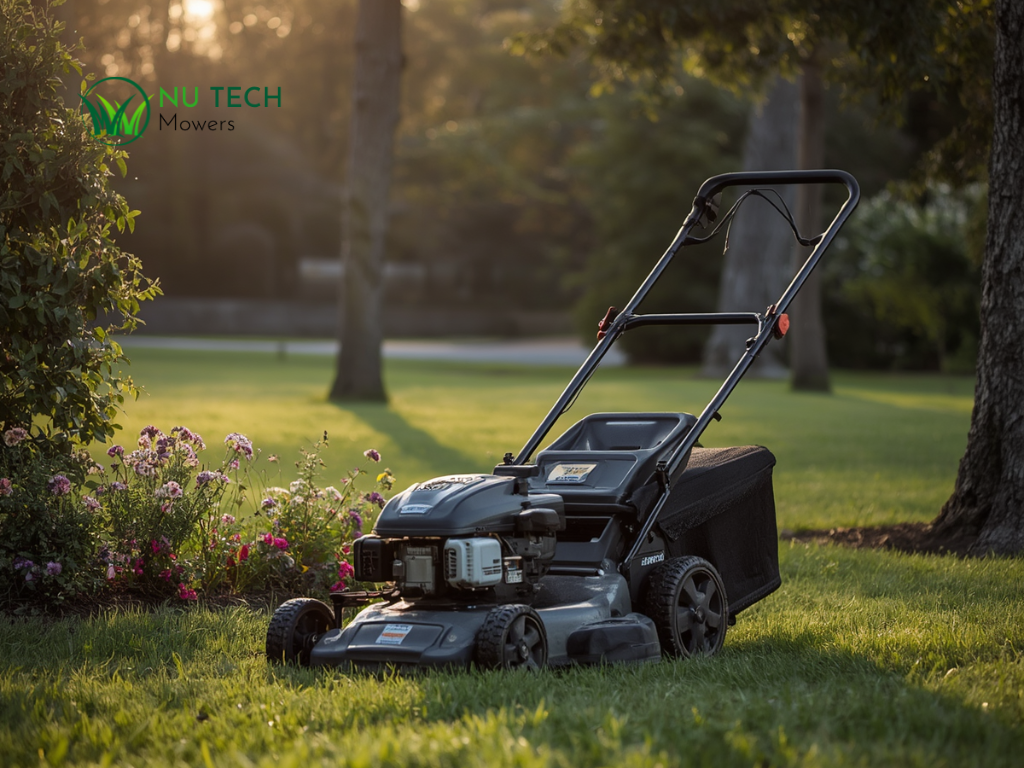
What to Look for When Comparing a Lawn Mower
Once you have narrowed down the appropriate lawn mower size and type, compare the features that will affect everyday use.
Cutting-height adjustment deserves attention because lawns may need to be cut at different heights according to grass type, season and conditions.
The catcher should also be practical to remove, carry and empty if you plan to collect clippings regularly.
Handle comfort and storage matter more than they may appear in a showroom. A mower that is uncomfortable to push or difficult to fit into the shed can become frustrating over years of use.
Choice recommends looking at factors such as adjustable handles, accessible controls, cutting-height adjustment, wheel design, manoeuvrability and how easily the catcher can be handled.
For battery machines, compare what comes with the mower. Some are sold with batteries and chargers while others are supplied as a bare tool, so the advertised mower price may not represent the complete amount needed to start mowing.
For petrol machines, consider servicing and routine maintenance.
For robotic machines, consider installation, lawn mapping or boundary requirements, charging-station placement and the manufacturer’s rated working area.
A good lawn mower choice should make regular maintenance easier, not simply look impressive on a specification sheet.
Comparing a Husqvarna Lawn Mower With Your Yard Needs
If you are considering a Husqvarna mower or another established brand, compare the individual machine with the requirements you have already identified.
Start with your actual mowing area, then look at access, cutting width, terrain, grass condition and the amount of physical effort you are comfortable with.
A Husqvarna lawn mower with a wider deck may suit an open lawn, while a more compact model may work better around detailed landscaping. The same principle applies when comparing a push mower, ride on mower or Automower.
Husqvarna’s own Australian buying guidance emphasizes matching cutting width and propulsion to lawn size and complexity rather than choosing a mower solely on power.
When speaking with a specialist supplier such as Nu Tech Mower, it can help to know the approximate square meters of grass, narrowest access width, whether the property slopes and what type of mowing equipment you currently use. Those details make it easier to compare suitable options without buying more machine than the yard requires.
There is no single lawn mower size that is right for every Australian home. A small, complicated garden may benefit from a compact push mower. A medium lawn may suit a wider battery or self-propelled model. A large, open property may justify a ride on mower, while homeowners wanting more automated maintenance may consider an appropriately sized Automower.
The best buying decision comes from matching the machine to the property. Measure the lawn, check access, consider terrain and grass conditions, then compare mower type, cutting width and power source. If you are unsure which option fits your yard, discussing those details with Nu Tech Mower can help narrow the choice to equipment that suits the work you actually need to do.